Rosalía, Bad Bunny and the Runway: Reviving Calvin Klein’s Iconic Allure
The iconic U.S. brand, celebrated for redefining the intimate apparel market, is seeing the results of a 2023 strategic plan led by Eva Serrano, who left the company at the beginning of the year.


Calvin Klein returned last Friday to the catwalk in New York to show its new concept of what is sexy. It was the second collection presented by Veronica Leoni, the creative who, along with the former CEO Eva Serrano, returned to the U.S. brand to the catwalk after more than six years of absence. If Leoni’s first collection was Calvin Klein in its purest form, but brought to the present moment with tailoring, knitwear and minimalist and structured coats, in the second she has perfected the urban reality by going a step further and has embraced the true “fetish” of the house, both in image and sales: underwear.
“We bring underwear into our universe for the first time and really take ownership of that business,“ explained Leoni after last Friday’s runway show. On the catwalk was a tweed dress with the brand’s famous signature elastic bands, scattered also on eyewear, long johns and men’s boxers. “In this awareness that the brand belongs to the people, I feel that the fetish creates an aspirational and superior layer to the perception and lifestyle of the brand itself,“ Leoni said.
The addition of the Roman designer (the third creative director of the house after Raf Simons, Francisco Costa and Calvin Klein himself) was the centerpiece of Eva Serrano’s strategy to respond to the mission entrusted to her by Stefan Larsson.The new brand was the centerpiece of Eva Serrano’s strategy to respond to the mission entrusted to her by Stefan Larsson (ex-H&M him, ex-Inditex her), CEO of PVH, when he recruited her to the company in 2023: to turn Calvin Klein back into one of the world’s most desirable lifestyle brands.
“We bring underwear into our universe for the first time and we really own that business,“ says Veronica Leoni
Calvin Klein, one of the world’s most recognizable brands, dropped out of the runway spotlight when it shuttered its most elevated line in 2019, after spending about $70 million on a Raf Simons-led repositioning that never delivered the expected results. From then until now, Calvin Klein had lost the fashion halo that elevates the brand and makes the really profitable lines shine: underwear and jeans, just as couture firms dazzle on runway to really sell perfumes and cosmetics.
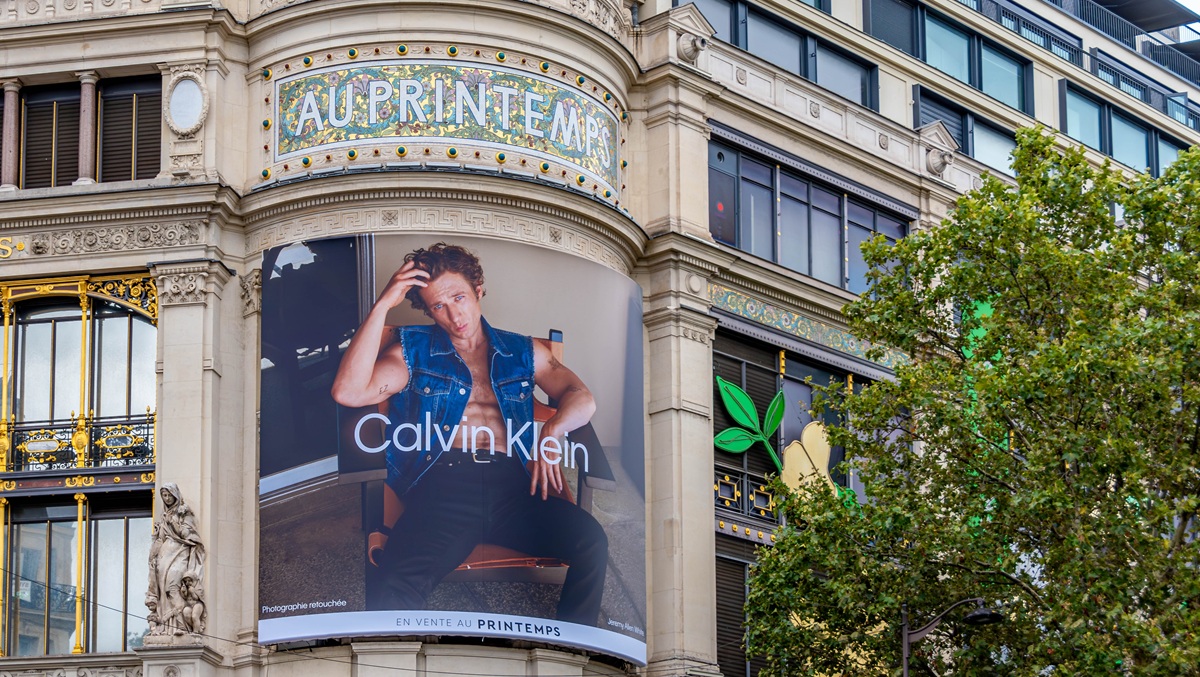
But since Calvin Klein underwear is not only about the catwalk, the return to the spotlight was combined with a relaunch of the iconic campaigns of the American brand. Actor Jeremy Allen White starred in Calvin Klein’s spring-summer 2024 campaign, combining perfectly chiseled abs with briefs, jeans and the New York skyline. The networks caught fire and the campaign resulted in a media impact valued at around $74 million, according to data provided by PVH.
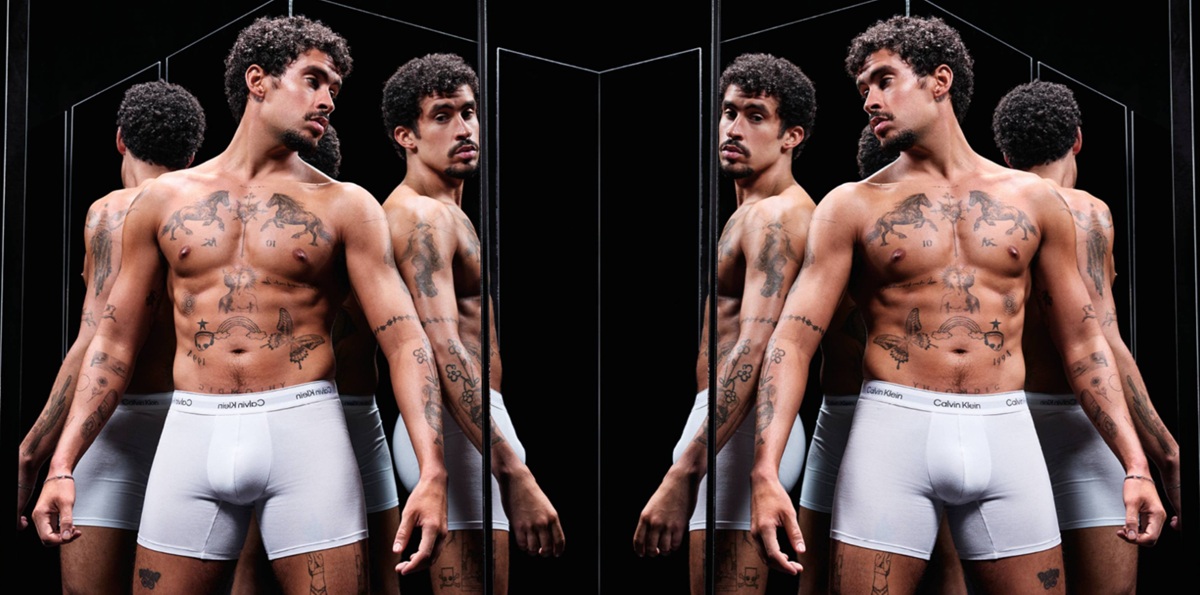
After renewing with The Bear actor for fall-winter, Calvin Klein went one step higher in media exposure. The spring-summer 2025 campaign, which came out last March, starred an explosive Bad Bunny, the record-breaking artist of the moment, photographed by Mario Sorrenti. The images, of course, went viral instantly, generating a media impact valued at 8.4 million dollars in less than 48 hours, according to Launchmetrics.
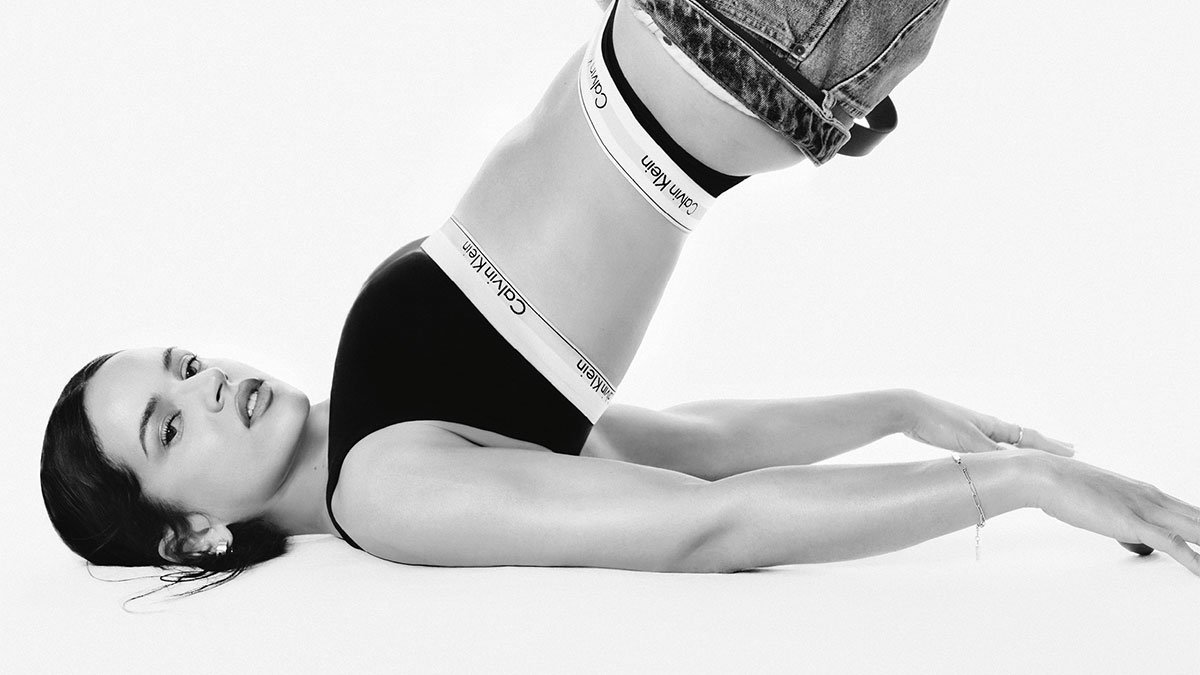
At the beginning of last week, just a few days before the second runway show after its return to the catwalks, Calvin Klein made the definitive coup with the addition of a new face: Rosalia. Under the gaze of photographer Carlijn Jacobs, the campaign seeks to capture what the brand has defined as “Rosalía’s distinctive artistic energy”, also using a song, De Madrugá, as a soundtrack.
The strategy cooked up by Calvin Klein since 2023 has already begun to be translated into sales, a few months after the architect of the transformation, Eva Serrano, left the company. While waiting for the trend to continue, PVH has managed to increase Calvin Klein’s sales by 5.34% in the second quarter of the current fiscal year, marked by the Bad Bunny campaign.
“Calvin Klein showed continued growth in fashion underwear and jeans, driven by the biggest product innovation to date, amplified by megastars like Bad Bunny,“ noted Larsson, PVH CEO, in the second quarter results presentation. “Looking ahead, as we enter the important fall season, both brands (referring to Tommy Hilfiger) have geared up with a strong category focus, more innovation in key product franchises and more innovation in key product franchises,“ said Larsson.We are looking forward to a strong category focus, more innovation in key product franchises and comprehensive, hard-hitting campaigns with a strong lineup of globally relevant talent,“ Larsson added, without revealing the upcoming signing of Rosalia.
The strategy is already translating into sales: Calvin Klein grew by 5% in the second quarter of 2025
Growth in the second quarter of 2025 breaks with Calvin Klein’s weak sales trend in recent years. In 2022 and 2023, the brand posted growth of 3.36% and 3.47%, to $3.783 billion and $3.914 billion, respectively. After two years still marked by comparable low sales as a result of Covid, in 2024 Calvin Klein posted a decline of 1.48% to 3,857 million dollars, falling both in North America (0.65%) and internationally (1.9%).
The strategy being adopted by Calvin Klein is, in fact, what the brand has been doing for more than forty years, albeit brought up to the present time, combining elevated design with mainstream products. Raised in the Jewish community of New York’s Bronx, Calvin Klein launched his brand in 1968 with a childhood friend, Barry K. Schwartz. In 1973, he became the youngest creative to date to receive the Coty American Fashion Critics’ Award, an award created by Coty in 1943 to highlight American fashion during World War II, but discontinued in 1984 and replaced by the Cfda Awards.
With a flourishing business buoyed by critical acclaim, Calvin Klein entered the lucrative licensing business, with scarves, belts, eyewear and footwear, and finally sealed a new jeans business. In the first week on sale in 1978, Calvin Klein sold 200,000 pairs of jeans.
The license that would end up definitely triggering Calvin Klein’s business and imprinting its name in fashion history came in the eighties with underwear for men, first, and women, later. Calvin Klein changed the positioning of this garment, until then hidden and little exploited by brands, which did not consider it because they could not show their logo.
Calvin Klein created designer underwear, making rubber bands visible with his name stamped on them and bringing color to traditionally white pieces. Bloomingdale’s New York noted that, in the first two weeks of selling Calvin Klein briefs, it had sold more than $65,000 and estimated that the underwear would sell more than $4 million that year alone.
Calvin Klein underwear not only lived on a different product, but also on bold and provocative marketing campaigns that relied, of course, on the principle that sex sells, something that, in fact, had previously proven with the jeans with Brooke Shields and the slogan “Doyou know what comes between me and my Calvins? Nothing.
Calvin Klein’s first underwear campaign debuted in 1982 with Olympian Tom Hinthaus filling the billboards of Times Square. Since then, Calvin Klein campaigns have uncovered profiles of all kinds and starring in them has become synonymous with being fashionable, creating images that have gone down in history such as Kate Moss and Mark Wahlberg in underwear in 1992.
Sales of underwear and perfumery saved Calvin Klein from bankruptcy in the nineties, which in 2002 would end up starring in one of the corporate operations of the moment. The U.S. group PVH (which already controlled Tommy Hilfiger) paid 400 million for Calvin Klein, although the lucrative jeans and underwear business was left out of the deal.
In the bidding for Calvin Klein, PVH faced VF (owner of The North Face and then owner of Lee), which ended up discarding the operation because it did not include the jeans and underwear license, in the hands of Warnaco since 1997. In 2013, PVH ended up taking over Warnaco for US$2.8 billion, uniting Calvin Klein’s formal, jeans, underwear and sportswear lines under the same ownership.
Related content

PVH Ups Forecasts After Second Quarter Boost with Calvin Klein and Bad Bunny
27 ago 2025 - 07:04

Calvin Klein Loses Chief Product Officer Following Eva Serrano’s Exit
14 jul 2025 - 03:30

Latest news

Birkenstock projects double-digit growth through 2028 with renewed strategy
29 ene 2026 - 11:16

Levi Strauss Boosts Profitability: Dodges Tariff Impact and Triples Earnings
29 ene 2026 - 11:15

H&M keeps its finger on the pulse and earns 4.6% more at fiscal year-end
29 ene 2026 - 11:10

Gordon Brothers Takes Over LK Bennett, Sets Stage for Global Expansion
28 ene 2026 - 12:33