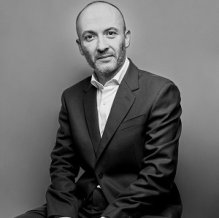
ModaLisboa’s Abbondanza on Lisbon’s Edge: Young Talent and Industrial Power
For more than three decades, Eduarda Abbondanza has used ModaLisboa to link Lisbon’s designers with Portugal’s industrial base and push “made in Portugal” beyond manufacturing, toward brands and design-led value.


As Portugal pushes to shift its fashion identity from manufacturing to design-driven value, ModaLisboa has taken a central role in redefining how the country positions itself globally. At the helm is Eduarda Abbondanza, president of Associação ModaLisboa, who has spent three decades building a platform that links emerging talent with one of Europe’s most advanced textile industries. In this interview, she discusses the strategic challenges facing Portuguese fashion, from industrial proximity to creative ambition and the pressures of a changing labor landscape.
Question: What do you remember from the early years of ModaLisboa, and what did it mean to launch a fashion week in Lisbon back then?
Answer: Even after thirty-four years, that period remains remarkably present. It was a moment shaped by intensity, freedom, and a collective appetite for experimentation, the kind of energy that imprints itself permanently. Launching a fashion week in a city still learning how to imagine mass cultural events for communities previously unseen was a profound shift. Lisbon was entering a cultural reawakening: a post-revolution generation reclaiming creative ground that had long been suppressed. After the turbulence that followed April 25, there was finally room for optimism, and various artistic movements were taking shape. ModaLisboa emerged within that momentum and became the first large-scale project to professionalize designer fashion as a full ecosystem: not only as creative practice, but as an industry. That required mobilizing every component: designers, production, hair and makeup, photography, video, models, communication, technical teams. By bringing international press and placing Lisbon within a global independent fashion circuit, we positioned the city in a space it has managed to sustain ever since.
Q: Portugal has a long textile and apparel tradition but building a creative and internationally visible fashion platform was another challenge. What barriers did you identify then, and which ones remain today?
A: Portugal’s capacity to compete globally is inseparable from its historical context. More than four decades of dictatorship and isolation delayed the emergence of a creative economy and the development of a fashion culture rooted in everyday life. A smaller domestic client base is only the surface of the issue: the delay affected academic offerings, reduced private investment, and hindered the internationalization of both designers and the platforms that support them.
Designer fashion has enormous potential, but it depends on an interconnected system. While we now have a robust and growing creative and manufacturing landscape, the structural foundations that enable long-term expansion still require consolidation. And of all challenges, cultural transformation is the one that resists the most.
Q: ModaLisboa has grown from a fashion event into an association promoting Portuguese design, sustainability and experimentation. What was the main turning point in that transformation?
A: The transformation began very early. After six editions marked by rapid growth but produced without a permanent structure, it became clear that continuity required reorganization. That awareness shaped our work thereafter: it demanded humility to reassess, transparency in action, and thoughtful decision-making. This commitment to listening, to the market, to the community, to the sector, allowed us to establish the Association and to adopt a posture of constant adaptability. Reinvention became part of our identity. Today, strategic reflection, dialogue with advisory groups, and an ongoing recalibration of priorities ensure that our relevance is never static.
“Launching a fashion week in a city still learning how to imagine mass cultural events for communities previously unseen was a profound shift.”
Q: What is the idea behind your strategy, and what tangible results have you seen in terms of creativity, business or international visibility?
A: Our strategic foundation is actually very simple: to aggregate. ModaLisboa exists as the point of convergence for all actors in the Portuguese fashion ecosystem, from emerging designers to major textile groups. Our work is to build bridges, strengthen community, articulate a shared narrative, and encourage paradigm shifts. The outcomes are, I believe, very visible: the endurance and steady expansion of the event, the emergence of increasingly mature authorial voices, and a growing connection between creative experimentation and responsible production. These results reflect a long-term collective investment, and we are very proud of them.
Q: Compared with other established fashion weeks as Paris, Milan, London, New York how do you position Lisbon, and what do you see as its main competitive advantage?
A: International press often frames Lisboa Fashion Week as a space where emerging talent and sustainability meet, and that description captures our identity better than I could, I must say. Few places combine such diverse independent voices with immediate access to one of the world’s most innovative textile industries. This proximity, both symbolic and geographical, is our most distinctive competitive advantage.
Q: How would you describe the relationship between ModaLisboa and Portugal’s textile industry (manufacturers, exporters, innovators) and how does that connection shape the event’s strategy?
A: It is an immensely rich relationship, built on closeness and collaboration. Alongside individual companies, our ongoing work with sector associations such as Cenit, Anivec and Apiccaps has deepened this connection. The industry’s presence within ModaLisboa, be it in exhibitions, professional encounters, showcases and conversations, enriches the event and strengthens its ties to the creative community. Beyond fashion week, this collaboration unfolds through various national and international projects that expand our understanding of the sector and influence how we design our initiatives. It is a form of exchange that is fundamental to our mission.
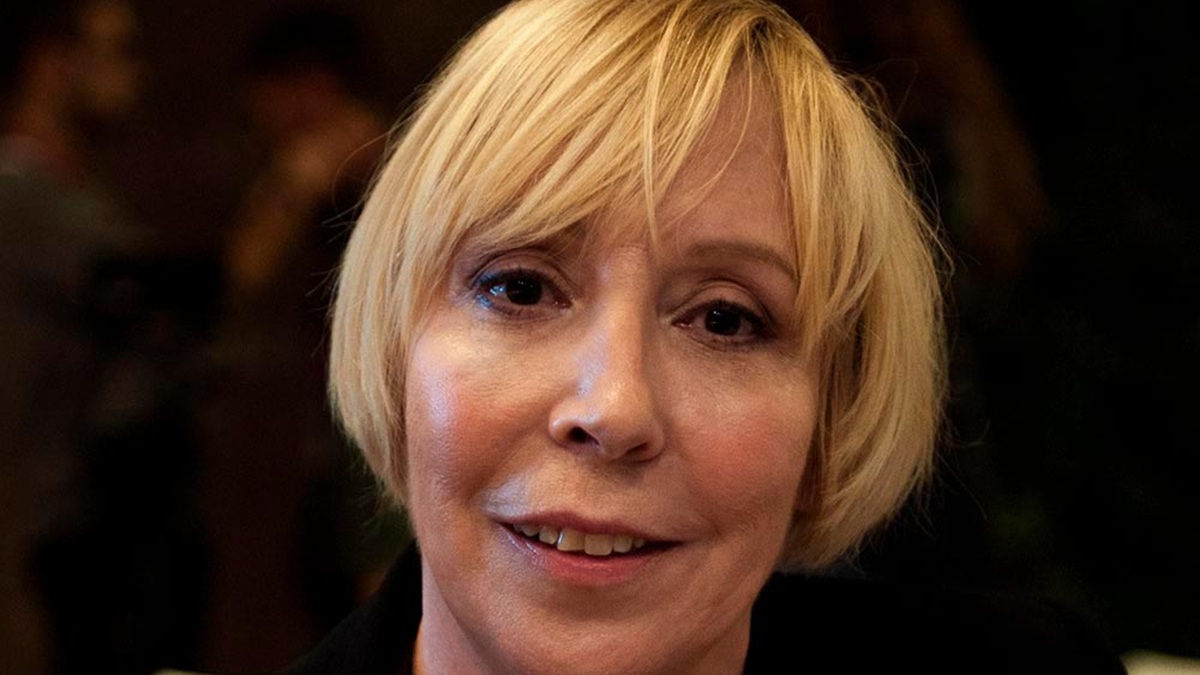
Q: Sustainability has been central to ModaLisboa’s discourse. What are the unresolved challenges, and what would be the next milestone you hope to achieve?
A: Our approach to sustainability has long operated on two parallel tempos: the urgency demanded by the climate crisis, and the deliberation required for changes that are structural rather than cosmetic. The designers we represent, who mostly produce locally and in small quantities, place our ecosystem ahead in many aspects of the transition. Meanwhile, the Portuguese industry has invested heavily in innovation, anticipating European regulation and reshaping its processes.
Yet significant challenges remain, especially regarding legislation and the need to protect brands already committed to responsible practices. Effective policy must coexist with meaningful penalties for those who disregard it, and consumer awareness is essential to sustain accountability. The next milestone would be overcoming these systemic barriers so that energy can shift toward new, deeper stages of sustainable transformation.
“Today, strategic reflection, dialogue with advisory groups, and an ongoing recalibration of priorities ensure that our relevance is never static.”
Q: What practical advice would you give to Spanish or Latin American brands interested in entering the Portuguese or Lusophone fashion ecosystem?
A: Come to Lisboa Fashion Week! It is the most efficient immersion into our ecosystem because it brings together designers, industry leaders, companies, researchers, communicators, and consumers. Entering a new market is always complex, but observing local dynamics, listening closely, and engaging directly with the community provide the strongest foundation for any long-term strategy.
Q: At a time when fashion faces tensions between creativity, sustainability, acceleration, and mass culture, what role should a fashion week play today?
A: We are living through a period of profound transformation, both in fashion and in the world around it. Fashion absorbs global shifts rapidly, which places fashion weeks in a unique position. They must function as laboratories where the system can rethink itself. Beyond presenting collections, I strongly believe they should serve as civic and cultural platforms where contradictions are confronted: authorship and industry, innovation and speed, individuality and mass culture. Their purpose must be to broaden perspective, slow the rhythm of perception, and restore meaning to creating and wearing. Ultimately, a fashion week must not only reflect the present but help articulate possible futures rooted in sustainability, knowledge, and collaboration.
Q: Portugal is often seen as Europe’s manufacturing hub, sometimes associated with lower costs. How can that perception shift toward a narrative of creativity and added value?
A: I think that shift is already underway. The exceptional quality of Portuguese manufacturing, paired with technological innovation and creative excellence, is increasingly visible on the international stage. This transformation has grown through consistent collaboration between designers and industry associations and through ModaLisboa’s commitment to showcasing talent, inviting global media, and communicating with purpose rather than spectacle. Perception changes slowly, but it changes through continuity and depth, and that work is actively happening.
Q: If you had to define ModaLisboa’s main responsibility for the next decade in one sentence, what would it be?
A: To cultivate a space of freedom where talent, innovation, technology and the value of craft converge to generate culturally resonant brands capable of thriving in increasingly demanding markets.
Related content

Portugal’s Fashion Ambition: Lisbon’s Design Scene Takes the Lead
12 dic 2025 - 05:00
Sephora Expands Footprint with First Lisbon Street-Front Store
23 sep 2025 - 16:17

The Kooples lands in Portugal: opens in Porto and Lisbon
29 nov 2019 - 09:00
Gordon Brothers Takes Over LK Bennett, Sets Stage for Global Expansion
28 ene 2026 - 12:33
Latest news
Gordon Brothers Takes Over LK Bennett, Sets Stage for Global Expansion
28 ene 2026 - 12:33
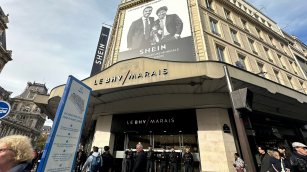
Galeries Lafayette Finalizes Sale of BHV Building Amid Shein Controversy
28 ene 2026 - 12:30
VF Corp’s Q3 Results Shine with 28% Boost as Business Reorganization Unfolds
28 ene 2026 - 08:23
Claire’s Faces Another Setback in the UK with Second Bankruptcy in Six Months
28 ene 2026 - 08:21