Portugal’s Fashion Ambition: Lisbon’s Design Scene Takes the Lead
With a textile and footwear industry exporting over €6 billion, Portugal aims to strengthen its creative footprint. ModaLisboa is orchestrating this leap as the nation reevaluates its role in the value chain amidst ongoing labor reforms.
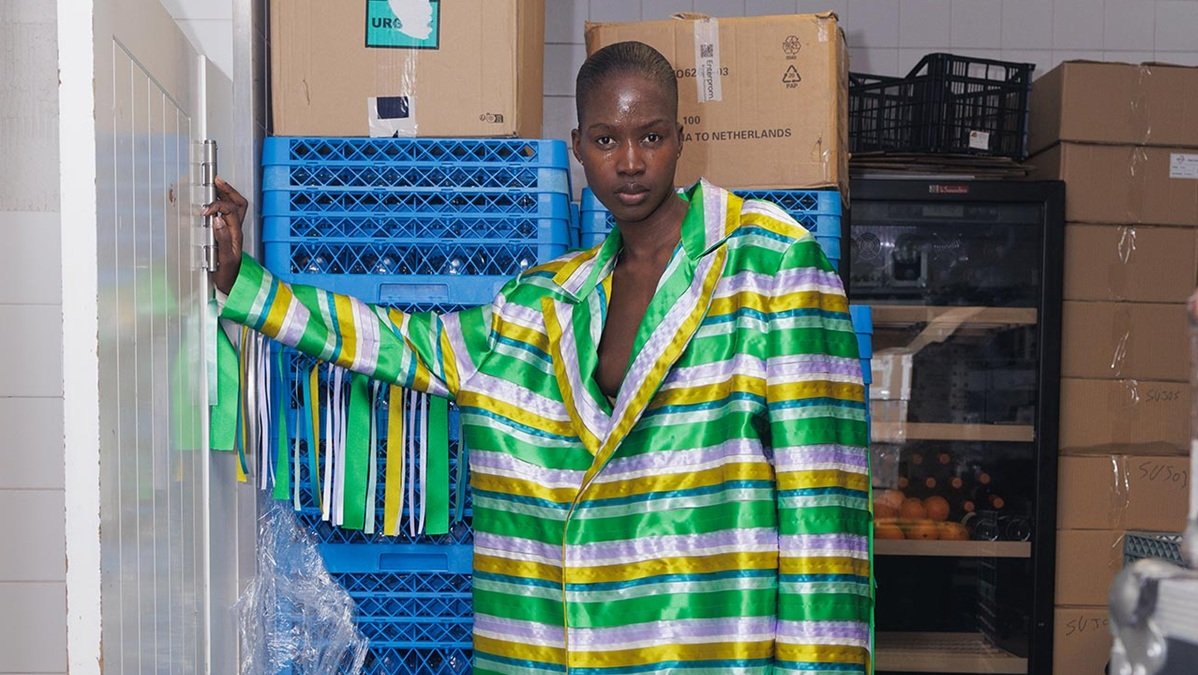


Portugal dresses half the continent from the backroom, from luxury to large-scale distribution, and looks to the neighboring country to activate a qualitative, fast and local production. Today, the textile and footwear industry represents about 2% of the national GDP, employs more than 130,000 people and brings together a fabric of more than 5,400 companies, concentrated mainly in the north of the country, while exports exceed 6 billion euros a year. For decades, the visible face of the country has been to assert itself as a reliable and relatively accessible production center. Now Lisbon is trying to shift its focus to design, relying on a generation of creators who no longer want to limit themselves to manufacturing for others.
ModaLisboa, halfway between a collective and a fashion week, has placed itself at the center of this shift. Launched more than three decades ago, the platform was born to professionalize signature fashion in a country that had suffered the yoke of dictatorship and sought to build a contemporary cultural identity. Eduarda Abbondanza, president of Associação ModaLisboa, explains to Modaes that the strength of the capital lies precisely in that particular mix between creativity and industrial capacity. Most designers work with workshops just a few hours away, which allows ideas to be quickly confronted with the productive reality. This proximity has helped the catwalk evolve from a showcase to a space where design and manufacturing meet.
The change of narrative, from factory to atelier, does not come from scratch. Portugal had already gained international visibility thanks to names like Marques Almeida, who in 2015 won the LVMH Prize and opened a path that confirmed that Portuguese talent could compete on the global circuit. Constança Entrudo, trained at Central Saint Martins and with experience at Balmain or Peter Pilotto, consolidated that exposure a few years later with a proposal focused on textile research and material manipulation, even presenting her garments at Paris Fashion Week. His collections, with one foot in Lisbon and the other on international platforms, reinforced the idea that the country could generate authorship with personality.
ModaLisboa was born with the aim of reinforcing the legitimacy of Portuguese design
The relay is articulated through Sangue Novo, ModaLisboa’s youth project. More than a competition, it functions as a point of contact between training, industry and catwalk in which the finalists usually come from schools such as Esad or the Faculty of Architecture of the University of Lisbon and work with techniques ranging from recycling to deconstruction, with transversal references that include the African diaspora, gender or social criticism. The organization connects them with factories, gives them access to materials and confronts them with the reality of budgets, schedules and margins. This process is key in a small market where the first steps are usually the most fragile phase.

For ModaLisboa, the goal is that made in Portugal ceases to be a seal associated only with the productive muscle. Sangue Novo helps that this seal also refers to the names that sign the collections. Some figures that are now part of the map, including Entrudo herself, began taking their first steps on this type of platform.
Moreover, Portuguese design today moves in very different registers: Béhen , Joana Duarte’s project, was born from the reuse of old textiles and the work with Portuguese craftswomen in the Peninsula or the Azores archipelago. Duarte studied architecture and worked in India before building a brand that combines traditional techniques, contemporary aesthetics, craftsmanship and upcycling with a sustainable approach.
In another direction is Gonçalo Peixoto, trained in Guimarães and graduated from Esad. The designer has built a brand aimed at a young audience, very present in networks and linked to music and video clips. It debuted in London in 2017 and has established itself in the Lisbon calendar, with a presence in European markets and a language that connects with new audiences.
Marques Almeida and Constança Entrudo are two of the national names on the global map
Carlos Gil, with a workshop in Fundão since 1998, brings stability to this map. His women’s ready-to-wear brand maintains a clientele inside and outside Portugal and has managed to balance authorship with a sustained business over time. His trajectory confirms that Portuguese design does not depend only on the capital and that the country has a network of workshops capable of supporting long-term projects.
In parallel, ModaLisboa, which held its last edition last October, has also begun to attract proposals that enter through other cultural channels. 2B, the brand created by singer Bárbara Bandeira together with João Morais, is produced entirely in Portugal and has brought to the catwalk an audience that usually consumes fashion from music or TikTok. For the organization, this type of initiative broadens the conversation and reflects that Portuguese design is also at stake in how new generations relate to fashion.
Industry, sustainability and the missing piece
The creative takeoff coincides with a moment of strong industrial investment. Portuguese textiles have incorporated clean technologies, recycled materials, digital traceability and low-impact production. Footwear, concentrated in Felgueiras and the Ave Valley, exports more than €2 billion a year and has positioned itself as one of the most dynamic European sectors in innovation. Portugal arrives at the ecological transition with a certain advantage, because a large part of its production is local and operates with reasonable volumes.
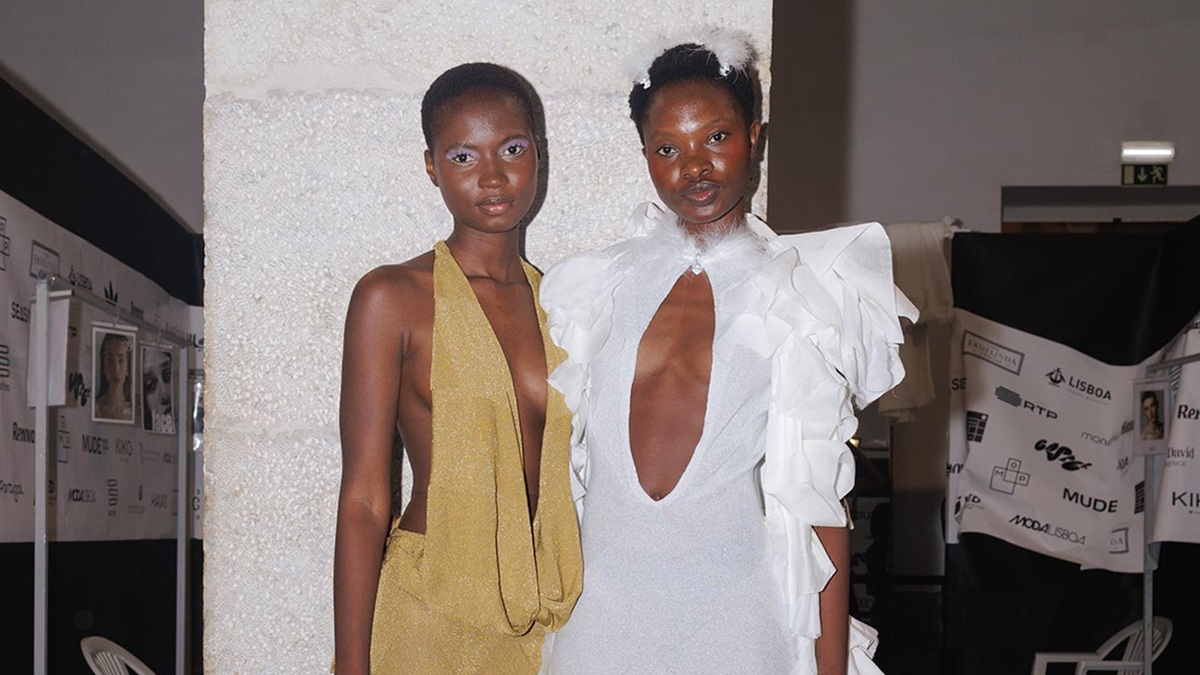
The gap lies elsewhere: the country continues to manufacture mainly for third parties and needs a legislative framework to protect brands that already produce responsibly. At the same time, the debate on labor is going through a tense moment. Portugal is facing its first general strike in twelve years this December 11, called by the main trade unions against the government’s labor reform, with strikes in transport, health and other basic services. This climate underscores the extent to which the discussion on competitiveness, labor rights and the production model goes far beyond the textile sector and forces fashion to place itself in a context in which added value cannot be built only with design, but also with employment conditions and stable public policies.
At the same time, the market needs the consumer to understand what a Portuguese brand brings compared to the global offer. Abbondanza summarizes the next decade as a crucial stage, in which Lisbon must consolidate an environment where design can grow with structure and where creativity translates into business.
For some years now, the question has revolved around whether this creative energy can settle in companies capable of scaling up, financing themselves, creating jobs and sustaining collections with continuity. With the foundations more than settled, the Portuguese industry will continue to be a productive pillar for Europe, but the intention of ModaLisboa, and other platforms such as Portugal Fashion, is that an increasing part of this capacity is put at the service of own brands. Portugal does not want to give up its status as a manufacturer, but aspires progressively to decide what it produces and to place its signature on the label.
Related content

Portugal Fashion Relaunches With Updated Format After Year Off the Calendar
30 jun 2025 - 06:46

Gordon Brothers Takes Over LK Bennett, Sets Stage for Global Expansion
28 ene 2026 - 12:33

Galeries Lafayette Finalizes Sale of BHV Building Amid Shein Controversy
28 ene 2026 - 12:30
Latest news
Gordon Brothers Takes Over LK Bennett, Sets Stage for Global Expansion
28 ene 2026 - 12:33
Galeries Lafayette Finalizes Sale of BHV Building Amid Shein Controversy
28 ene 2026 - 12:30

VF Corp’s Q3 Results Shine with 28% Boost as Business Reorganization Unfolds
28 ene 2026 - 08:23

Claire’s Faces Another Setback in the UK with Second Bankruptcy in Six Months
28 ene 2026 - 08:21