L. Mesones (Expotextil Perú) on expanding outreach to buyers restricted by government policies
With a focus on innovative business practices, the director of the premier trade fair in South America is gearing up for the next ExpoTextil Peru, happening from October 23 to 26 in Lima.
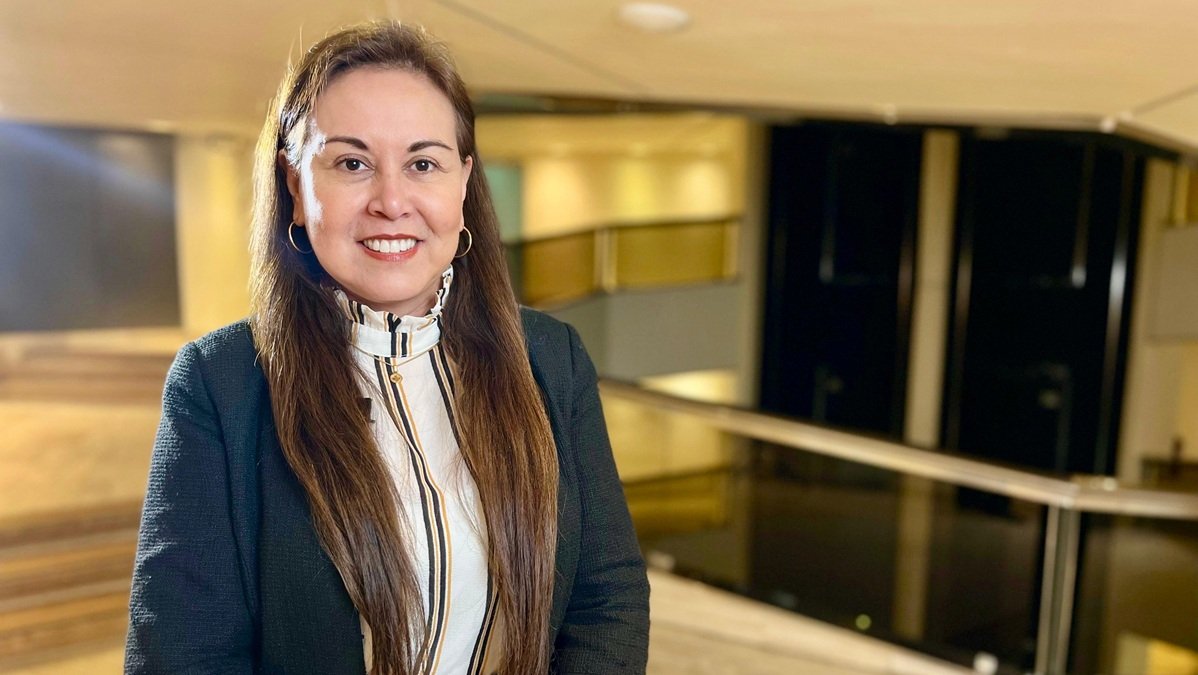


Peru seeks to position itself in international fashion beyond Pima cotton and alpaca. The next edition of ExpoTextil Peru, to be held from October 23 to 26, will go in search of international customers in a turbulent context due to the tariff war. The last edition generated business for $130 million, highlighting the importance of the South American country in the global industry. Luisa Mesones is in charge of the fair and relies on the collaboration of all industry players to work with the public sector in order to strengthen Peruvian fashion.
Question: With the reconfiguration of global supply chains after the trade war, how is Peru positioning itself with respect to countries like Mexico or India that are already benefiting from nearshoring?
Answer: Faced with this scenario, Peru has positioned itself strongly in the supply chain of organic products, especially for the eyes of Europe and Asia, so that they can link here with this type of products. From the fair we are trying to ensure that more and more exhibitors have articles of this type of production, which forced many Peruvian companies to have to adapt, since, in addition, Europe had said that, from 2025, it was not going to enter products that were not sustainable. Regarding tariffs, we noticed certain restrictions, but with respect to other countries. Peru has not been given a ninety-day suspension of the 10% tariff, so we will have to see how it evolves. Logically, there are countries that have been hit much harder and we have noticed that some countries that participated in the event, such as Russia or Turkey, have withdrawn.
Q.: How has Peruvian fashion positioned itself in a global context marked by the tariff war?
A.: Peruvian brands that export their products and designs do it personally to large companies in the United States and Europe. They have a lot of prestige abroad. For some years now we have had the Society of Apparel Exporters in Peru and now the fair has a new Advisory Council that is supported by associations such as Promperu, the National Society of Industries, the Lima Chamber of Commerce, the sustainable fashion cluster, and so on. All these institutions meet regularly to exchange ideas that project Peruvian fashion abroad. We have invited the Ministry of Foreign Affairs and Agriculture to be part of this council to see just these improvements that we can make a national development plan within the fair and to help develop the sector at a high level in the region. We should not focus only on Peru but look at the region. We must have alliances to be able to move forward because the world moves together.
Q.: Has the strategy for promoting Peruvian products in markets such as the United States and Europechanged?
A.: Most companies have agreements, but basically they continue to move in the same way. The idea of holding a business roundtable or taking a group of businessmen abroad no longer works. We visit fairs because yes, they are spaces that continue to function, but the key is to go out and look for that buyer that normally was not brought by a government, the one that is looking for something specialized. They ask us, for example, for databases, information, specialized products. That is why we are designing within our office an area of commercial opportunities, trying to specialize in the selection of those products that they ask us for. Specifically, this year Gots is coming from Germany to participate in the fair, which helps us to spread the importance of certification worldwide.
Q.: Peru has international potential in products such as Pima cotton or alpaca. How are Peruvian fabrics responding to Chinese competition in terms of price and differentiation?
A.: We do not have as much supply in camelids to continue to meet the high demand for alpaca, even for Peruvian consumption, since sometimes these animals are used for work. The key is that the Peruvian businessman can be original to develop new products, with creativity to be able to offer products that can have an impact and to be able to make alliances also between companies or communities to be able to supply this demand.
Q.: There is also talk of a risk of Chinese dumping in the Peruvian market. What actions are being coordinated with the public sector to protect small producers?
A.: The recent inauguration of the port of Chancay is a commercial milestone between South America and China. While there is a lot of investment of this type, such as the new airport, there is also some protection. For example, in the fair we have the participation of Chinese companies, but in order to be there they must not be able to compete with our local industry, with participation in terms of equipment, machinery or that type of products. However, the market is open, so many Chinese companies are opening industries in Peru to be able to sell legally. What we have to see is how to compete with a product that is good and much cheaper. That is where other strategies come into play, and we all have to think about how to compete in terms of quality and design so that we are all in the same competitive game. Just as China, Japan and Taiwan have allied themselves, we have to look for the same.
Q.: What measures is the fair promoting to accelerate the recovery of the apparel sector?
A.: 2023 was a strange year, with very good sales, but it cost a lot. That is why we are now looking for other possibilities of a new market that can go beyond the United States. We are developing other product lines that are attractive and competitive for other countries. At the same time, local consumption in Peru can be taken to other markets through direct imports with a focus on Chile, Bolivia and Ecuador, where we are targeting another type of product. In recent years, Peruvian producers have made a great effort to support the local industry, renewing technology and incorporating more modern machinery, which has helped to increase consumption. In this sense, from the fair we are promoting different types of business rounds, with local buyers, because within our own Peruvian companies there is a demand for products that the same internal chain can provide. We are proposing that small companies can supply medium and large companies in other areas. We are also organizing a provincial roundtable to promote development outside Lima and reach the provinces.
Q.: The next 18th edition of ExpoTextil Peru will have new pavilions, business rounds and plant visits. How will you evaluate the success of this edition compared to last year?
R.: Since the last edition we have noticed a greater interest in our machinery and technology, so this year we are going to position the Peru Textil pavilion, a little in line with what we mentioned before, of this desire of Peruvian businessmen to innovate beyond raw materials. The idea is to promote our designs, clothing and Peruvian textile culture. We also give great importance to the training part of the fair, where we will have the eighth edition of the Textile Industry Week, in alliance with the Universidad del Pacífico to develop certain topics such as industry 5.0 and to promote technological ideas for the country.
Q.: What factors are you promoting as a competitive differentiator for the Peruvian textile industry?
A.: A lot of efforts are being made. However, there is still much to be done. In terms of sustainability, for example, the reuse of post-industrial waste or water treatment are crucial issues that need to be addressed and move forward faster. And that is where the fair plays a fundamental role, because not only does it do so in the training of the week, but we also have a virtual newsletter where we disseminate news on these issues on a weekly basis to all industry players.
Q.: What are the main challenges for the new advisory board?
A.: In the case of PromPerú, they are going to help us with the business rounds, since they have their trade offices, while the Ministry of Foreign Affairs has organizations in constant coordination with the embassies abroad. Basically, they are in charge of 160 organizations. They have asked us to identify other markets, so we are talking about Asia and other types of countries that we normally do not go to. The challenge is to find out what types of products they are asking for and where we can work to create new state policies that will bring us closer to these new customers.
Q.: In a world that is debating between de-globalization and regional reconfiguration, what role does ExpoTextil play in relaunching Peru as a fashion and supply hub?
A.: Historically, industry players have felt the difference between small, medium and large companies. But, if we are divided, this does not work. It is necessary to work together to become that hub example. Over the years, we have seen many companies close, thousands of people left without jobs because there was no overall development plan. This cannot happen again. That is why we aim to work all together, to build a solid base, so that if governments or state policies change, the industry will not be dismantled.
Related content

Swatch Sees 89% Profit Decline in 2025 Amid Tariff Woes and Sluggish Demand
30 ene 2026 - 04:26
Inditex’s Eduard Casabella on Oysho’s Sport Pivot and Growth Through Identity
29 ene 2026 - 18:40
McKinsey’s Gemma D’Auria on Luxury’s Pullback and Fashion’s Resilience in 2026
29 ene 2026 - 18:35
Latest news
Swatch Sees 89% Profit Decline in 2025 Amid Tariff Woes and Sluggish Demand
30 ene 2026 - 04:26
Inditex’s Eduard Casabella on Oysho’s Sport Pivot and Growth Through Identity
29 ene 2026 - 18:40
McKinsey’s Gemma D’Auria on Luxury’s Pullback and Fashion’s Resilience in 2026
29 ene 2026 - 18:35