J. Seara of BCG on How Brands Face Challenges in New Markets While The World is Fragmenting
According to Boston Consulting Group’s general manager, the youth’s passion for luxury remains strong. The challenge for brands lies in connecting with them and navigating emerging landscapes.
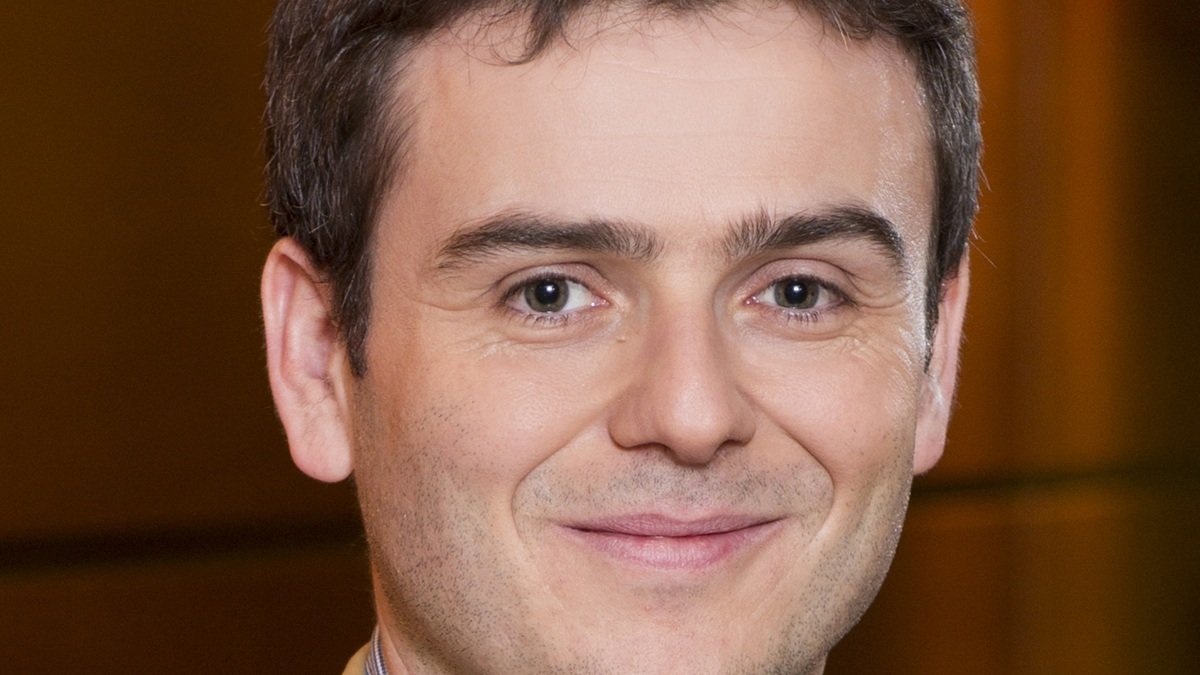


Javier Seara, an engineer by profession, is a partner and CEO of Boston Consulting Group (BCG), where he has been working for 22 years. Seara was one of the forerunners of the firm’s fashion and luxury sector, the vertical of the group that now has more than 600 people. A year after returning to hometown in Spain, having lived in Munich for much of his final years at the firm, Seara is optimistic about the future of luxury, with brands that, “like cathedrals, will always be there.“ He does not expect a major player to emerge from China and argues that the sector’s main players have been built on decades of tradition. He also denies that young people do not like luxury, but acknowledges that some of the big brands are not knowing how to reach them.
Question: Luxury is in crisis. Is it a question of changing priorities or that the category is no longer interesting?
Answer: When I think of luxury, I always think of its evolution in recent years, in which two relevant events have taken place, which we sometimes forget. Luxury has always had two very different types of customers: there is the aspirational, who saves to buy their first Gucci bag. And if the economy is not doing so well, instead of Gucci, they buy Coach, for example. This is a customer who is much more susceptible to the economic or political situation. They react more. And then there is another level of customer, the true luxury consumer. These are people who already have a collection of luxury handbags. They don’t care about what is happening in the economy because it affects them less. In the last ten years, these are the ones that have really brought growth. So even in the pandemic, luxury was still growing. Because it’s a much more stable customer. And the second important fact is what has happened with the Chinese market and the Chinese consumer, where the two types of customers I am talking about have been affected. Twenty-five percent of the market was in China and now, with the five-year plan, the government is trying to influence the market. On the other hand, there is a different generational attitude. There is no lack of demand, but young people need to be approached differently. Finally, it is true that groups like Kering or LVMH have always attracted a lot of attention. So you get the feeling that if one of them is falling in sales, the whole market is falling. But no, the market is still growing. Maybe not as much as it used to, but it’s not falling, far from it. Nor does the concept of the star designer, who has the ability to solve everything, work as well. Now, a millennial may not care as much about who he or she is. However, there are companies that are reacting quickly. In China they use MiuMiu to say something is cool. They say something is MiuMiu to refer to something culturally relevant. The brand is moving up. Prada, however, has posted setbacks in the last fiscal year. How can that be, if they are the same company? Because MiuMiu is more adaptable to what’s going on in the world, and it’s doing well.
Q.: Is the drop in sales transversal to all generations or do young people no longer want to buy luxury?
A.: Young people are demanding a change of model. It is very noticeable with today’s influencers, who have nothing to do with those of a few years ago. They are more local and closer and less elitist. What brands have to do is understand them and connect with them. The young consumer is not going to let brands offer a worse product, or a less impressive store. They still have perspective. But they have to be approached differently, and that’s not so easy for some brands. So I don’t think demand among young people is being affected so much as they simply see them as too traditional, inauthentic, not connected to their culture. They are protesting against the inability of brands to do something different from what they have done in recent years. It’s not a demand problem, because young people are spending money in other areas of luxury, such as travel.
“Young people are protesting against the poor ability of brands to do something different from what they have done in recent years.“
Q.: By markets, luxury was pinning its hopes on Asia, especially China. Is the situation in China particularly serious or is it common to all markets?
A.: It is difficult for brands to understand the world at the moment. The continents are becoming more and more separated and it is difficult for us to understand other territories. Years ago it was much easier for someone in Paris to react to what was happening in China, Korea or the United States. But geopolitics has become more complicated, the world is less global. The United States and Europe are far apart. You can see it very clearly with clothing. For example, with the casual fashion boom, which has had a much stronger impact in the United States than in Europe. This is happening with many other trends. And, for brands that work with a very global model, it is difficult to adapt in all markets. In fashion this happens less than in luxury. Because, although brands are sold all over the world, there is always one continent that dominates. For example, Gap and Levi’s are stronger in America; Zara and H&M have always been European, and Uniqlo Asian. In China, in particular, all this is more difficult now. It’s no longer enough to paint the collections red for Chinese New Year. It’s more complicated, you need a lot more information. And this is very difficult to do well, especially from another continent. That said, Asia continues to be the fastest growing territory for luxury. Japan and Korea are also included, but China is the largest market, although it is still small.
Q.: By category, are apparel sales suffering the most?
A.: In the last five years the price increase in luxury has been brutal. The prices of products that were already expensive before have tripled. And these products are exactly the same as they were before. At this point, it might seem easier to stop investing in an 800-euro sweatshirt than in a 2,000-euro handbag. And, on the other hand, the consumer is progressively moving towards a somewhat lower product level because the prices of all have skyrocketed.
Q.: Cosmetics and perfumery were holding up, but analysts are beginning to warn of a slowdown. Do you agree with this trend?
A.: What has happened with cosmetics and perfumery has been crazy. It has been able to attract a whole generation that didn’t consume it before. It has had an exceptional growth that is just that: exceptional. Everything is stabilizing. There is no drop in demand. The trend should not get radically worse.
Q.: If we owned 2.55% of any of the big luxury brands such as Chanel, LVMH or Dior, would it be a good time to sell or would you wait?
A.: There are brands that come and go, but the big ones are always there. Those brands are bigger than their own business. They go beyond their designers, who can make a difference in a small brand, but no longer in these ones that are so consolidated. They have been building like a myth for generations. They are like cathedrals, they are going to be there when many are no longer there. And, therefore, they are very little comparable to other brands. They can do better or worse, but they have more money than anyone else. So no, I wouldn’t sell.
Q.: Do you dare to put a horizon in which the sector will recover?
A.: In the short and medium term, it is going to be difficult for luxury, as an industry, to return to the 15% or 20% growth we saw years ago. What we are going to see from now on is stability and a little less crisis, because the market is growing a little. There will be many winners and losers, depending on the ability to adapt to this more fragmented world.
Q.: The big players in the sector, LVMH and Kering, are selling assets. Is this going to lead to a reconfiguration of the map of operators in the luxury industry?
A.: I don’t think there will be such a big reconfiguration. There are more designers, and that generates a lot of noise. I don’t think the big players are going to change much, they will continue to be in a very similar way. With the exception of Kering, which is undergoing a major transformation.
“Cosmetics and perfumery has had exceptional growth that is now stabilizing.“
Q.: Could we see a major luxury giant emerge from Asia?
A.: It is very difficult. There have been attempts and there may be more, but it’s difficult. Luxury comes from where it comes from and it’s due to tradition. It is very difficult to get it right. In sports, China has been able to create powerful brands with global potential. And it’s not that luxury is something that only belongs to Europeans or Americans, but it has to do with the experience curve. When you do something for generations and generations, you end up knowing how to do it very well. In luxury, brand building is very important. Some have been contributing to the industry for decades, some even more than a hundred years, and that is very difficult to create. Luxury is still produced in Italy, France and Spain. And the Chinese government is also trying to slow down foreign purchases. However, I don’t think a Chinese consumer would not want to have a precious and valuable handbag. You simply have to look at how the product is sold to her, where, through what channels and with what level of customization. The product itself is what has changed the least, what has changed is all around.
Q.: Personalities such as Jeff Bezos are taking positions in the sector. Is it a good time to enter the luxury sector?
A.: It is true that the demand is there, but in a weaker form than a few years ago, where it seemed that the big groups could not produce enough to satisfy it all. When we talk about luxury, there is LVMH, Chanel, Hermès and Dior, the four untouchables. They more or less always do well. Because they speak directly to the true luxury consumer. Balenciaga, Yves Saint Laurent, Loewe... They go up or down more. The untouchables do not depend on a designer. I don’t think anything is changing that much. I see no reason not to invest in luxury.
Q.: Does the stock market reflect the real value of luxury companies?
A.: You have to understand that these types of brands have very high margins. You have to sell a lot of T-shirts to equal the margin of a single Chanel bag. The multiplier is very large. So when things are going well, the value creation is very high, and that’s what the market reflects. Your assets are still the designers, the stores, the technology... Everything translates into high margin, so the market value is also high.
Related content
British Luxury Faces Chill: Harrods Slips into Red as Profitability Declines
6 oct 2025 - 06:02
Global Fiber Leaders: from China to India
5 nov 2025 - 05:00

Birkenstock Charts Robust Growth Path to 2028 with Fresh Strategy
29 ene 2026 - 11:16

Levi Strauss Boosts Profitability: Dodges Tariff Impact and Triples Earnings
29 ene 2026 - 11:15
Latest news
Birkenstock Charts Robust Growth Path to 2028 with Fresh Strategy
29 ene 2026 - 11:16
Levi Strauss Boosts Profitability: Dodges Tariff Impact and Triples Earnings
29 ene 2026 - 11:15
H&M Holds Steady: 4.3% Profit Surge in 2025 Approaches €1.06 Billion Mark
29 ene 2026 - 11:10

Gordon Brothers Takes Over LK Bennett, Sets Stage for Global Expansion
28 ene 2026 - 12:33