British Luxury Faces Chill: Harrods Slips into Red as Profitability Declines
The British luxury conglomerate has navigated a transitional fiscal year, marked by steady revenues, a declining operating margin, and a negative bottom line due to exceptional expenses and mounting internal cost pressures.
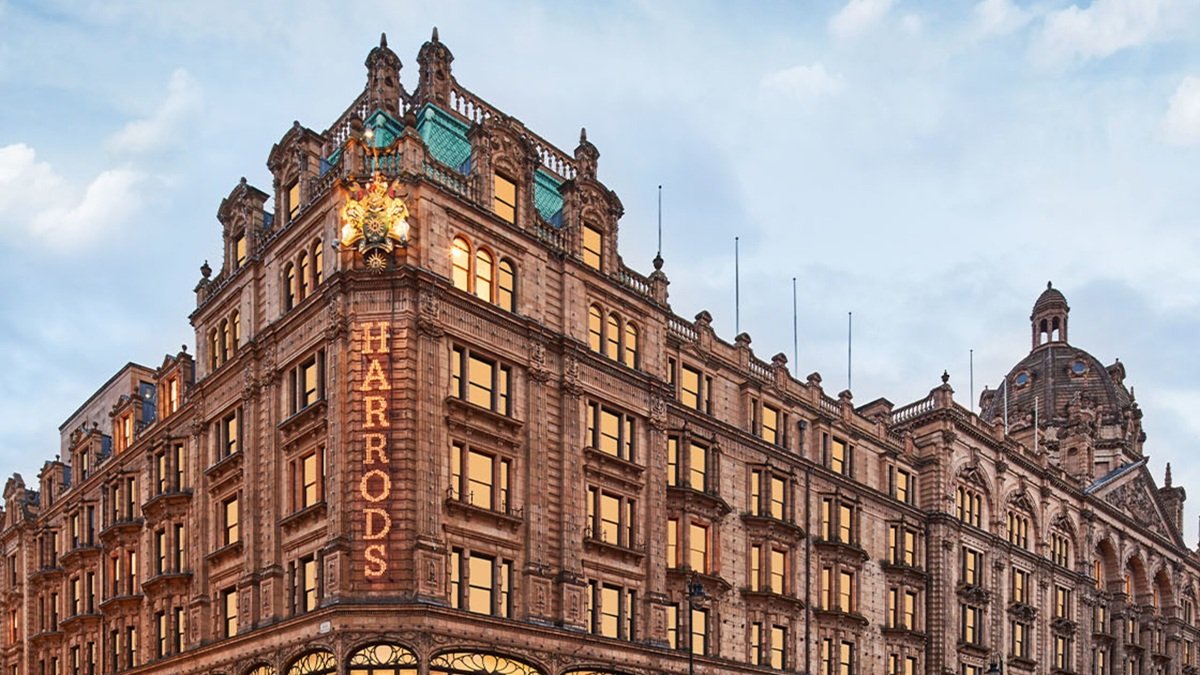

Harrods is holding its own despite a difficult context. The British luxury group closed FY2024 with a 2.4% decline in gross trading volume to £2.198 billion excluding VAT (about €2.59 billion) and a slight 0.6% increase in turnover to £1.082 billion (€1.275 billion). The increase, below British inflation, reflects a year of stable trading for the historic Knightsbridge department store in a complex environment for luxury, conditioned by the weakness of tourist spending and the absence of duty-free shopping in the United Kingdom, factors that continue to affect international traffic.
Group operating profit before exceptional expenses fell 17% to 177.7 million pounds ($239.3 million). However, pre-tax profit turned into a loss of £34.3 million ($46.2 million), compared with a profit of £111.5 million ($150.1 million) in the previous year.
Net profit also turned negative, with a loss of £36.5 million ($49.1 million), compared with a positive £76.7 million ($103.3 million) in the previous year. The figures contrast with the solid growth the company had experienced in 2023, driven then by the post-pandemic upturn and the partial return of Asian tourism.
According to the company’s CEO, Michael Ward, the fall in operating profit was due to higher employee salaries and higher logistics costs, “reflecting investment in our team and distribution.
Harrods recorded a loss of 36.5 million pounds in 2024
Ward attributed the net loss to “significant exceptional costs” that impacted the financial year. These included the digital transformation of the internal management system and a compensation program for victims of abuse committed by the company’s former owner and chairman, Mohamed Fayed. The compensation plan began to be implemented at the end of April 2025 and will remain open until March 2026.
Despite the adverse backdrop, Ward highlighted that 2024 was “a year of steady trading” for Harrods and that the company “again outperformed the luxury sector average.“ The group continues to focus on improving the customer experience and renovating its spaces, including the women’s fashion area and the historic restaurant The Georgian, in addition to its digital modernization plan.
“The market remains complex,“ Ward added, “but we are confident in the strength of our business and the resilience of the luxury sector to continue to make progress towards our long-term growth objectives.“
Founded in 1834 by Charles Henry Harrod as a small grocer’s store in London’s Stepney neighborhood, Harrods moved to its current location in Knightsbridge in 1849. Over nearly two centuries, the store has established itself as one of the world’s most iconic department stores, a symbol of British luxury and a landmark destination for tourists and international shoppers. It is currently owned by the sovereign wealth fund Qatar Investment Authority, which acquired the company in 2010.
Related content
Harrods Faces Second Cyber Breach, Compromising Data of 430,000 Customers
29 sep 2025 - 07:21
Birkenstock projects double-digit growth through 2028 with renewed strategy
29 ene 2026 - 11:16

Levi Strauss Boosts Profitability: Dodges Tariff Impact and Triples Earnings
29 ene 2026 - 11:15
H&M keeps its finger on the pulse and earns 4.6% more at fiscal year-end
29 ene 2026 - 11:10
Latest news
Birkenstock projects double-digit growth through 2028 with renewed strategy
29 ene 2026 - 11:16
Levi Strauss Boosts Profitability: Dodges Tariff Impact and Triples Earnings
29 ene 2026 - 11:15
H&M keeps its finger on the pulse and earns 4.6% more at fiscal year-end
29 ene 2026 - 11:10
Gordon Brothers Takes Over LK Bennett, Sets Stage for Global Expansion
28 ene 2026 - 12:33