Inditex and LVMH Climb as Hermès Drops to Third in IMD Future Preparedness Rankings
After a rapid ascent last year that saw the Spanish group leap into the top 3, growth has tempered. LVMH remains at the summit, while Hermès slides to third place.
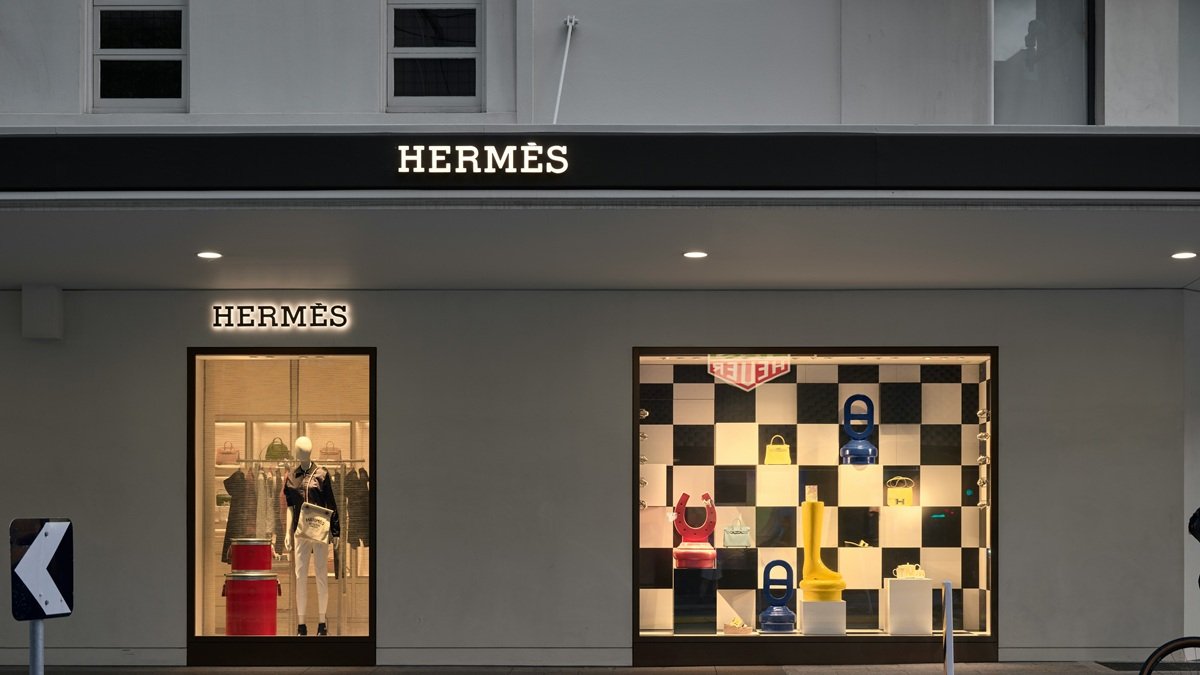

Spanish fashion giant Inditex has taken second place in the Future Readiness Index, prepared by the IMD business school, moving up one position and placing itself, for the second time, on the podium of companies in the fashion sector that are best prepared for the future. Compared to last year, when the owner of Zara rose five positions, entering the podium for the first time, the company has slowed its rise in the ranking.
Above Inditex is only France’s LVMH, driven by its “portfolio of timeless brands”, which the report notes has become an “almost unbeatable buffer against market shocks”. LVMH, in fact, obtained a perfect score of 100 points on the indicator of future readiness within the fashion sector, while Inditex followed with 91.4 points.
Of particular note was the blow to Hermès, which fell from the first position it held last year to third. The company took 87.2 points, down from 100 points a year ago. “The company’s approach causes it to score lower on some innovation indicators,“ the entity relates, referring to a lower adoption of certain digital advances within Hermès’ strategy. Even so, the IMD has stressed that “the company’s methodical and long-term growth demonstrates that focus and cultural relevance can prevail over scalability.“
Zara analyzes three million images a day using AI to detect trends
In the case of the Spanish firm, it has been placed in second position thanks to its “integrated and data-driven ecosystem behind Zara, Massimo Dutti and Bershka”. The study also highlights that Inditex thrives thanks to “fast-cycle innovation and global agility”, since, with thousands of stores around the world and a “recognized ability to create runway styles in weeks, the multinational stands out in the first results of innovation and business diversity”.
“This diversity is not in terms of product categories (most of which are apparel), but in its flexible operations and portfolio of brands, each of which targets different demographics,“ say those responsible for the report produced by IMD’s Center for Future Readiness.
Similarly, the report stresses that even as consumer demand became uncertain in 2025, Inditex maintained gross margins of 58%, indicating “pricing power and operational efficiency.“
Howard Yu, director of IMD’s Center for Future Readiness and head of the study, comments that Zara analyzes three million images a day using Artificial Intelligence (AI) to spot trends, so that by the time “H&M (ranked 21st) identifies the same trend, Zara has already designed, produced, shipped and placed it in store.“
Adidas ranks fourth, up six places from last year, followed by Nike and Kering
“Zara produces 85% of its offer in season, which means it manufactures based on what the consumer wants now,“ the expert points out, explaining that when it gets it wrong, it’s a “small batch, but when H&M gets it wrong, it’s full warehouses that end up on sale.“
Thus, Yu exemplifies that “H&M still operates with a six-month-ahead prediction model,“ while Zara operates with a “continuous reaction model.“ “In 2025, speed is not a tactic: it is the operating system,“ he notes, concluding that Inditex’s advantage “is not just speed, but control of the entire cycle - data, design, manufacturing, logistics and store.“
As such, the IMD study states that a common denominator among fashion industry leaders is their ability to “read consumer culture and build brand appeal”The IMD’s study highlights that Hermès, LVMH and Inditex have worked on this appeal through exclusivity, as in the case of the French companies, or through an ultra-fast response to trends, as the Spanish company has achieved.
Beyond the top 3, the fourth position is occupied by Adidas, also with one of the biggest rises of the edition, climbing up to six positions compared to the previous year, as a result of “a new approach”.This was the result of “a perfect turnaround, which consisted of turning a cultural trend into a massive financial boost, reactivating iconic brands and reducing inventories.
“Adidas is bouncing back under its new CEO Bjorn Gulden, demonstrating how a strong learning culture can restore future readiness,“ they say. It is followed by its main competitor, Nike, which falls by one position, and Kering, the other major luxury giant, which remains in sixth place.
Luxury, streetwear and digital fashion have merged into a single ecosystem
Looking ahead, the study concludes that the global fashion industry, in an “environment where brand equity dominates while style convergence accelerates,“ is being reshaped by AI and digital transformation, as well as the convergence of luxury, streetwear and digital fashion.
As such, they warn that AI’s shift in fashion is no longer a “side project; but fundamental to the way brands design, produce and convert shoppers.“
Moreover, in this context, the study notes that luxury, streetwear and digital fashion are no longer separate tracks; but are “merging into an ecosystem where aesthetics, communities and business models collide.“ “A whole economy based on urgency and privileged access has emerged, whereby scarcity increases perceived value, while the fear of missing out accelerates demand,“ it concludes.
Related content
Hermès Strengthens Supply Chain, Acquires 15% of Lanificio Colombo
7 nov 2025 - 16:38

Alpha Modus Takes Legal Action Against Inditex Over In-Store Tech Use
20 nov 2025 - 06:52
The Marc Jacobs Puzzle: The Sale Shaking Luxury
17 nov 2025 - 05:00
Bernard Arnault’s Wealth Takes a Hit as Hermès Family Claims Top Spot in France
10 jul 2025 - 15:01
Latest news
Birkenstock projects double-digit growth through 2028 with renewed strategy
29 ene 2026 - 11:16

Levi Strauss Boosts Profitability: Dodges Tariff Impact and Triples Earnings
29 ene 2026 - 11:15
H&M keeps its finger on the pulse and earns 4.6% more at fiscal year-end
29 ene 2026 - 11:10
Gordon Brothers Takes Over LK Bennett, Sets Stage for Global Expansion
28 ene 2026 - 12:33