McKinsey’s Carlos Sánchez Altable on Fashion and How Algorithms Face Tough Terrain
The McKinsey&Company partner delves into the pivotal aspects of the fashion industry amidst the surge of new technologies impacting both businesses and consumers, forecasting the next revolution driven by Artificial Intelligence.
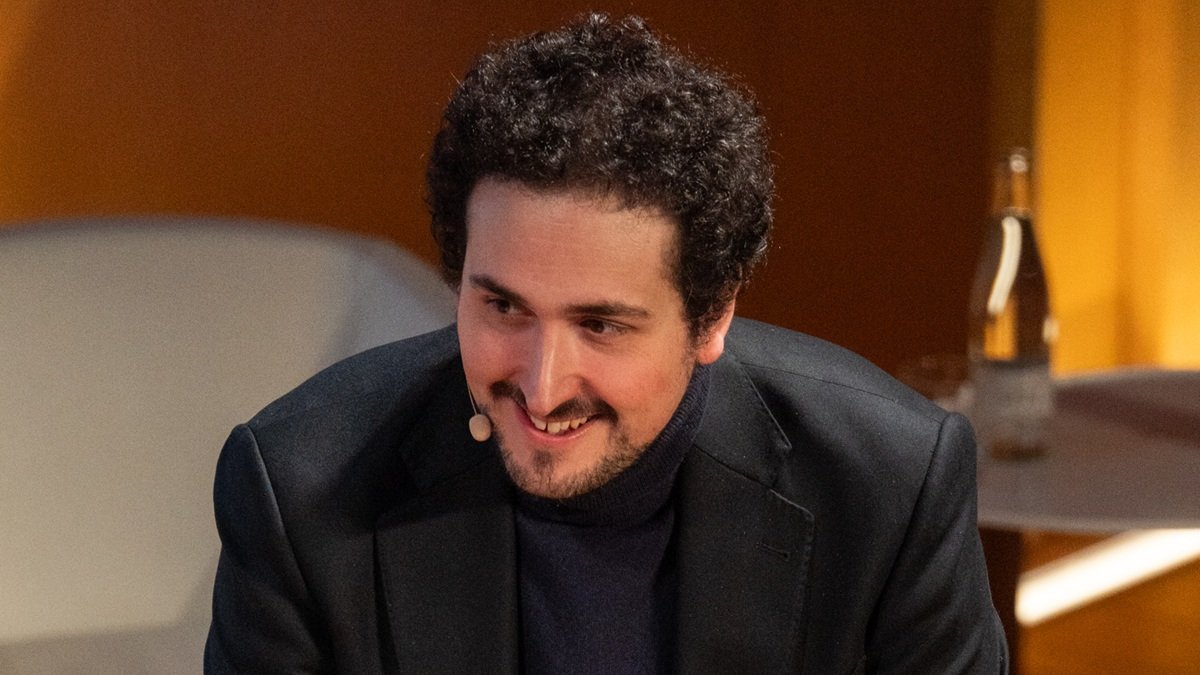


Carlos Sánchez Altable, partner at McKinsey&Company, explains how Artificial Intelligence will change both consumer habits and the way of selling on large platforms and online with new strategies for personalizing purchases. He also analyzes the path that the sector will take in terms of the implementation of new technologies and their development, such as Chat GPT.
Question: How can Artificial Intelligence change and modify consumer habits?
Answer: We have already seen a first wave of all this with social networks with algorithms. Generative AI can also change a lot based on how customers are inspired. We can imagine a world where customers are inspired much more through conversations, we have to see with whom those conversations will be, whether they will be with the more generalist models, such as Chat GPT.We have to see with whom those conversations will be, whether they will be with the more generalist models, such as Chat GPT, with assistants that will be created ad hoc to give advice to fashion customers, or with brands, which seems the most complicated scenario because if each brand has its own assistant it will be very difficult. Customers have cross-cutting recommendations, so we don’t know what the arrival scenario is going to be. In terms of consuming fashion and getting inspired, we always tend to think about the more transactional part of buying, but there is a big question, how does generative AI change inspiration? This changes across ages and genders, but all customers are inspired.
Q.: Will the tools you mentioned, such as GPT Chat or personalized robots, end up having more importance in this action of getting inspired or consuming than social networks?
A.: Yes, but in all these things, in the end the trend arrives, it seems to us that everything is going to change and then things don’t change. The distance between the change and the trend is not clear. The problem is that today if you ask him to inspire you and tell you things, the experience you have in virtual assistants, even in GPT Chat, is still not at the level it should be. It’s almost easier for you to train the social media algorithm to keep recommending things you like. How long will it take? I don’t know. Will it come? Yes, because these models have proven that they can learn super fast. And as soon as brands start to experiment more and more, to improve, to add data to these models, there will come a time when these generative Artificial Intelligence tools will improve social networks. What we don’t know is what social networks are going to do to integrate this.
Q.: And do we have professionals today who are going to be able to take advantage of all this potential?
A.: There are more and more, but in this world of generative Artificial Intelligence or even more traditional or predictive Artificial Intelligence, there is a lack of professionals, knowledge in companies, capacity for adoption and understanding of what can be done. Many of the approaches today are very technological in a business as tangible as fashion, that’s why companies and professionals reject it. Many of the emerging professionals are also not prioritizing fashion as their industry of reference, because it is still seen as a more traditional industry, where technology has arrived late. Although it depends on the fields, because in ecommerce fashion has been quite cutting edge.
Q.: Speaking of Artificial Intelligence in fashion, what should those profiles that arrive in the future be like?
A.: They have to be profiles coming from other industries because they are investing much more in training these profiles. Once they come from other industries, they should learn about the particularities of fashion, such as the things that can be predicted and the things that can’t, or where the most proven impact is. Inspiration is going to play an important role, but fashion is hard to predict and put algorithms on. That’s not to say it can’t be done, but it has a more subjective component to a lot of the decisions that are made, which is part of the nature of the industry and encompasses both customers and companies.
Q.: Is it possible to be 100% accurate in forecasting demand thanks to Artificial Intelligence?
A.: Demand forecasting is a lot of things, you can use it to buy, to know how much of a product you are going to need in your distribution center at certain times, to know how much you have to send to a store or to your distribution center, and so on. Some are more difficult and some are easier. If we’re talking about six months ahead, knowing what I have to buy to get right what customers are going to want is difficult, especially at the most granular level. But when you’re working with demand forecasts in a particular store in a week or two weeks, you can get a lot more right and you can correct your buying mistakes or get a lot more right. If we have learned anything it is that this whole field of Artificial Intelligence is going to teach us many new things that seemed unbelievable and little by little we will see how far it can go.
Q.: What other friction points in the fashion industry can predictive AI help solve?
A.: Demand prediction is clearly a big world, but it can help you with a lot of other things, like figuring out what your optimal store network is or how to do store staffing, for example. There are a lot of problems that are more analytical, and that’s why I distinguish between analytical AI and generative AI. Optimization problems are easily solvable with the tools we have today; however, prediction problems depend on the variables that exist and the quality of those variables. Demand prediction is one of the big problems the industry generates and it has ramifications for profit, sustainability, etc. I see a lot of my clients investing in that and it makes a lot of sense for the industry to continue to move forward there.
“Websites are not going to go away, it’s much easier for digital marketing to change.“
Q.: And what’s next in generative Artificial Intelligence?
R.: We will see how chat bots mix with websites, or how filters that are now super static on pages will start to become much more dynamic and based on the conversation you are having through your clicks and not so much your text.We’re already seeing it, when we’re putting in the filters that are now super static on the pages, they will start to be much more dynamic and will be based on the conversation that you’re having through your clicks and not so much on your text. We are already seeing it, when we put a prompt in Chat GPT gives you options and suggests possible answers. The same with images, we’re already seeing some being done with AI, and all of that is going to evolve so that the images you see are different from the images anyone else sees, so that they’re much more aligned with your tastes. Websites are not going to disappear, it’s much easier for digital marketing to change.
Q.: Which will end up being or having the greater impact at the end of the day between these two types of AI uses?
A.: Both are fields that are advancing very fast, although it may seem to us now that generative is advancing faster. In the predictive field, there are many scientists in the world working on optimization, prediction, predictive models, etc. Generative is much more visual, we are all amazed by the capabilities of the algorithms and the speed at which they are advancing. Both are going to transform the fashion world.
Q.: Along with this gain in efficiency and optimization, does the use of AI also entail greater risks in other aspects?
A.: Many of the issues, such as AI in images to generate content, carry ethical and diversity-related risks. The models have a lot of risks because they are massive things and don’t reflect any diversity, so there may be issues that are controversial. The models show you products that are not real as results at your prompt, you may then go to the web and it may not correspond to reality. It is not as simple as it seems and there are risks for both companies and users, these are things that have to be managed over time.
Q.: And how do you deal with this increase in risks? Is it through legislation or from the business side?
A.: Legislation has to help especially on sustainable issues, but a lot of these risks have to be addressed by business. Generative AI creates content that you don’t know if it’s true or if it’s based on real sources. This doesn’t happen with predictive AI, which may have errors, but you can measure the percentage of accuracy. So companies have to manage this to go about implementing generative AI or assembling the largest models that exist for their use cases, because risk management, ethics and all these disciplines glued to the business impact is critical. It can also involve reputational risks for companies, because the legislator can say, “if the model gives errors, it’s the companies’ problem,“ and that’s not the case. Nor is it the problem of legislation, because sometimes things go wrong and there is not much to legislate.
Q.: What other sectors have a greater implementation of AI right now and what can fashion learn from these others?
A.: Fashion has digital natives that are quite advanced players, I would even say that they export talent and export ideas, but in general it is a sector that is not so advanced. On the one hand, there are many companies that are more traditional and product-based. And on the other hand, there are digital natives that are more mature companies. Other sectors such as technology can be a source of inspiration and talent; banking is another one. They are industries that seem more traditional, but the reality is that they have technology at the center.
Related content

Adidas Bolsters Running Strategy, Taps Former McKinsey Exec to Lead Charge
19 nov 2025 - 07:24


Jewelry shields Richemont
19 ene 2026 - 04:09

Asics Strengthens Production: Onitsuka Tiger Launches First Factory in Japan
16 ene 2026 - 08:03
Latest news
Jewelry shields Richemont
19 ene 2026 - 04:09
Asics Strengthens Production: Onitsuka Tiger Launches First Factory in Japan
16 ene 2026 - 08:03