Calzedonia’s $3.5 Billion Empire: From Affordable Hosiery to Luxury Yachts
With a strategic mix of industrial oversight, international growth, and a belonging-driven sales culture, Oniverse, the family holding of the renowned Italian label, has established one of Europe’s most lucrative retail frameworks.
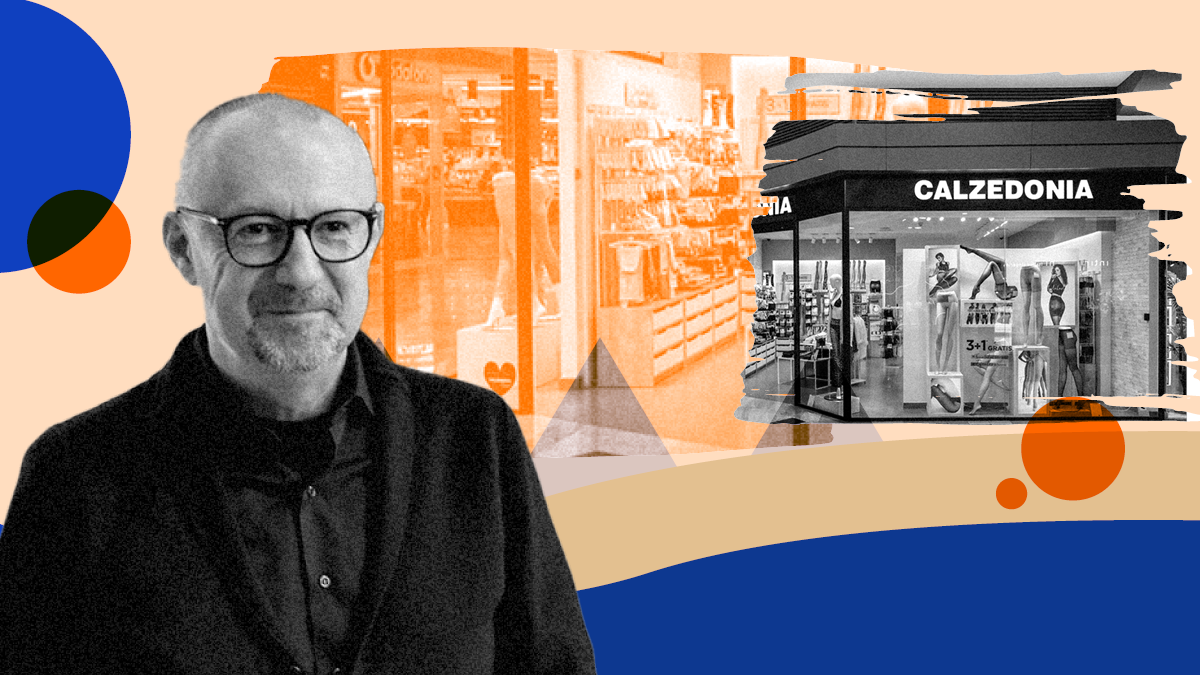


Kilometer zero of the Oniverse group, historically known as Calzedonia, is not a fashion metropolis, but an industrial park five minutes from the freeway linking Milan to Venice. There, in 1986, the engineer Sandro Veronesi connected a hundred circular machines, agreed with a handful of retailers on the first batch of franchises and launched a message that was as simple as it was disruptive: stockings and socks at popular prices, replenished quickly and displayed in stores that resembled small boutiques instead of the classic neighborhood haberdasheries. Almost four decades later, that initial workshop has become Oniverse, a family-owned conglomerate with a turnover of 3.5 billion euros and more than 5,700 points of sale in 55 countries.
Calzedonia’s family system, which shares many characteristics with that of Inditex, was based on two fundamental pillars: the first was based on in-house manufacturing and the second involved treating franchisees as partners. Veronesi supplied design, product and logistics; the retailer provided premises and customer knowledge. By 1990, the network had more than a hundred stores and stood out from traditional lingerie distribution, which was dominated by department stores and generic assortments.
In the mid-1990s, the real lever for growth emerged. The group founded a new project called Intimissimi. The new brand promised bras made in Italy for less than thirty euros and raised the average ticket without breaking the barrier of accessibility. Within six years, Intimissimi landed in Spain, Portugal and Greece; within eight years, it had its first plant in Croatia and signed a supply agreement with Victoria’s Secret for the U.S. market.
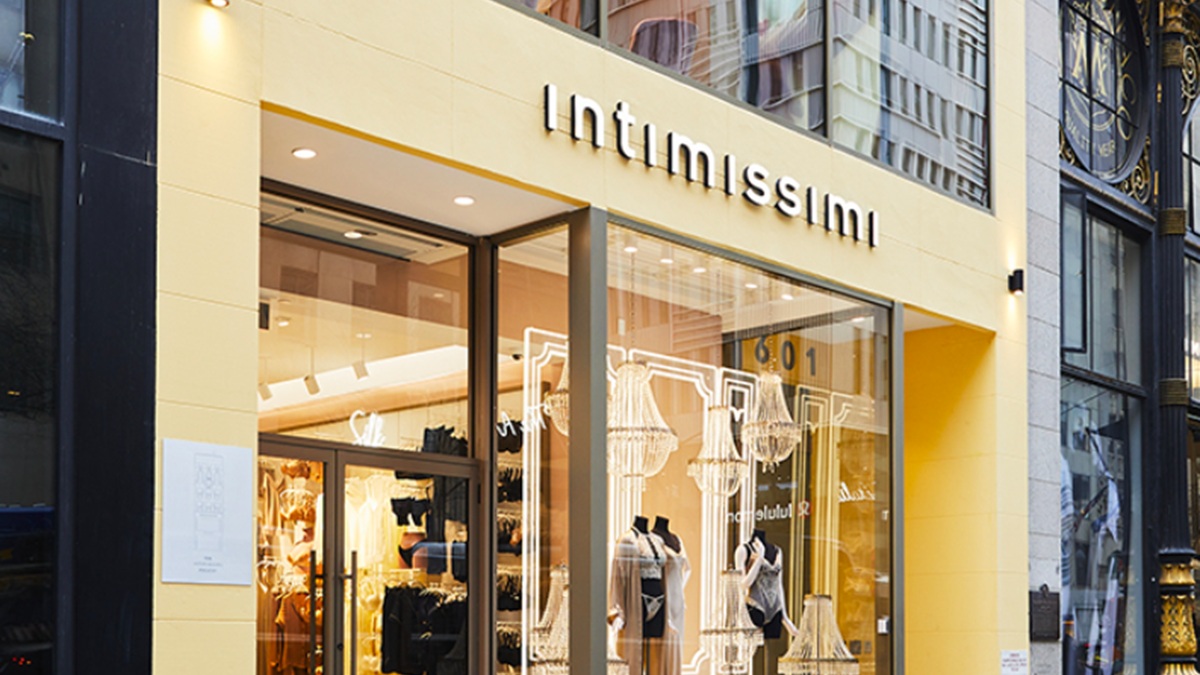
By the first decade, the original idea had mutated into a method: compact single-brand stores, express replenishment and strict control of visual positioning. The model was similar to the Inditex of the 1990s, with the difference that the strength of each outlet did not depend on fast fashion, but on basic assortments with constant rotation.
Oniverse, known as Calzedonia, is a niche specialist and manufacturer by vocation
The new century brought controlled diversification. In 2003, Tezenis was born, which transferred the logic of fast fashion to youth intimate apparel to approach a renewed and novelty-hungry public. Six years later, the group bought Falconeri, a cashmere brand based in Trento, which made it possible to insert noble fabrics, raising the group’s positioning with sweaters for 149 euros, without betraying the promise of affordable prices.
The expansion of brands forced a redrawing of the industrial geography that is part of the Veroniesu’s entrepreneurial tradition. Oniverse maintains four prototype plants in Italy, eight volume factories in the Balkans and six complexes in Sri Lanka, plus a central logistics platform in Verona that can consolidate half a million units a day. The result means that approximately 80% of production is in house and the group retains an Ebitda margin of 22%.

Verticality has also become a sustainable argument. Faced with the challenges of the intimate apparel and swimwear industry to find alternative technical materials or recycling solutions, Oniverse relies on recycled nylon that is spun in Mantua, cashmere is purchased directly from Mongolia and surplus collections are recycled into capsules for emerging markets.
The company’s business model has, to a large extent, to do with the weight of the equipment. For Veronesi, who does not hesitate to defend this argument in each of his speeches, the salesman is the first brand ambassador. Every time the Arena di Verona is transformed into the Intimissimi on Ice show for a figure skating show, opera, a grandstand filled with thousands of sales clerks from all over the world. It also happens when Tezenis organizes a party in Ibiza or Intimissimi renames itself Iuman with great fanfare at the Verona headquarters.
Acknowledgements to star vendors are given before the press acknowledgements. The events function as a convention, catwalk and marketing campaign, but above all they are family ceremonies of a heterogeneous nature that aim to reinforce and thank la forza di vendita for its work. Teams from international markets mingle with celebrities, influencers and journalists, professionals that the Veronesi place at the same level of importance for the media success of their business. This practice has reduced staff turnover in retail to 18%, half the European average, and has cemented a company culture where the cash register is celebrated as much as creativity.
The Veronesis have built a business around spectacular shows and a big family culture
The past decade has been one of refinement. In 2015, the group added to its portfolio Atelier Emé, a bridal brand that exploits the Veronese savoir-faire of embroidery. And already in 2022, the group rescued the niche brand Antonio Marras, a Sardinian designer house, to give itself couture legitimacy and demonstrate that low cost can dialogue with the catwalk.
One of its biggest moves, however, came in August 2023 with the purchase of the Cantiere del Pardo shipyard, producer of Pardo, Grand Soleil and VanDutch yachts. The strategic fit was sealed in December with a new corporate name: Oniverse, Veronesi’s veiled anagram, which aims to encompass intimate fashion, cashmere, wine (under the Signorvino wineries umbrella) and luxury yachting under the same logic of verticality and family control.

For the moment, the numbers back up the maneuver: in 2024 sales rose by 13.5% to over 3.5 billion euros, with Italy contributing 38.5%, the European Union 55% and the rest of the markets 6.5%. E-commerce, meanwhile, already represents 11% of the total and is growing at an annual rate of 23%, while the bulk of turnover continues to be generated by the company’s own physical network and franchised stores.
At the same time, Oniverse is accelerating in the United States and the Middle East. Intimissimi opened a flagship store in Dubai Mall last spring; Tezenis plans to exceed 1,000 stores by 2026 and Calzedonia is testing formats to attract tourist traffic. The current challenges are not minor. The inflation of synthetic materials is putting pressure on margins, and the price war in basic lingerie, with the major retailers or specialists such as Etam or the reborn Victoria’s Secret, is forcing them to innovate without making prices more expensive.
IPO looms over the group’s future
The investment banks insist on the possibility that always haunts the great family empires, but Veronesi repeats that “an IPO would be natural, not urgent”. As of today, the family controls 100% of the capital and enjoys a positive net cash flow. For now, the Veronesis prefer a weekend in the Dolomites to a roadshow with analysts.
Every day, machines in Sri Lanka finish a batch of shiny tights and workers in Forlì weld the hull of a seventeen-meter VanDutch that will soon sail to Saint-Tropez. This contrast sums up the essence of Oniverse: a specialist in specific products that allows itself to elevate its positioning without renouncing accessibility, a family that steers its universe like a captain steers his helm, attentive to the swell but faithful to the course.
If the strategy succeeds, Verona will prove that a five-euro collant can finance a three-million-euro yacht and support one of the most efficient logistics chains in Europe. If it stumbles, the group can always go back to ground zero, where it all began: an industrial building, a hundred circular knitting machines and a franchisee convinced that commerce is, above all, a family affair. In the meantime, the forza di venditas continues to row, sell, animate and give meaning to an empire that continues to speak in the plural every time it announces a new opening.
Related content
Calzedonia Boosts Tezenis Presence in Madrid with Spain’s Largest Flagship
15 dic 2025 - 07:33

Calzedonia Teams Up with Companies to Advance Tights Recycling Initiative
29 sep 2025 - 15:47

Calzedonia goes bigger in 2019: its profit grows 4.7%
27 ene 2020 - 19:26

2019, the year fashion said yes to sustainability with the Fashion Pact
31 dic 2019 - 09:00
Latest news

Swatch Sees 89% Profit Decline in 2025 Amid Tariff Woes and Sluggish Demand
30 ene 2026 - 04:26


Inditex’s Eduard Casabella on Oysho’s Sport Pivot and Growth Through Identity
29 ene 2026 - 18:40
McKinsey’s Gemma D’Auria on Luxury’s Pullback and Fashion’s Resilience in 2026
29 ene 2026 - 18:35