Turbulence in Morocco: Fashion’s Nearshore Hub Faces Social Unrest
The nation’s youth, representing over 40% of the population, are fueling a week-long protest movement that has spread to major industrial cities such as Casablanca, with several hundred arrests already made.

“We don’t want a World Cup, we want healthcare”. Under this premise, the youth of the Maghreb country has flooded the streets of the country during the last week, leading a series of protests, peaceful at the beginning, but which have led to clashes with security forces and have already resulted in several hundred injured and arrested, in addition to the first deaths. With the consequences of the 6.8 magnitude earthquake that devastated the country in 2023 still visible, the demonstrators, grouped under a movement called Gen212, are demanding “immediate” reforms in the health and education system, as well as in the labor market of one of the hubs in the vicinity of European fashion.
With 41% of the population under the age of 25, Morocco’s young people face an unemployment rate that reached 47% in the second quarter of 2025, according to data from the Central Bank of Morocco. Generation Z thus reignites the spark, just as it did in Nepal this September, in Bangladesh in the summer of 2024 or in Hong Kong just after the outbreak of the pandemic, on the streets of a strategic country for Spanish fashion.
The protests, which first broke out in Rabat, the Moroccan capital, and Agadir, have gradually spread to other key cities for the economy such as Casablanca, led by a youth “dissatisfied with the current situation,“ explains the Gen212 movement, which refers to the national prefix, in an open letter published on the Internet. The seed that set the country ablaze was the death in a short time of eight women in a hospital in Agadir, all after having undergone a cesarean section, and which raised the first complaints about the public systems.
Morocco’s youth took to the streets last week to demand improvements in social services
With a population of 38 million inhabitants, Morocco has a Gross Domestic Product (GDP) of $154 billion, and a GDP per capita of $9,100, according to the CIA World Factbook. The economy of the Maghreb country closed 2024 with an increase of 3.2%, an upward trend which, according to data from the International Monetary Fund (IMF), was expected to accelerate. The agency’s forecasts for the country, made in July of this year, pointed to GDP growth of 3.9% and 3.7% in 2025 and 2026, respectively. Inflation, however, could spike in Morocco, with prices expected to rise by 2.2% in 2025, compared to 0.9% the previous year.
Faced with this feeling of abandonment by the population, the movement has denounced some of the latest government decisions, focusing, they say, on the construction of large-scale infrastructure, such as the 2030 Football World Cup, to be held jointly in Spain, Portugal and also Morocco. “The youth of Morocco are no longer just calling for change, they have now taken action,“ the statement explains. In a parallel document, echoed by the press and agreed by the movement through Discord, the platform through which the protests are being organized, Gen212 has also added universal health coverage, improved educational quality or better training and working conditions for teachers to its list of demands.
The country’s government, for the time being, has justified the deployment of security forces, lamenting the escalation of violence. Throughout the week, however, it has also reiterated on different occasions its “willingness” to listen to the country’s youth and bring their demands to the public debate, always, however, through dialogue. Since the beginning of the protests at the beginning of last week, the clashes between police and demonstrators have increased in violence, leading to at least half a thousand arrests by mid-week, more than 300 injured and the first three deaths.
The protests have already resulted in hundreds of injuries and at least three deaths.
Morocco, center of nearshoring
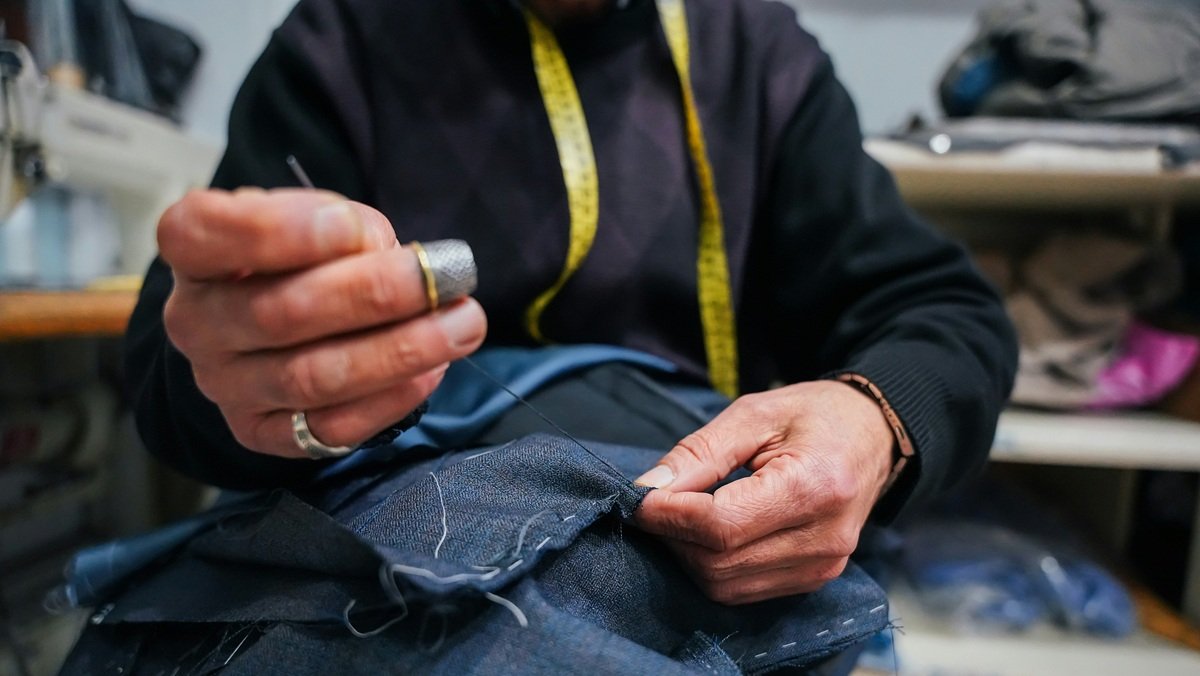
Although the unrest has not yet spread to the industrial fabric, the student protests could destabilize fashion sourcing. Along with Turkey, Morocco stands as the main nearshoring supplier for European fashion giants. In total, Morocco exported fashion worldwide worth $5.9 billion in 2023, according to the latest available data from Harvard University’s Atlas of Economic Complexity, up from $5.1 billion the previous year. Of Morocco’s total foreign sales, which stood at $67.2 billion at the end of the year, fashion accounted for 8.8% of the total.
Spain remains the main customer of the textile sector in the country, destination of 47.7% of textile exports from the Maghreb country in 2023. France is in second position, although with a much lower share of 12.11%, highlighting the strategic importance of Spanish fashion in the country’s textile industry. The ranking is completed by Germany, with a share of 6.6%, the United States and Poland, with another 5.5% in both cases.
In the opposite direction, Morocco bought textile and fashion in 2023 for a value of 5.5 billion dollars, with Spain again in the lead, with 29.8% of the total. In this case, China comes close to the top spot, as the second largest textile exporter to Morocco, with 24.1%. Turkey (10.5%), Italy (6.5%) and France (6.5%) complete the top of origin of Moroccan textile imports.
Related content
Leading the Charge: Bangladesh’s Dominance in Cotton Imports
19 sep 2025 - 07:19

Birkenstock projects double-digit growth through 2028 with renewed strategy
29 ene 2026 - 11:16

Levi Strauss Boosts Profitability: Dodges Tariff Impact and Triples Earnings
29 ene 2026 - 11:15
H&M keeps its finger on the pulse and earns 4.6% more at fiscal year-end
29 ene 2026 - 11:10
Latest news
Birkenstock projects double-digit growth through 2028 with renewed strategy
29 ene 2026 - 11:16
Levi Strauss Boosts Profitability: Dodges Tariff Impact and Triples Earnings
29 ene 2026 - 11:15
H&M keeps its finger on the pulse and earns 4.6% more at fiscal year-end
29 ene 2026 - 11:10

Gordon Brothers Takes Over LK Bennett, Sets Stage for Global Expansion
28 ene 2026 - 12:33