Fashion Forward: What Will the Industry Envision in 2026?
If you, as a fashion business leader, were to engage in strategic discussions with your board or establish a geopolitical advisory group, which deep-thinking components would anchor your dialogue?



The Finnish neuroscientist and philosopher Antti Revonsuo formulated in 2000 the Threat Simulation Theory, one of the most influential theories on the evolutionary function of dreams. According to this scholar, we dream to simulate real threats and practice effective responses without physical danger. Hence, most dreams include some kind of problem, anxiety or conflict. One of the most important aspects of this theory of why we dream is that dreaming is not a by-product of rest, but a function selected by evolution: individuals who dreamed more effectively about threats improved their reflexes and defense strategies and thus increased their chances of survival. In a world where nightmares become reality, deep thinking is today a key to survival.
Last July, Inditex announced during its general shareholders’ meeting the creation of an international advisory board made up of experts and leaders of renowned prestige who will be responsible for advising the board of directors and the group’s management on geopolitical issues. The new body is attached to the audit and compliance committee of the board of Zara’s parent company.
This committee, chaired by José Luis Durán and made up of five other members of the board of directors of Inditex, has among its functions to ensure that risks are maintained and managed within the accepted tolerance thresholds, having to reassess, at least annually, the most significant financial and non-financial risks, their level of tolerance and the measures planned to mitigate their impact should they materialize. It must also promote a corporate culture aimed at ensuring that risk is a factor taken into account in decision-making at all levels of the company and the group. In other words: Inditex’s brain must generate the right nightmares.
Inditex’s decision, taken after a long sequence of disruptions that have marked the global economy (from Covid-19 to the war in Ukraine or the new US tariff policy), is innovative in Spain, where there is little tradition of companies implementing this type of commission. It is consistent, however, with an increase in companies’ concern about geopolitics. According to a report by EY, from 2021 to 2025, from 40% to 84% of the total number of company boards of directors regularly analyze the impact of political risks on their companies’ strategies.
Inditex announced last July the creation of an advisory committee on geopolitics, which will guide the Spanish group in identifying strategic risks and aspects such as demographics or new social trends
Inditex’s new advisory body will not, however, focus only on geopolitics or international economics, but will also address “other global issues, such as demographics or new social trends,“ according to the group.
Who will form the new advisory board that will help Inditex’s leaders to analyze major political and social phenomena on a global scale is not known and it is not convenient to know. Sources in the sector point out that they will probably be people who were already on the Spanish group’s contact agenda, with networks and knowledge in key countries at present. This is a sort of private Bilderberg Club, referring to the meeting of notables from around the world that defines itself as a forum “for informal discussion on major issues”.
In the 2025 edition, which was attended by figures such as Ana Patricia Botín, president of Banco Santander, or Pablo Isla, chairman of Nestlé and former chairman of Inditex, issues such as Ukraine, the transatlantic relationship, AI or depopulation and immigration were discussed.
Has the world gone mad?
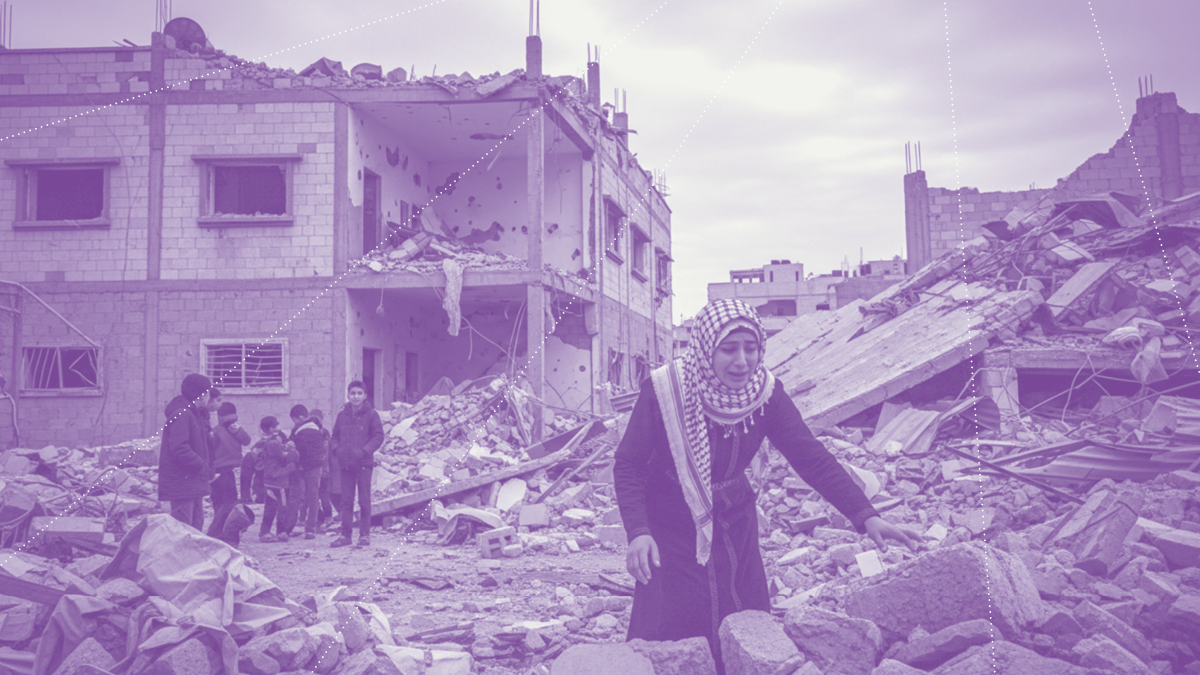
Black swans (such as Covid-19), gray rhinos (such as global warming), unexpected wars (such as the one in Ukraine) and technological threats of all kinds have become part of the international news. And they have done so to such an extent that entities such as the International Monetary Fund (IMF) refer to the current context as one of “persistent uncertainty”. In a phrase, it seems as if the world has gone mad. Has it?
Marc Canal, senior research fellow at McKinsey Global Institute, relativizes the exceptionality of the moment. “What is important is to understand that we are in a new era: there are changes every twenty or thirty years in which we enter a new phase after an earthquake in which certain things happen,“ he says. In this sense, he points out that 35 years ago the fall of the Berlin Wall “was an impressive earthquake in terms of the opening of the world and globalization, a change in many aspects”, but he recalls that the shock experienced in the sixties was “much more similar to the current one due to the level of uncertainty”.
“There is a recency bias, whereby the most recent is the most important, but we have been here before and it is no more difficult today than before,“ adds the expert. The difference, in his opinion, is that now “we are in a world where there is much more information, but also more analytical capacity, so even if we are able to separate the signal from the noise it can be easier to manage, but it is easy to get lost in the noise,“ he adds.
Achim Berg, a former McKinsey consultant and expert on the fashion business, agrees that the world was already volatile ten years ago, but stresses that “the unpredictability of events has increased.“ “It’s too complicated, too big and subject to too much change for one CEO alone to manage it all,“ he exclaims.
The World Economic Forum urges companies to gain “geopolitical muscle”, but also to engage in dialogue with governments to maintain the international commercial order
Angel Saz-Carranza, director of Esade’s Centre for Global Economy and Geopolitics (EsadeGeo), agrees that it is more difficult to understand what is happening today than it was thirty years ago. One is that we are more internationalized than 30 years ago, and that means we are exposed to many more territories and actors, which makes everything more complex. Secondly, Saz-Carranza points to a much more sophisticated digital and analog logistics technology that interconnects us even more: “that is, there are not only more players, but more links and also those links operate much faster.“ “Finally, we have gone from an environment with stable rules agreed upon by all to one without rules, in which actors, especially politicians, have more and more room for maneuver because they are no longer subject to those rules.“
The recipe for dealing with a world like today’s does not, in his opinion, involve predicting what is going to happen, an exercise that “has become useless”, but rather having mechanisms that make it possible to incorporate this uncertainty. “Having thought beforehand what the vulnerabilities of your business are, knowing where they are, what happens if they materialize; if you carry out a relatively systematic, constant and rigorous reflection on your business, when there are changes, in principle that allows you to be quicker and more skillful when it comes to reacting than your competitors,“ he reflects.
According to Luis Lara, managing partner of Retalent and professor at Isem Fashion Business School, the key issues discussed at board meetings are a reflection of the world. The expert uses the example of the most relevant issues in 2015, 2020 and 2025: ten years ago, the boards of directors of companies in any sector, also in the fashion industry, had profitability and value creation; financial monitoring and compliance as key axes; organic and, above all, inorganic growth (at a time when the sector was closing deals such as L Capital’s entry into El Ganso or the sale of Pronovias); cybersecurity and risk management.
In 2020, with the irruption of Covid-19, everything blew up and priorities changed completely: the focus was then on commercial, operational and financial resilience, because the key was to survive; urgent digitization, at a time when most companies were far behind; sustainability and purpose, two words that positioned themselves at the top of mind and promised to be very relevant in the future; talent health and crisis and opportunity management. In 2025, three subjects stand out above the rest, according to Lara: geopolitical uncertainty, talent and technology.
AI is set to change the labor market, but it may also condition consumer confidence in the face of fears of massive job destruction
If you, as the leader of a fashion company, were in the position of having to debate in your board of directors, what would be the deep thinking elements in your meeting? In addition to the three already mentioned (geopolitics, talent and technology), the experts consulted add two other major disruptive elements that will certainly impact the short, medium or long-term future of fashion companies. These are the regulatory environment and taxation, and demographics and social changes, also influenced by the geopolitical context that the planet will be breathing in 2025.
Permacrisis and business activism
“Before the war in Ukraine,“ reflects Lara, “fashion could sell anywhere in the world; geopolitics has taught that a market can suddenly disappear or mutate overnight. Russia’s cancellation in the West after its invasion of Ukraine is the clearest example of this kind of unexpected change, which probably had more negative impact on international fashion companies (forced out) than for Russian ones, which took over (and in many cases, control of the stores) they left behind.
The word multipolarity is on the lips of all analysts of current international politics, with China as a major counterweight to the United States, which has decided to look inward with America First. But the new world order that is taking shape in the present decade does not renounce the interconnectedness that decades of economic globalization have brought about.
“Although the world is not de-globalizing, it is dividing into blocs,“ warns the McKinsey Global Institute researcher. “The physical distance of trade has not gone down, countries continue to trade with countries around the world, but they have distanced themselves geopolitically, that is, countries trade more with countries with which they are geopolitically similar; that is a sign of friendshoring,“ details Canal.
Lara, who points to an eventual Chinese invasion of Taiwan as a major geopolitical risk for fashion, argues that “we have gone from a global market since the 1990s to a fragmented world, which is bad for fashion.“ “We are going to a world of imperfect globalization, which impacts supply and demand, with broken supply chains,“ he adds.
Demographic changes will alter the fashion market. By 2050, 40% of spending in Spain will be by people over the age of 65, compared with 25% today
For the EsadeGeo director, companies with a globalized supply chain are more obliged than ever to have in-depth knowledge about it, both upstream and downstream. “Knowing where your own input comes from is important to protect yourself from possible legislation, for example,“ he points out.
For Achim Berg, another aspect that has changed is that today Inditex, H&M or Mango are the new Coca-Cola, having increasingly become global players. “This means that what moves affects you, and tariffs are an example: if Trump imposes a 50% tariff on India, it not only means that as a global company you cannot send goods from one country to another, but also that Indian suppliers will focus more on Europe, because they have empty capacity to fill.“ “There is always an obvious and direct impact, but also implications that are not so easy to see,“ he warns.
The flexibility in supply chains that the current context leads to often means more costs, warns Berg, who also cautions that “you have to be careful about what and where to make big investments, because everything has to be done carefully.Berg also warns that “you have to be careful where and what to invest heavily in, because everything is much more unpredictable and volatile, and it’s not so clear where the world is going to go in the next ten years.
The operations areas are now in a strategic position in fashion companies, having to provide knowledge of the flow of goods and contacts and the ability to change them at full speed when necessary. But, as a highly globalized sector and therefore more exposed to geopolitical dysfunctions, the sector must also play a more important role in the national and international political conversation.
In an article last September authored by executives from PepsiCo and commodities giant Trafigura Group, the World Economic Forum not only highlights the importance of companies having the “geopolitical muscle” to respond to operational realities that may arise in the global marketplace, but also the importance of companies having the “geopolitical muscle” to respond to operational realities that may arise in the global marketplace. to respond to operational realities that may arise in their supply chains, but also urges companies to “participate in the dialogue” on international economic policy, in which “governments must consciously involve them”. “Companies that develop strategic alliances with entities in stable jurisdictions in countries that strike a balance between global competitors,“ says the World Economic Forum, “can help build resilience in the face of great power dynamics and broader geopolitical tensions.
In this new international context, notes the director of EsadeGeo, an industry like fashion must organize itself. In his opinion, the sector “has not lobbied because the political and international trade winds were in its favor, but now it is much more vulnerable to changes in international trade policy because it is so internationalized and globalized”.
Regulatory environment and taxation
If in recent times it has been proven that geopolitics can close a market overnight, the sector has also seen other nightmares come true, such as new taxes and a global environment of regulatory uncertainty, which is particularly bleeding in the European Union. The old continent has not only left on standby a major economic and political integration, necessary to be a relevant player in the global geopolitical context, but has also demonstrated its negotiating weakness and lukewarmness in the face of its convictions and ethical commitments. It has done so by accepting tariffs of 15% on all its exports to the United States with little confrontation, on the one hand, and with an erratic change of course in its ESG-related policies, on the other.
“Eighteen months ago everyone expected ESG regulation to become stricter, but there has been a change in policy direction, to the point where progress has come to a complete halt in the U.S. and partially in Europe; And to this whole mix we now have to add tariffs and the end of de minimis, which is affecting not only Shein, but all world trade,“ summarizes Achim Berg.
In Europe, the stop-clock policy on sustainability-related legislation has left companies out in the cold, as they have to prepare for the entry into force of extended producer responsibility or the digital product passport with hardly any regulatory clarity.
In the era of sustainable transformation and management based on grandiose intentions, regulatory uncertainty threatens to push the industry into a wait & see attitude that inevitably leads to a loss of leadership.
Before, notes Saz-Carranza about European regulatory policy, “we could incorporate a regulation and anticipate that in our neighborhood, and even globally, it would be assumed as good practice and applied; that is no longer the case.““Now what remains to be seen is whether Europe is willing to fight to maintain regulatory autonomy in its own market, or whether, instead, every time China or the United States protests about a regulation they consider excessive or discriminatory, it will back down or not.“
“If you think your job might be at risk, you’re not going to spend your savings on buying a handbag, as an aspirational customer, you’re going to save it and maybe spend it on something smaller,“ develops Achim Berg
Technology: from AI to cybersecurity
Technology is a disruptive element that, rather than appearing as a novelty, remains (in continuous mutation) at the top of mind of the fashion industry. The difference is that now it is not about digitizing to improve operations or communication or consumer outreach, but about understanding how new tools can lead to major changes from a social and economic point of view and to traumatic transformations in both the operations and business models of companies.
But if international politics constantly manufactures elements of uncertainty for the fashion business, technological transformation does the same. “Everyone talks about AI but few know what it is and how to use it, when we are at the beginning of one of the biggest changes for fashion, because it is impacting the entire chain, from design to planning, to sourcing and omnichannel,“ notes Berg.
For the EsadeGeo director, “there is still a lot of doubt as to where the added value of AI lies, whether the big models will be commoditized and therefore the added value will be in the application.“ “It is clear that in Europe we have lost the AI race, but we have to be alert: the race is not over today nor are we clear how the different companies are going to finish, there is a lot of uncertainty about it,“ he adds.
The McKinsey expert agrees that Europe has fallen behind in the technology race and points out that one consequence of this is that European companies are on average less profitable than those in the United States, they find it harder to grow and this has consequences for their ability to export. But just as Saz-Carranza points to a path for optimism, recalling that “the sands of the future are related to energy, biotechnology, pharmaceuticals, construction, etc., and here Europe is powerful, there are enormous opportunities and it is good at it”.
Another derivative of the arrival of AI is the concern it generates in the consumer. “For the first time in a long time,“ says Berg, “we are facing technological changes that the average consumer doesn’t understand: AI may be a great opportunity, but for the average person it is a threat, it is the next technological revolution, and they are not clear how it will affect them in terms of their job security or their income. “People are not being as positive about their future in relation to technology, and what used to be a new iPhone, which was going to make your life easier, now what it creates is some fear of being replaced by technology,“ he adds.
“If you think your job might be at risk, you’re not going to spend your savings on buying a handbag, as an aspirational customer, you’re going to save it and maybe spend it on something smaller,“ Berg develops.

The war for talent
In a world that almost no one understands and with an unpredictable and undecipherable future, the war for talent may become the most vicious battleground among fashion companies. With the AI revolution in its early stages, indications are that the labor market around the world will be transformed with fewer low value-added jobs and more critical positions determining how to efficiently utilize disruptive technologies such as generative AI.
Retalent’s managing partner frames the war in terms of generational change: “the baby boomer and generation X generations have reached the time to retire and we have to find replacements for them, but talent is increasingly scarce and the new generations do not fit into the labor market”. High turnover and difficulty in finding profiles that meet the demand of companies are forcing the sector, according to Lara, to engage in a war for talent that has already been witnessed in industries such as technology, and which ends up inflating the labor costs of managers and technicians in certain areas.
The keys, in his opinion, will lie in “how companies adapt to attract talent in a sector which, moreover, is a great red ocean that is losing attractiveness in the face of other, stronger sectors”, and in identifying internal talent in order to avoid entering a compensation war.
Pointing to a practice that may become general practice in the economy, the big consulting firms have already slowed down the hiring of junior profiles as a result of the automation of some functions through the automation of theThis is a move that, according to experts, will end up making it more difficult to find talent in these companies’ talent pool.
For Canal, “if a company stands still and does not think about what the workforce will be like in ten years, what that talent will be like and where it will come from, in a few years it will find itself with a labor market that does not meet its needs and it will not be able to operate in the same way”.
The recent protests in Morocco, led by Generation Z, are a warning to navigators of the consequences of the rupture of the generational pact: today’s children are not living better than their parents.
Demographics and social change
The movement of tectonic plates in the uncertain world in which fashion moves will also generate in the coming years some areas of friction with inevitable consequences: demographics. “The world,“ describes Luis Lara, “is incessantly listening to the ticking of a time bomb, that of the aging population: it will explode in fifteen years because a much larger part of the population will focus its spending on living and health. “Who will buy fashion then?“ he asks.
Canal adds that “the world is going from a demographic dividend, where demographics are helping us and adding people to the labor market every year, to a demographic dividend, where demographics are helping us and adding people to the labor market every year, everything isgoing inour favor,“ he says.Everything goes in our favor, to a world with much lower birth rates, with an aging population and more strains on public systems”.
Added to this is a change in consumer habits in the West, which, as Berg points out, is raising their savings levels. “What that tells us is that the problem is not so much money but consumer confidence, which is not willing to spend as much now as it used to: the global economy is volatile and sentiment is low; having a war in Europe also has a negative impact on the consumer, and generates insecurity,“ he explains.
However, the McKinsey expert stresses the difficulty of understanding how demographic changes will affect consumption. It is known, Canal points out, that if there are no abrupt changes in migratory patterns, in 2050 the over-65s will account for 40% of consumption in Spain, compared to 25% today. “But we don’t know what this person will consume: if you had deduced 50 years ago that you would sell many more hats because older people wear many hats, you would have been wrong,“ he says.
In addition to the uncertainty caused by the introduction of tariffs, the changes in European ESG policy are creating legal uncertainty for companies
But beyond the propensity to spend, a deeper social disruption is on the analysis charts of international think tanks in the wake of a growing condition that worries many leaders in the West: an increasingly unequal distribution of wealth.
In Morocco, since the end of September, Generation Z has been at the center of an unprecedented wave of protests in the country in response to unease over factors such as unemployment, the precariousness of public services and corruption. A year earlier, a student movement led to the overthrow of the Bangladeshi government. They are a warning to navigators: according to Lara, “the generational pact has been broken, as since World War II each generation could live better than the previous one, but Generation Z and the Millennials live worse than their parents”. In other words, we are going to a world with many social differences and what fashion likes is the middle class.
And in all this mess...
The next meetings of the board of directors of a fashion brand must also have on the table a systemic risk that is partly a compilation of all the previous ones. Faced with a future marked by uncertainty, will fashion continue to appeal to consumers, to workers or to regulators? How will it stem the decline in the weight of consumer budgets that is already occurring in mature markets?
At a time when the global war is very much a culture war, Gap has added Jody Gerson, president and CEO of Universal Music Group, to its board of directors. This is probably the first of more moves in which fashion will look for elements of connection with a consumer who may end up settling into disaffection with a sector that, if it does not change with the world, may find itself out of step in an order of priorities that has yet to be defined.
The deep thinking emanating from the sector’s think tanks, necessarily diverse and with agents from outside the industry, can be, in this sense, a generator of change doctrine for fashion. A constant, intelligent and audacious change that fashion must lead in order to continue to be relevant.
Related content

OECD Predicts 2026 as Year of Full Tariff Impact Under Trump Policies
6 oct 2025 - 06:22

Inditex Stumbles: Five Key Pressures Driving Slowdown
12 jun 2025 - 00:00

Global Apparel Trade Rises 7% in First Half of the Year, WTO Reports
7 oct 2025 - 16:49
Birkenstock projects double-digit growth through 2028 with renewed strategy
29 ene 2026 - 11:16
Latest news
Birkenstock projects double-digit growth through 2028 with renewed strategy
29 ene 2026 - 11:16

Levi Strauss Boosts Profitability: Dodges Tariff Impact and Triples Earnings
29 ene 2026 - 11:15
H&M keeps its finger on the pulse and earns 4.6% more at fiscal year-end
29 ene 2026 - 11:10
Gordon Brothers Takes Over LK Bennett, Sets Stage for Global Expansion
28 ene 2026 - 12:33