European Parliament Eases Regulations on Transparency and Sustainability
Following a decisive vote, the European Parliament has greenlit the Omnibus I legislative package, focusing on transparency, sustainability, and corporate responsibility, with 428 members in favor against 218 dissenters and 17 abstentions.
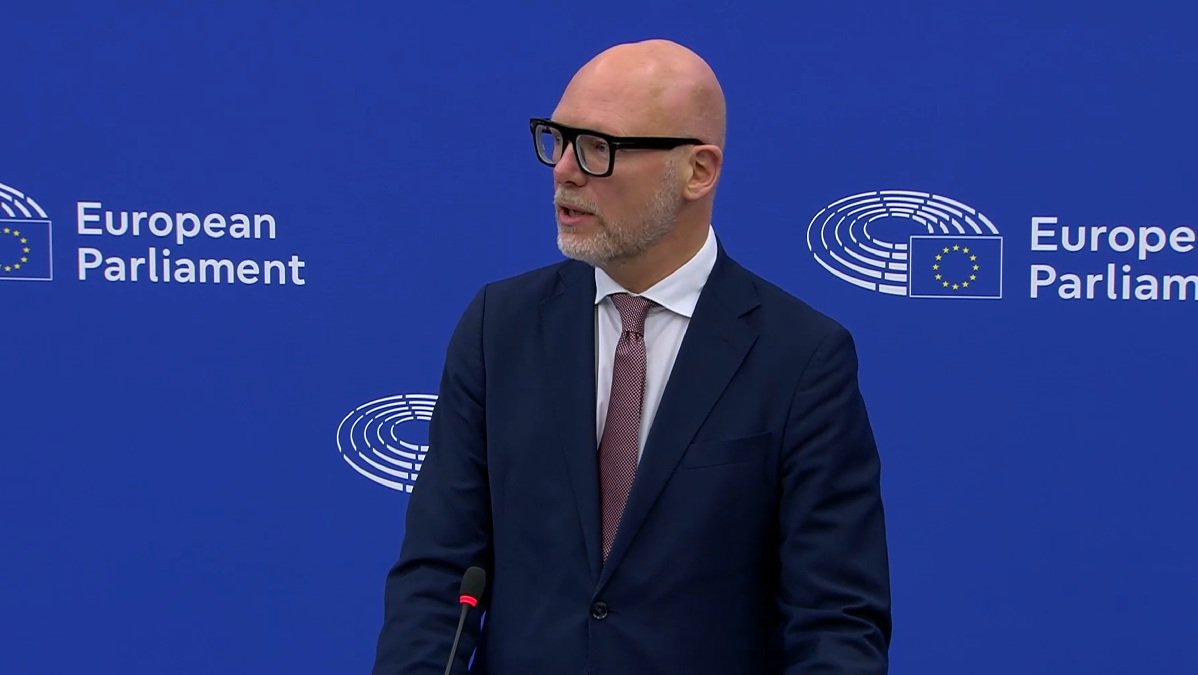

The European Parliament has approved the so-called Omnibus I with a very large majority. The legislative package includes the Corporate Sustainability Reporting Directive (Csdr), the Corporate Sustainability Due Diligence Directive (Csddd) and the European Taxonomy, and involves a lowering of requirements to facilitate implementation and reduce the number of companies affected.
In plenary session, the legislative initiative on transparency and sustainability received 428 votes in favor, 218 votes against and 17 abstentions. Its implementation, however, was almost closed after the agreement between the European Commission and the Council in recent weeks and, above all, after receiving the approval of the Legal Affairs Committee (JURI) of the European Union (EU) last week.
The agreed text lowers certain sustainability transparency and due diligence requirements for European companies, in line with the agreement reached between European institutions to “offer greater predictability to the European business fabric and less bureaucracy”, said Jörgen Warborn, MEP for Sweden and rapporteur of the Omnibus I package, at the press conference following the vote.
The legislative initiative on transparency and sustainability received 428 votes in favor, 218 votes against and 17 abstentions
The Corporate Sustainability Reporting Directive, known as Csdr, only requires social and environmental reporting for companies in the European Union (EU) that employ on average more than 1,000 people and have an annual net turnover of more than €450 million.
For non-EU companies, the net turnover threshold rises to €450 million generated in the EU for sustainability reporting purposes. As far as Csddd is concerned, only companies with more than 5,000 employees and €1.5 billion in annual net turnover will be required to comply with the legislation on corporate sustainability due diligence.
This measure aims to minimize the number of companies impacted by the three European directives on sustainability transparency, due diligence and taxonomy. Only between 5% and 8% of European companies will be affected. The European Commission estimates that the impact of Omnibus I on cost savings for EU companies will reach €4.5 billion.“This will allow them to focus on their business and competitiveness and not on bureaucracy,“ said Commission sources.
Companies subject to the revised due diligence rules are also relieved of the need to prepare a transition plan to make their business model compatible with the Paris Agreements.
“The parliament has also accepted the commission’s proposal as regards civil liability,“ Warborn added. “The Parliament and the Council agree that there will be no harmonized civil liability,“ he has argued. In other words, companies will still have to answer to national authorities, but they will not be held liable at European level. Finally, in the event of non-compliance by a company, the amount of fines will also be reduced to 3% of the company’s worldwide net turnover.
“Most of the fines were higher than we expected,“ said Jörgen Warborn. Although Omnibus I has not been without its detractors, who saw in this lowering of conditions a step backwards in terms of sustainability, which is aggravated by a new delay in the implementation of the sustainability directives by companies, now set for 2029. As the MEP concluded, the Left, the Greens and fourteen S&D MEPs voted against.
Allegations of conflict of interest against Warborn
Jörgen Warborn, rapporteur of Omnibus I, is also president of SMB Europe (SMEs Europe), an aspect that has been denounced by various civil society organizations, considering that there may be a conflict of interest. This fact has been included in a letter that Transparency International has sent to the European Union’s Advisory Committee.
When asked by a journalist at the press conference about this issue, Jörgen was surprised and answered: “I have been president of this organization for a long time. It is an EPP-related organization, just as there are EPP Women and EPP Youth. We do not fight for specific business interests, what we want is a better business environment for everyone. I think this is a political complaint. People who didn’t like the result and tried to influence today’s vote.
Related content
European Parliament Targets Shein and Backs France’s Platform Suspension
26 nov 2025 - 14:38
EU Parliament Advocates for Expansion of Digital Passport to All Consumer Goods
21 oct 2025 - 15:32
Swatch Sees 89% Profit Decline in 2025 Amid Tariff Woes and Sluggish Demand
30 ene 2026 - 04:26

Latest news
Swatch Sees 89% Profit Decline in 2025 Amid Tariff Woes and Sluggish Demand
30 ene 2026 - 04:26

Inditex’s Eduard Casabella on Oysho’s Sport Pivot and Growth Through Identity
29 ene 2026 - 18:40
McKinsey’s Gemma D’Auria on Luxury’s Pullback and Fashion’s Resilience in 2026
29 ene 2026 - 18:35