Sarda Marks 60 Years with an Unforgettable Summer Showcase
Legacy lingerie brand Andrés Sardá has successfully navigated the critical repositioning it embarked on a year ago. With a refreshed approach, the brand is attracting a younger clientele, and the numbers are promising.



For Sarda, the former Andrés Sardá, 2025 will be a summer to remember. In its more than sixty years of history, the exclusive lingerie firm has experienced crises, generational changes and even a corporate operation. But the past June, July and August have been a litmus test for a risky move: repositioning to attract a younger clientele without losing the classic one. For the time being, the figures and notoriety are in line with the Catalan company, which the Belgian Van de Velde group is using to rejuvenate its entire offer.
It is said that the mantilla that Jaqueline Kennedy wore in 1962 in her audience with Pope John XXIII at the Vatican was Spanish. It was signed by a company from Barcelona called Sarda, which the businessman and textile engineer Andrés Sardá had started together with his brothers, based on their family background as lace manufacturers. But in October 1962 the Second Vatican Council exempted women from wearing mantillas in church, which forced the company to reinvent itself: that same year Eurocorset was born, specializing in lingerie.
As the first importer of lycra in Spain, Andrés Sardá managed to position his lingerie designs, daring for the society of the sixties, in capitals such as Paris. Driven by groundbreaking campaigns photographed by names such as David Hamilton, the company moved into swimwear in 1970, launched the Risk and University brands and, in 1986, the Andrés Sardá brand was officially born, positioned in the luxury segment of lingerie.
Catwalk shows (a rarity until Victoria’s Secret took wing), high street and multi-brand stores and an international presence led Eurocorset to achieve a turnover of 13 million and a gross operating profit (ebitda) of one million euros in 2007, figures that attracted the attention of Van de Velde, then a giant of intimate apparel, owner of brands such as PrimaDona and Marie Jo. In 2008, the Belgian group took control of Eurocorset for €14.6 million.

Although the company’s decision-making center was moved to the group’s headquarters, the heart of the company remained in Barcelona. Andrés Sardá’s design teams remained in the Spanish city, led first by the founder and then by his daughter, Núria Sardá.
After more than sixty years of history, the time has come for Andrés Sardá to renew itself. In 2023, Liesbeth Van de Velde, a member of Van de Velde’s board of directors, proposed to Núria Sardá the repositioning of the Spanish brand. The new generations of consumers have grown accustomed to the speed, prices and communication styles of large retail groups and brands like Fenty, while the multi-brand channel, the traditional lingerie channel, is far from their shopping circuits.
Andrés Sardá then began a process of repositioning, with a very visible expression: the brand was stripped of the Andrés and the tilde to remain only as Sarda, precisely the name with which the founder had been introduced in the business world. The new Sarda, which was launched in August 2024 for the autumn-winter season, is now accompanied by a striking and characteristic yellow corporate color.
Andrés Sardá began a year ago a plan to rejuvenate its positioning, touching product, prices, image and distribution
The product underwent a refocusing betting on easier and more comfortable models, which adapt to different bodies with cups that reach up to the F in some models. With production concentrated in Tunisia (in Van de Velde’s own factory) and with raw materials from Spanish and French companies, Sarda has adapted its prices (with starting prices of 70 euros for a bra and 30 euros for panties) and has accelerated its timing, with drops that refresh the product during the traditional seasons.
With the aim of reducing the age of its clientele, the company focused all its communication on women in their twenties and above, whereas until then the brand’s target was women in their thirties and above with high purchasing power. After the initial shift, Sarda has relaxed its communication to reach out to younger women without losing those who until now were its customers.
The brand’s distribution mix has also changed. The two stores with which the brand operated until now (located in Madrid and Barcelona) have been transferred to a client, but the brand has strengthened its online presence with the entry into different marketplaces. In addition, it has a network of 500 multi-brand customers in Europe, the Middle East, Japan and the United States, as well as a presence in the Rigby&Peller stores, owned by Van de Velde.
From Barcelona, Sarda leads the areas of design, marketing and commercialization in Spain. Van de Velde is in charge of production, logistics and international sales. The brand plans to increase its distribution network, pending the plan drawn up by Laura Pérez Ferrer, who joined Van de Velde last April as chief sales officer and member of the management committee.
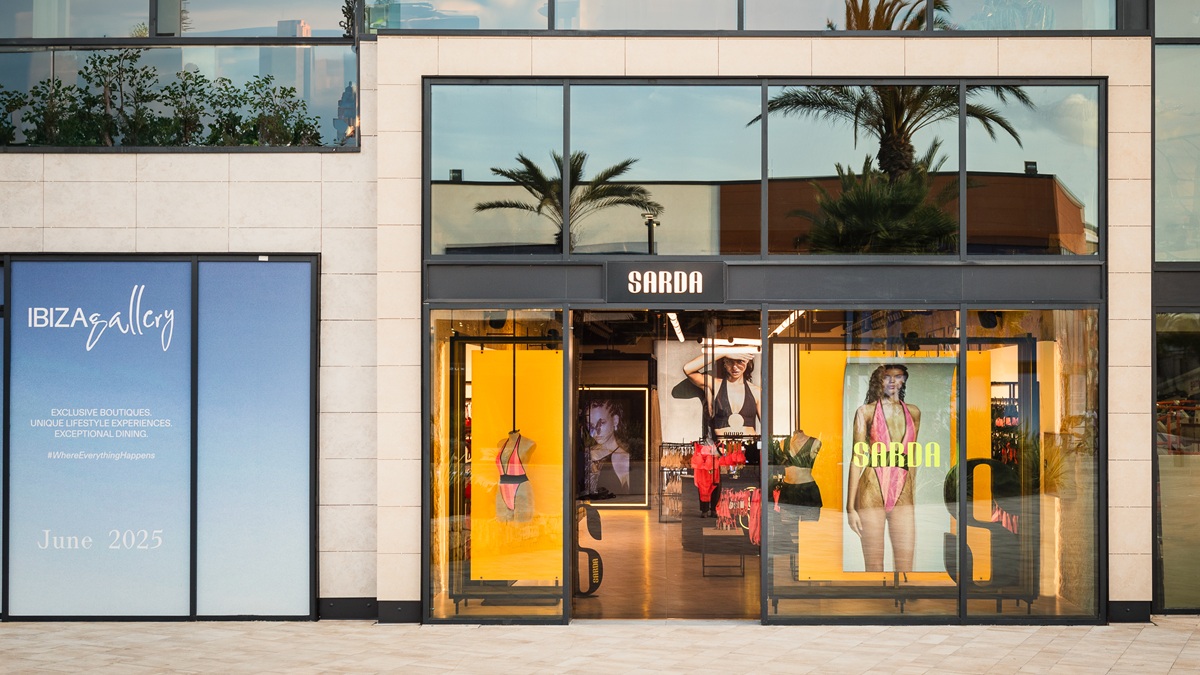
First results
“One year is too little time to see the results of the change, but we can already learn some lessons,“ explains Núria Sardá, who, from Barcelona, leads a team of thirty people focused on the areas of design, marketing and commercialization in Spain. The executive highlights, for example, the good performance of the bathroom in the last summer, as well as the “positive reception of some reinvented basics”, i.e. classic models adapted to the present time.
Sarda is also getting the new customers attracted by the change in positioning to come to the physical store. “We are bringing them into the traditional store, the multi-brand channel and Rigby&Peller, thanks to the marketing investment we are making,“ she says.
With a commitment to partnerships that will see the light of day in the coming months, sales have already begun to rise. Without specifying specific figures, Sardá points out that, despite the price reduction, the increase in units sold represents a higher total volume. The Spanish brand is becoming the tool Van de Velde is using to rejuvenate its public and revitalize its sales, which have been weakened in recent years. The Belgian group closed 2024 with sales of €206.4 million, 2.3% less than in 2023, and an ebitda of €50.6 million.
Related content

Van de Velde’s ebitda shrinks 10% due to Sarda repositioning
27 ago 2025 - 07:22
Birkenstock projects double-digit growth through 2028 with renewed strategy
29 ene 2026 - 11:16

Levi Strauss Boosts Profitability: Dodges Tariff Impact and Triples Earnings
29 ene 2026 - 11:15
H&M keeps its finger on the pulse and earns 4.6% more at fiscal year-end
29 ene 2026 - 11:10
Latest news
Birkenstock projects double-digit growth through 2028 with renewed strategy
29 ene 2026 - 11:16
Levi Strauss Boosts Profitability: Dodges Tariff Impact and Triples Earnings
29 ene 2026 - 11:15
H&M keeps its finger on the pulse and earns 4.6% more at fiscal year-end
29 ene 2026 - 11:10
Gordon Brothers Takes Over LK Bennett, Sets Stage for Global Expansion
28 ene 2026 - 12:33