

Circ Signs Deal to Produce Its Recycled Fiber at Selenis Facilities in Portugal
The U.S. next gen company is engaged in a plan to increase the industrial scale of its recycled polyester manufacturing, and will also start up its own factory in France in 2028.

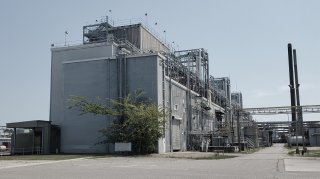

Circ gains production volume. The U.S. next gen materials company will use the facilities of the Portuguese company Selenis to scale up production of its recycled polyester fiber. Circ thus joins Syre, another next gen materials company, which is also working hand in hand with the Portuguese industrial company.
“This industrial collaboration will allow the company to take advantage of Selenis’ infrastructure and know-how in the transformation of recycled polyester monomers to high-quality polyester,“ the U.S. company explained. Circ has also emphasized that this alliance results in a scalable solution that is easy to introduce into supply chains.
Specifically, both companies have agreed that “thousands of metric tons” of Circ’s production will be carried out in Selenis’ infrastructures. Thanks to the agreement, the U.S. company will be able to start producing its recycled fiber even before the start-up of its own plant scheduled for 2028.
Circ will thus increase its production before starting up its own mill
In mid-May, the next gen company officially announced plans to build its first industrial-scale plant, which will be located in northern France. Circ plans to complete construction in three years, and to reach an output of up to 70,000 metric tons.
“While the rest of the world was focused on the recycling of packaging, our strategy since 2022 has been focused on the circularity of textiles,“ celebrated Eduardo Santos, global strategy director of the Portuguese company. This is not, in fact, Selenis’ first collaboration in the next gen materials sector.
At the end of last year, Syre also teamed up with the Portuguese industrialist to start fiber production on a larger scale. In the case of the Swedish company, the company agreed to use Selenis’ facilities in the United States, to which it will add a new area to the existing infrastructure.
Related content

Aeffe Restructures: 221 Layoffs Announced Ahead of Holiday Season
5 dic 2025 - 17:11


Victoria’s Secret Surges Ahead in Q3: Revenue Up 9%, Losses Down 43%
5 dic 2025 - 13:43

Estée Lauder Bolsters Portfolio with Fresh Brands Amid Business Overhaul
5 dic 2025 - 13:31
Latest news
Aeffe Restructures: 221 Layoffs Announced Ahead of Holiday Season
5 dic 2025 - 17:11
Victoria’s Secret Surges Ahead in Q3: Revenue Up 9%, Losses Down 43%
5 dic 2025 - 13:43
Estée Lauder Bolsters Portfolio with Fresh Brands Amid Business Overhaul
5 dic 2025 - 13:31


