Royer, the Legendary French Shoe Company Behind Kickers, Enters Chapter 11
Founded in 1945, the French group has entered judicial proceedings to restructure its debt, aiming to address years of accumulated decline amidst a turbulent domestic market undergoing transformations and bankruptcies.
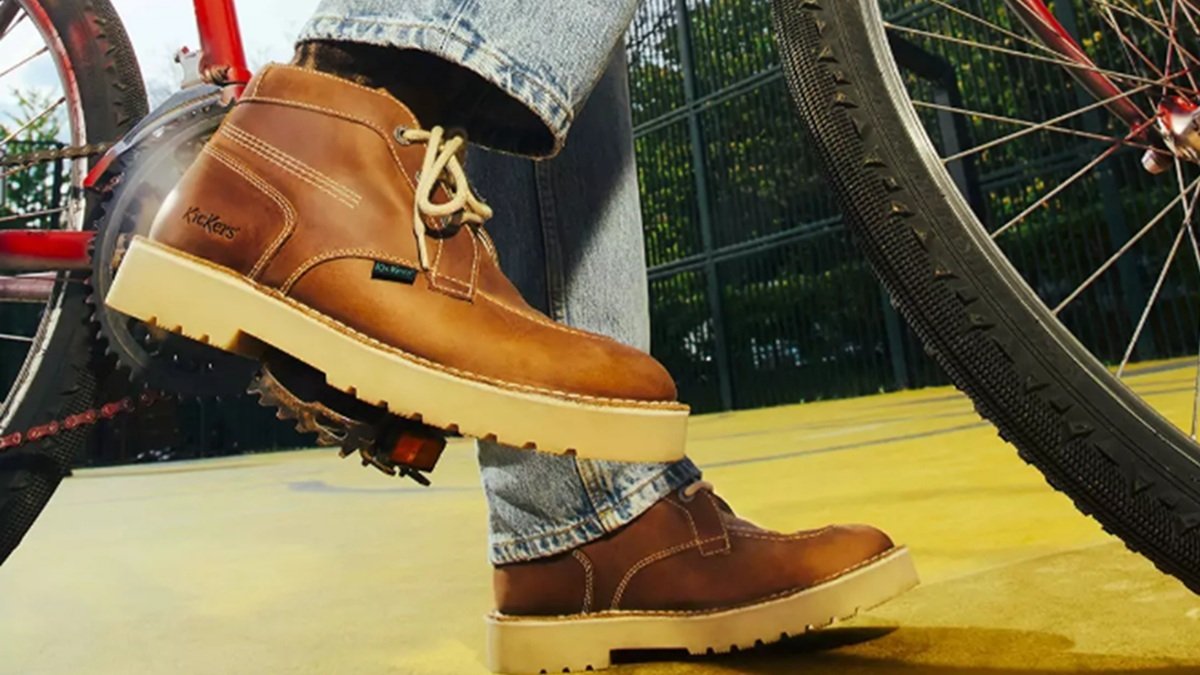

French footwear adds another casualty. The Royer group, one of the largest distributors in the country and owner of the Kickers brand, has requested the protection of the Court of Commerce of Rennes to restructure its debt and try to ensure the continuity of the company. The Breton company is availing itself of this procedure, a legal tool that allows it to suspend payments and negotiate with creditors under judicial supervision.
Headquartered in Fougères and with a workforce of 260 employees spread over some twenty companies (seven of them in France), Royer has been dragging along since 2022 a succession of crises that have weakened its structure. “The group has faced increasing international competition and an unfavorable context that has led to excessive debt,“ the company explained in a statement.
The Royer conglomerate, founded in 1945 and still controlled by the family of the same name, reached a turnover of €300 million in 2019, with 500 employees and 45% of its sales abroad. Its sales network distributed, at the time, more than 20 million pairs of shoes per year.
Five years later, that figure has been reduced to less than half. In 2023, the group had a turnover of €132 million, and by 2024 it was already anticipating a further decline. The loss of the U.S.-based New Balance license marked a turning point. The company closed its Maleville (Aveyron) plant, sold part of its facilities in Cholet and stopped production lines in Germany.
The Royer group has gone from €300 million in sales to a struggle for survival
The group also sold the Von Dutch brand, put its high-end brands on hold and cut 150 jobs in France. At the time, Royer tried to refocus on Kickers, its most recognized brand, with the ambition of strengthening its international presence. But the market context, inflation and changing consumer habits thwarted the plan.
Royer’s situation is not isolated. In recent years, the French footwear map has been emptied of historic names. In the footwear sector, Minelli, André, San Marina or Clergerie have gone through insolvency or restructuring processes. San Marina, founded in Marseille in the 1980s, was liquidated in 2023; Minelli was again placed under judicial protection this year, and André, founded in 1896, is going through its third insolvency proceeding in less than a decade.
The French footwear industry is experiencing a prolonged contraction, accentuated by rising production costs, pressure from Asian imports and the difficulty of adapting to the digital channel. According to data from the Institut Français de la Mode (IFM), imports account for more than 60% of the domestic market, and urban footwear consumption has fallen by more than 15% since 2019.
Royer’s fall confirms the critical state of French footwear. In the last ten years, domestic production has fallen by almost 40%, according to data from the Observatoire de la Chaussure, while competition from Italy, Portugal and Asia intensifies. France retains a recognized savoir-faire, but its industrial fabric has been weakening. Family-run workshops in regions such as Romans-sur-Isère and Cholet, former centers of the French shoe industry, now operate with minimal margins or under hybrid licensing and distribution models.
The company is between restructuring and asset sales
The Royer case illustrates the difficulty of French family-owned groups to adapt to a globalized environment. The generational changeover, industrial costs and the loss of power of their national brands have led to a slow dismantling of the industrial fabric that for decades supported a large part of employment in regions such as Brittany, Vanda and Auvergne.
Royer, which continues to manage the children’s brands Aster and Mod8 and maintains licenses such as Umbro, Freegun and Dim, has indicated that this process seeks to “find a new dynamic that will allow it to relieve its cash flow and work on a new strategic plan”.
Among the options on the table are the validation of a restructuring plan, the sale of assets, the entry of a new investor or even the partial divestment of some subsidiaries. The company assures that its priority is to preserve jobs and stabilize its structure in France, while maintaining activity in its international subsidiaries.
The procedure will be supervised by a receiver appointed by the Rennes court. During this time, Royer will have limited room for maneuver, but will be able to temporarily suspend payments and renegotiate its debt.
The group’s last CEO, Marc Le Roux, left the company a few months ago to join Reebok Europe. The Royer family, headed by Jacques Royer, retains control, although it does not rule out the entry of new partners or investors.
Related content

Beaumanoir’s Second Act: Reviving French Fashion, One Brand at a Time
1 jul 2025 - 06:00
Birkenstock Eyes Double-Digit Growth Through 2028 with Revamped Strategy
29 ene 2026 - 11:16
Levi Strauss Boosts Profitability: Dodges Tariff Impact and Triples Earnings
29 ene 2026 - 11:15
H&M Holds Steady: 4.3% Profit Surge in 2025 Approaches €1.06 Billion Mark
29 ene 2026 - 11:10
Latest news
Birkenstock Eyes Double-Digit Growth Through 2028 with Revamped Strategy
29 ene 2026 - 11:16
Levi Strauss Boosts Profitability: Dodges Tariff Impact and Triples Earnings
29 ene 2026 - 11:15
H&M Holds Steady: 4.3% Profit Surge in 2025 Approaches €1.06 Billion Mark
29 ene 2026 - 11:10
Gordon Brothers Takes Over LK Bennett, Sets Stage for Global Expansion
28 ene 2026 - 12:33