South Korea’s Market: Where Discipline, Data, and Design Define Asian Sophistication
High regulatory standards, a hyperconnected retail landscape, strong local codes, discerning clientele, and K-pop as a soft power are the hallmarks of the Korean market. For fashion brands, capturing Seoul requires precision over expansion.
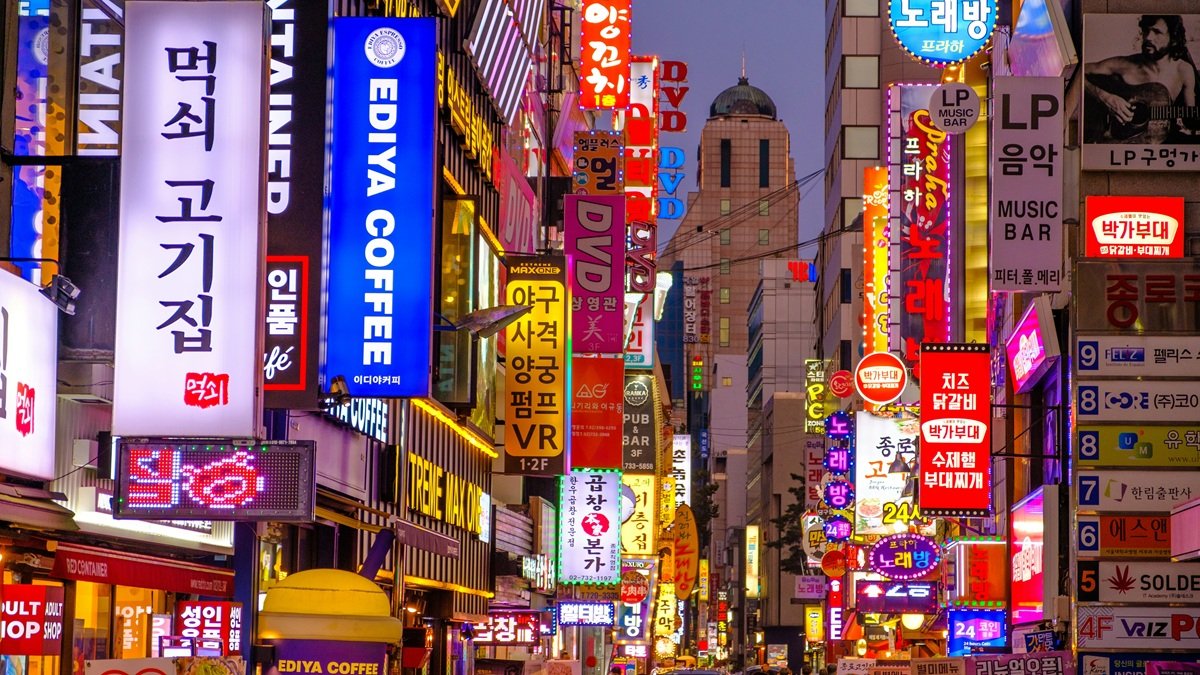

On the world economic map, South Korea represents a vibrant paradox. With just over 50 million inhabitants, the Asian country combines a development comparable to that of Europe with an intensely hermetic and local culture. Its capital, Seoul, pulsates from the avenues of Gangnam, epicenter of the worldwide hit Gangnam Style and global pop aesthetics, to the markets of Namdaemun, where tradition and modernity intertwine at every corner. A mere sixty kilometers from the financial center stretches the border with North Korea, a line that reminds us that stability is an achievement that is maintained with fragility and not a permanent guarantee. Coexistence with the enemy at home has molded a national character based on discipline, balance and the need to move forward without hesitation.
Generation MZ, which groups millennials and Z, is today the dominant force. Raised on hyper-connectivity and shaped by the visual culture of K-pop, they seek brands that represent tangible values led by design, consistency and authenticity. In South Korea, fashion is an expression of identity and an extension of everyday life, reflecting the importance of appearance in a country where physical appearance is an object of worship and dedication. South Korea is not only a powerhouse of innovation and development in the global beauty market, it also leads the rankings in aesthetic treatments.
Korean checkout: cards, wallets and instant conversion
Selling fashion in Korea starts with understanding how to pay. The country is virtually cashless and more than 70% of online shopping is done on mobile. Integrating local payment systems is not optional. KakaoPay, Naver Pay and Toss account for the majority of transactions and combine messaging, banking and e-commerce. Their adoption enables immediate conversion and customer loyalty within a closed and efficient ecosystem.
The digital channel, meanwhile, already accounts for more than a third of fashion and beauty sales in Korea. Marketplaces such as Coupang, Naver Shopping and 11st channel much of the traffic, along with Musinsa, which has grown from a sneaker forum to a multi-brand group with physical stores and more than ten million active users. In 2023, Coupang saved Farfetch with its acquisition and, two years later, integrated its catalog of 1,400 brands into R.Lux, its luxury app. The deal exemplifies the alliance between local technology and global commerce.
For a foreign company, operating in South Korea means precision. Without local stock, Korean language support or the right payment methods, the customer experience suffers and the margin for success disappears before it even begins. Speed is not improvised, but planned, and respect is measured in the ability to integrate and adapt to a highly demanding market.
The country is practically cashless and more than 70% of online purchases are made from cell phones
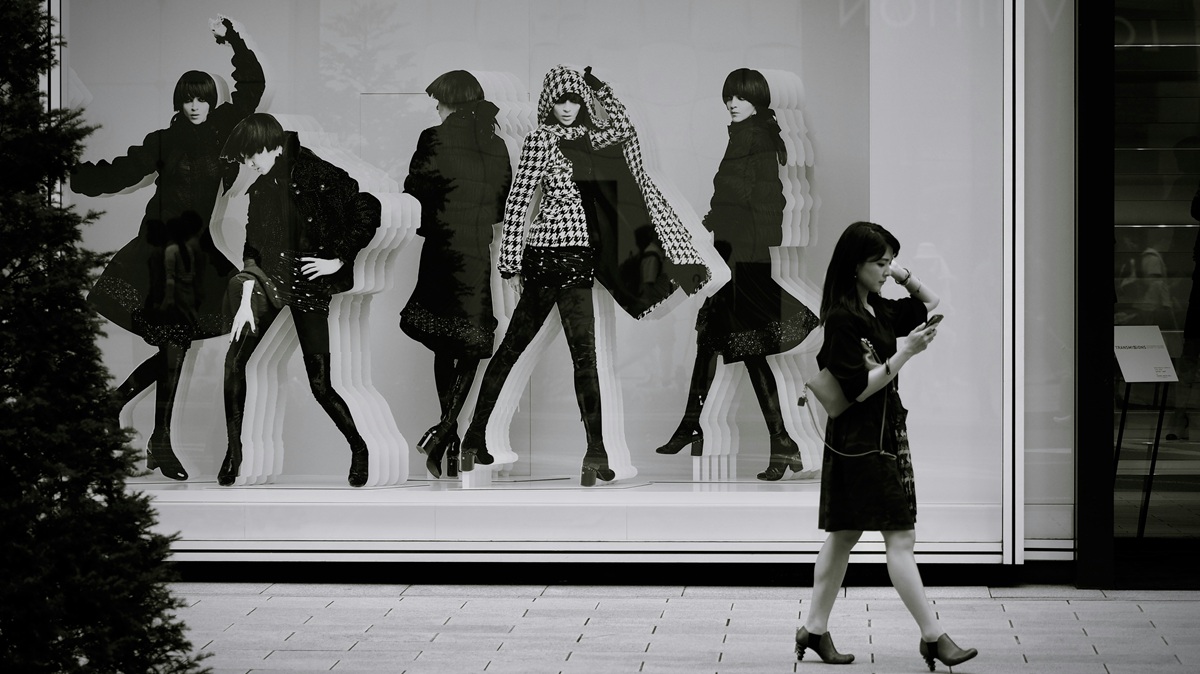
European luxury has found a new stage in South Korea, after having explored China and Japan. In 2023, Gucci presented its cruise collection at the Gyeongbokgung Palace; Louis Vuitton transformed the Jamsugyo Bridge over the Han River into a catwalk for its pre-fall fashion show; Dior chose the campus of Ewha Women’s University for its Fall 2022 collection; and Chanel opened its cruise at Dongdaemun Design Plaza, designed by architect Zaha Hadid, in 2015. These fashion shows set the international agenda, while consolidating Seoul as the symbolic capital of luxury and contemporary desire.
From Gucci to Louis Vuitton: luxury looks to South Korea with ambition
In South Korea, visiting a luxury boutique is a gesture of belonging. The customer buys, but also confirms a bond that strengthens ties with the savoir-faire and craftsmanship of other parts of the world. Eager for novelty, the Korean consumer seeks excellence, service and authenticity. Brands that reproduce without adapting fail; those that interpret the context become part of their consumers’ lives. The purchase of a handbag or a watch is not an isolated act, but a way of projecting identity.
For its part, the physical store has become an extension of this DNA. You don’t just go in to look, but to feel and share. In South Korea, retailers introduced the experience into their spaces long before the trend arrived in Europe. Themed in-store cafés, hidden bookshelves, state-of-the-art fitting rooms, new products, limited series, smart mirrors, photo booths, advanced skin diagnostics, games and sweepstakes are just some of the initiatives that encourage visits to stores as if they were amusement parks in which to spend the afternoon.
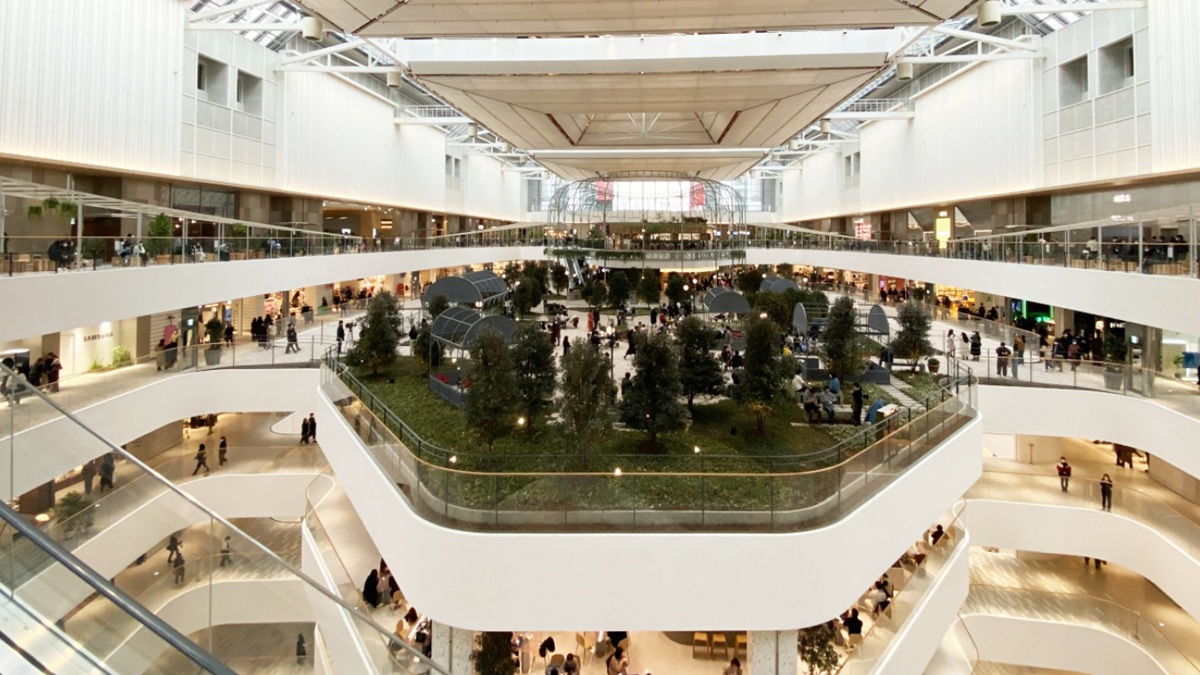
That principle is embodied in The Hyundai Seoul, the flagship Hyundai Department Store Group opened in 2021 in Yeouido. With 89,000 square meters and designed by Richard Rogers, the building redefines the concept of a shopping mall and integrates it into the urban landscape of a city where Buddhist temples coexist with steel skyscrapers, architecture becomes a bridge between past and future.
The building stands out for its 20-meter-high atrium, its glass roof and the Sounds Forest interior garden, a 3,500-square-meter green space that introduces a pause of silence in the midst of consumption. Inside, there are more than 600 local and international brands such as Louis Vuitton, Gucci, Burberry and Nike. Visitors walk through an environment where each floor serves as the stage for a different sensory experience. For a foreign brand, becoming part of the concept means passing a test of image, service and cultural adaptation. The journey from a temple like Jongmyo to this glass flagship sums up the identity of the Korean capital as a city that unites heritage, technology and consumption.
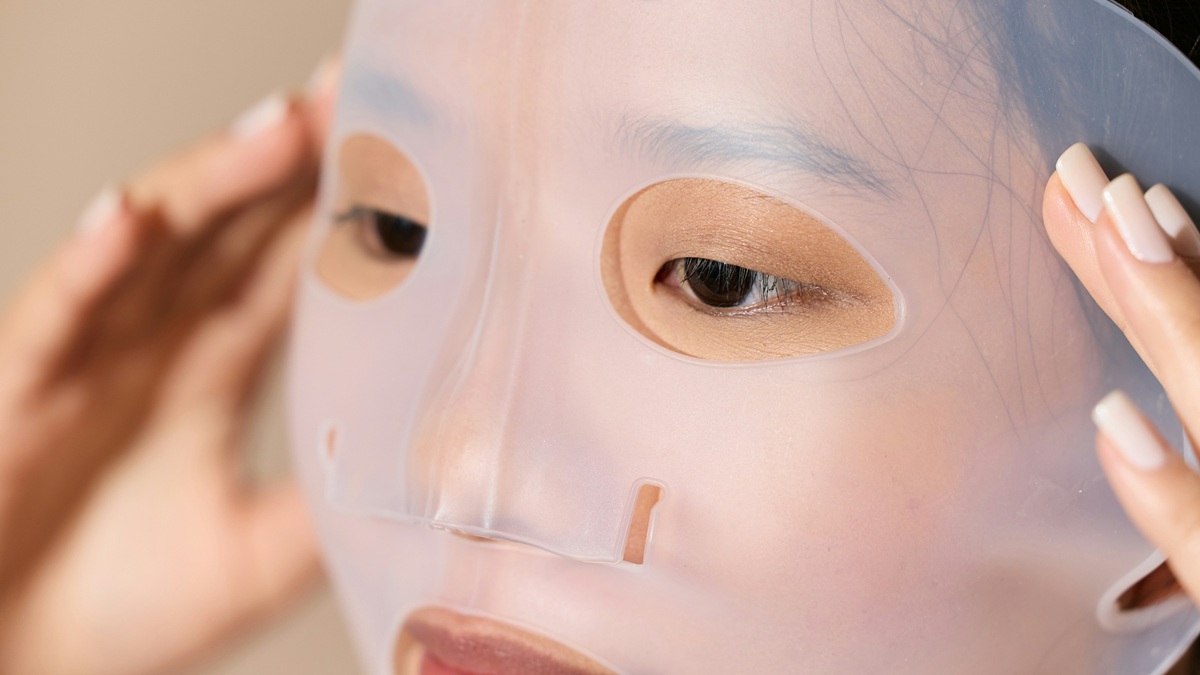
Olive Young’s law: immersive beauty and global K-fashion that took down Sephora
In parallel, South Korea stands out for having turned the K-beauty phenomenon into an export industry. Groups such as Amorepacific or LG Household & Health Care set trends in innovation and sustainability. Brands such as Laneige offer immersive stores where customers customize products and live the skin care experience. The Myeongdong neighborhood in Seoul is the heart of this industry, with illuminated streets, stores that behave like stages and a constant interaction between technology and ritual.
This model explains why brands such as Innisfree and Sulwhasoo have crossed borders and why Korean cosmetics consumption has become a symbol of innovation in the global imagination. For Spanish brands, the lesson is that beauty no longer sells only product, but narrative and experience.
In fact, the Korean market has emerged as the ultimate litmus test for foreign companies. In 2024, Sephora ended its Korean venture after years of losses. The company failed to rival Olive Young, a leader in the beauty channel, whose sales volume exceeded 4.7 trillion won, about $3.5 billion. Its model combines a network of more than 1,200 stores with a digital ecosystem that combines ecommerce, loyalty programs and express service.
Korean success transcends beauty, however. Gentle Monster, founded in 2011, has turned its designer eyewear into an object of desire in Europe and the United States, exemplifying how cultural identity can become a global business asset. Its international network exceeds 80 points of sale and its stores look more like art galleries than boutiques, as is the case of its Haus Nowhere space, where it reinforces the dialogue between art, technology and retail.
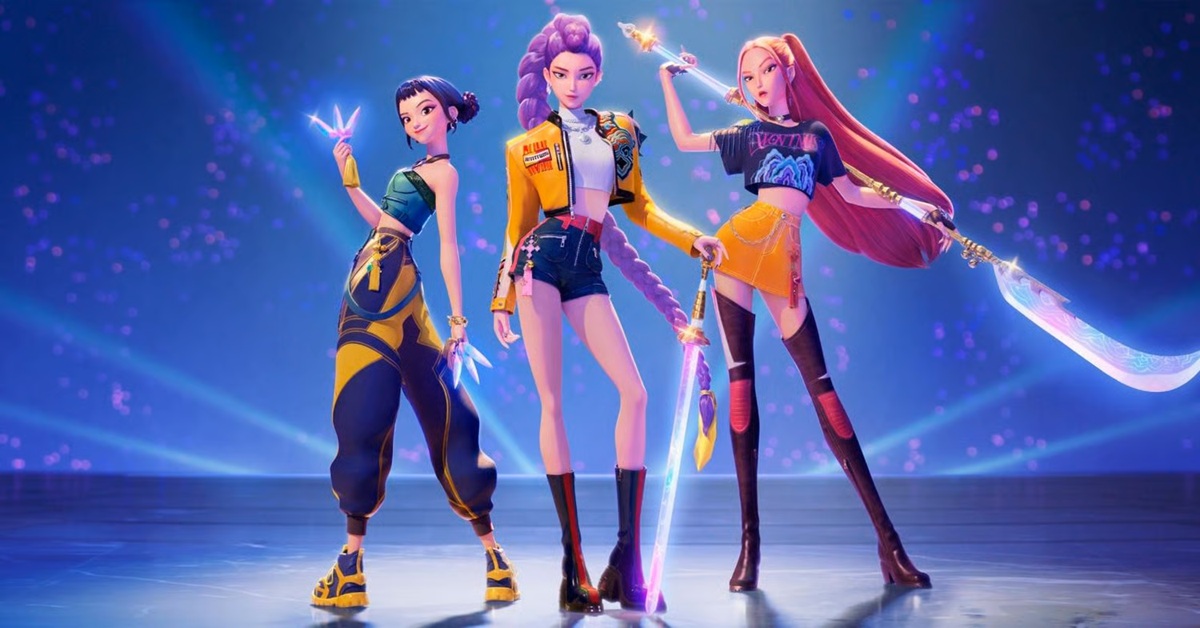
Export marketing of K-pop and K-dramas
K-pop and K-dramas, boosted internationally through the Netflix catalog, have been Korea’s best marketing campaign. K-pop goes beyond music, functioning as a soft power strategy that spreads Korean values, language and aesthetics, with fast-paced, high-pitched notes and elaborate choreography. It has multiplied tourism, boosted luxury and beauty and turned idols such as Jennie Kim, V of BTS, or Jisoo into global ambassadors for European brands such as Chabel, Celine or Dior.
Audiovisual productions such as The Squid Game or The K-Pop Warriors have served to popularize local culture, displaying a range of proposals that go from dystopian violence to children’s fantasy. Demonstrating how entertainment has merged with the real economy to become a tool of cultural diplomacy, each product ends up with extensive merchandising to satiate the appetite of its entourage of fans and their universes reach international clothing brands, in the form of dedicated collections with Zara, H&M or Lacoste.
As for the import of foreign products, South Korea allows foreign investment in fashion and textiles, but demands strictness. Labeling in Korean is mandatory and must include materials, country of origin and importer data. In children’s or safety categories, KC (Korea Certification) certification is required. Import VAT is around 10% and tariffs are in line with the EU-Korea free trade agreement. In addition, the Pipa(Personal Information Protection Act) requires explicit consent for any processing of personal information. Penalties for non-compliance are therefore high and apply without exception.
Translating without adapting, choosing the wrong channel, underestimating logistics or ignoring the real costs of import and fulfillment are common failures
Isabel Baek, head of the Icex Department in Seoul, sums up the challenge: “Regulatory compliance is not an insurmountable barrier, but it requires planning and local advice, from labeling to data protection, every detail counts.“ Compliance in South Korea is not a bureaucratic formality, but a sign of respect.
The most common mistakes among foreign brands are repeated. Translating without adapting, choosing the wrong channel, underestimating logistics or ignoring the real costs of import and fulfillment are common mistakes. So is neglecting reputation in a market that is sensitive to the social context. South Korea rewards consistency and punishes improvisation. In a space where speed is measured in seconds, trust is earned with time and consistency.
Isabel Baek synthesizes the ultimate learning. To be successful it is not enough to sell product, you have to choreograph the proposal, the channel and the communication,“ she assures; “South Korea rewards constancy and punishes improvisation”. Success does not depend on conquering your market, but on learning to be part of it.
Related content
Birkenstock Charts Robust Growth Path to 2028 with Fresh Strategy
29 ene 2026 - 11:16
Levi Strauss Boosts Profitability: Dodges Tariff Impact and Triples Earnings
29 ene 2026 - 11:15
H&M Holds Steady: 4.3% Profit Surge in 2025 Approaches €1.06 Billion Mark
29 ene 2026 - 11:10
Gordon Brothers Takes Over LK Bennett, Sets Stage for Global Expansion
28 ene 2026 - 12:33
Latest news
Birkenstock Charts Robust Growth Path to 2028 with Fresh Strategy
29 ene 2026 - 11:16
Levi Strauss Boosts Profitability: Dodges Tariff Impact and Triples Earnings
29 ene 2026 - 11:15
H&M Holds Steady: 4.3% Profit Surge in 2025 Approaches €1.06 Billion Mark
29 ene 2026 - 11:10
Gordon Brothers Takes Over LK Bennett, Sets Stage for Global Expansion
28 ene 2026 - 12:33