The Legacy of Capa Ideal: How Lojas Renner Became a Retail Giant
With operations spanning three countries and eight brands under its belt, the Brazilian giant boasts annual revenues exceeding $2 billion. Over its 100-year journey, the company transformed from its beginnings in wool capes to winning over JC Penney.

The Treaty of Poncho Verde put an end to the Farroupilha Revolution on March 1, 1845, after ten years of armed conflict between the Brazilian Empire and the rebels of the self-proclaimed Rio-Grandense Republic. More than a surrender, it was a political negotiation that allowed an honorable exit for the farroupilhas and consolidated the gaucho pride. The name of the treaty was not accidental, since the poncho or cape is the gaucho garment par excellence, a symbol of identity and culture.
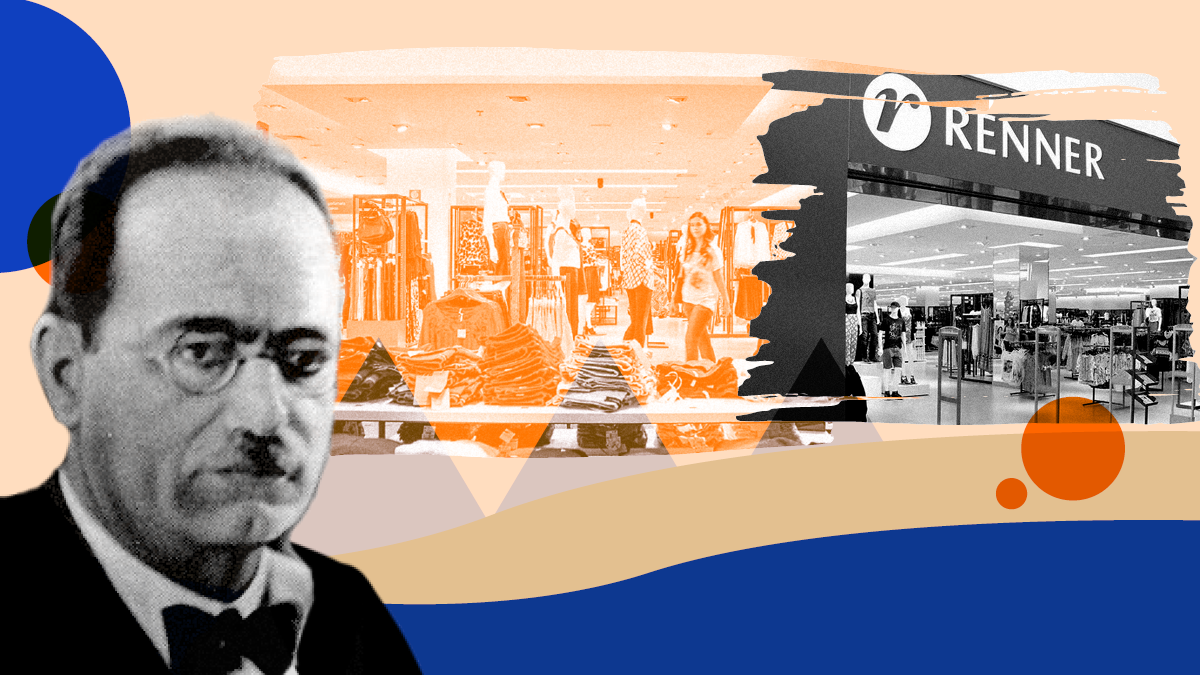
Decades later, this same garment would take industrial form in the hands of Antônio Jacob Renner, an entrepreneur descendant of German immigrants who, in 1912, founded in Porto Alegre a small textile factory specialized in wool garments.
His business was consolidated with his most emblematic creation: the Capa Ideal, a modern reinterpretation of the poncho, designed to withstand the wind and cold of southern Brazil, but also to dress workers, travelers and contemporary gauchos with dignity. Thus began the history of Lojas Renner, not only as a clothing manufacturer, but also as the heir of a regional identity turned into an industry.
The early twentieth century was a time of booming manual labor in Brazil, which created the ideal scenario for Renner, who, with his German heritage, managed to run a business that today symbolizes the power of the Brazilian fashion industry and, unlike its rivals, has been able to expand abroad.
Lojas Renner started his business with the sale of the so-called ‘Ideal Cloak’, specially designed to cover gauchos and traders in the climate of southern Brazil
The Capa Ideal began to be sold officially in 1922, in what would be Renner’s first store. In a store in the city of Porto Alegre, the company marketed woolen textile articles for men. The next two decades represented the diversification of the company with the sale of garments beyond wool capes and national expansion with stores and offices in Sao Paulo, Santos and Porto Alegre.
In fact, the commercial offering had expanded so much that Renner became a department store by the 1940s, selling household goods, bazaar, furniture and clothing.
Going public and a stint with JC Penney
The company, as it is known today, did not emerge until 1965, when the A.J. Renner group became a corporation and began operating as Lojas Renner. Two years later and at the height of its business success, the company was listed on the stock exchange.
Throughout its history, the group was conditioned by the current state of the Brazilian economy. An example of this was the restructuring that Renner implemented in the 1990s, when the South American country was in the midst of a severe economic crisis and high inflation. At that time, Renner abandoned the department store model to return to its origins and focus only on the marketing of clothing.
The company belonged to JC Penney for almost a decade
This restructuring process also involved the professionalization of the company’s management and the implementation of the enchantment philosophy, focused on not only satisfying customers, but exceeding expectations and measuring the shopping experience.
At the same time, Renner continued to expand in Brazil’s major cities and its size seduced retail bigwigs. At the end of 1998, U.S.-based J.C. Penney took majority control of Lojas Renner, marking another turning point for the Brazilian company, which received capital injections of up to one hundred million dollars and went from having twenty stores in southern Brazil to fifty stores.
During its period with JC Penney, Lojas Renner also managed to consolidate a portfolio with the launch of its own brands such as Just Be, Blue Steel and Get Over. In 2005, the U.S. department store group sold its stake in the Brazilian company, becoming the first Brazilian company with 100% of its shares outstanding on the stock exchange, entering the Novo Mercado segment, with rigorous governance practices.
The decade of 2010 was also one of acceleration and modernization. In 2011, Renner completed the purchase of Camicado, specialized in decoration; in 2013 it launched its own chain with Youcom, specialized in young fashion; while in 2016 it entered the plus-size segment with the launch of Ashua.
Renner is currently present in Uruguay and Argentina
News and internationalization
With a turnover of 12,672 million reais ($ 2.27 billion) in 2024, Lojas Renner has consolidated its position as the largest Brazilian fashion distribution company, surpassing its rival Riachuelo.
Lojas Renner is currently commanded by Fabio Adegas Faccio, who has been CEO since 2019, but has been with the company for more than 25 years. Carlos Souto, meanwhile, serves as chairman of the board.
Despite its more than one hundred years of history, the company’s internationalization was late. The company began its expansion in Uruguay, with the opening of its first establishment in 2017. Two years later, Renner raised the shutter on its first points of sale in Argentina. The group’s commercial network extends to 670 stores between the three countries, with its brands Renner, Camicado, Youcom, Ashua and the Repassa resale platform acquired in 2021, as well as the urban logistics Uello from 2022.
Related content

Beaumanoir’s Second Act: Reviving French Fashion, One Brand at a Time
1 jul 2025 - 06:00


Riachuelo: Brazilian DNA of the fast fashion giant
25 mar 2025 - 05:00
Latest news

Swatch Sees 89% Profit Decline in 2025 Amid Tariff Woes and Sluggish Demand
30 ene 2026 - 04:26


Inditex’s Eduard Casabella on Oysho’s Sport Pivot and Growth Through Identity
29 ene 2026 - 18:40

McKinsey’s Gemma D’Auria on Luxury’s Pullback and Fashion’s Resilience in 2026
29 ene 2026 - 18:35