Jorge Lizan of LRA: “Trendy Concepts Must Meet Profitability Demands”
International brand expansion expert discusses the transformative changes in retail since the pandemic, with a focus on brands that are prioritizing prime locations and enhancing customer experiences over just increasing store size.
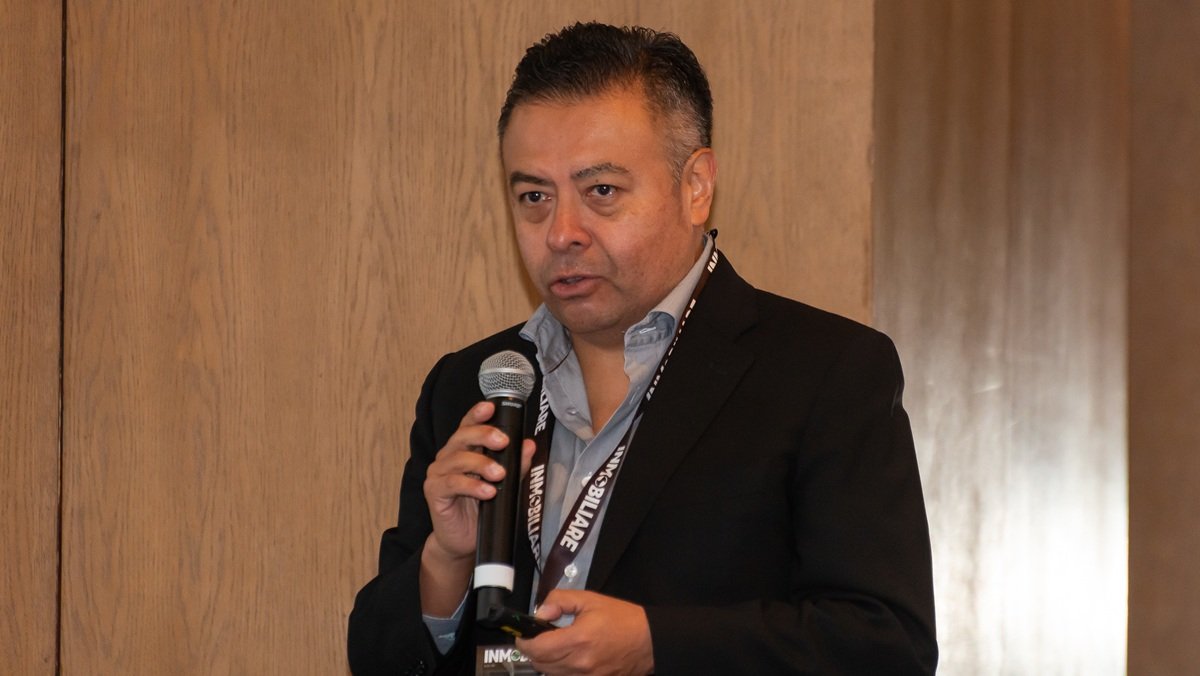


Ten years ago, fashion faced a monothema: the retail apocalypse. Nothing could be further from that concept than the situation we now find ourselves in, with an increasingly large market in terms of number of brands and waiting lists to enter the best shopping centers. Jorge Lizan, founder and CEO of Lizan Retail Advisors (LRA) has been advising brands planning their international expansion for ten years. With clients such as Taco Bell, Balenciaga or Adolfo Domínguez, the retail expert assures that the future of the sector in the coming years will be based on customer experience, product customization, brand innovation and, above all, profitability.
Question: What are the major trends that are currently shaping the evolution of retail at a global level?
Answer: More than a trend, it is the biggest issue: the lack of space. Unlike the financial crisis of 2008 and the post-pandemic situation, where there was great availability, today there is brutal competition for the same spaces, because everyone wants to be in the same areas. And this is something that happens in all the big cities in the world, in Madrid, London, New York or Mexico City, where currently the Roma Norte neighborhood is in great demand, but specifically in one street. There is an increasingly strong concentration in certain areas, whether they are high streets or shopping malls. As demand is so high, the cost of occupancy has risen, so in some cases it is very difficult to obtain locations. Beyond this real estate point of view, in other aspects of retail there is a growth of more personalized, unique or boutique brands, with a very high differential power. These are the brands that communicate best with the new generations and present very experiential concepts that cater to this demographic. New brands that have been on the market for less than ten years and are already very successful are also growing a lot, so internationalization cycles are shorter. With the virality that exists today, these brands become global in a very short time, they start internationalization, and sometimes a fund comes in to provide capital or buy them.
Q.: So the physical channel is still a priority?
A.: Yes, but with some exceptions, such as online giants like Shein. But other than that, practically, and especially in fashion, it is very difficult to be only in the online channel. Even if you are born online, very quickly you have to open some flagship stores.
“In the future we won’t see many new malls in Latin America, but we will see expansions and improvements.“
Q.: Which markets are becoming more attractive for international expansion?
A.: The trend for these viral or niche brands that are growing very fast tend to expand quickly through Europe, start franchising, and usually the next destination is the Middle East, with Dubai as the gateway. The U.S. remains more difficult for these brands, because they have to operate directly as franchising is not possible. And without a doubt, if they decide to jump into Latin America, they do it first in Mexico. This is the route that almost all brands are following. But there is also a trend of Chinese brands, of good quality, opening all over the world and without franchising, as in the case of Pop Mart with the success of Labubus.
Q.: How would you describe the Latin American consumer today? Do they value ecommerce or traditional stores more?
A.: Logically, the younger generations in Latin America have a higher percentage of participation in ecommerce than other parts of the population. Platforms such as MercadoLibre, Amazon and other marketplaces are growing very fast in the region. This is also reflected in the performance of online department stores, which have gone from being less than 5% of total sales to now representing more than 20% of the business. The importance of digital sales cannot be discounted, but the channels are becoming increasingly integrated. There are fewer barriers between one way of shopping and the other, and nobody thinks that ecommerce is going to do away with shopping malls or physical retail, as was the case a few years ago. There are certain categories that tend to have higher online sales by their very nature. But if we look at the case of restaurants, for example, aggregators and home delivery services, which could be the equivalent of your online store, are growing a lot, especially after the pandemic.
Q.: Which countries in the region are proving most attractive for international retail?
A.: Again, Mexico continues to be the gateway to the region, it continues to be 50% of the business for our consultancy, although in recent years we have seen brands entering through Uruguay because of the ease of taxation and have established their Latin American offices there. In the case of Brazil, the largest consumer market continues to be difficult for brands because of various difficulties such as bureaucracy, barriers to doing business, language, high taxes and the fact that you can’t repatriate your profits as easily. Brazil is a very endemic economy that lives off its domestic market. Luxury brands do have an important presence in Brazil, but they usually go direct, it is very difficult for them to have an intermediary or franchisee, because the margins (except for luxury) are so low that there is not so much business for a third party. After Mexico, Colombia was the next country in Latin America where brands wanted to expand, but the economic and political situation in recent years has caused companies to delay or cancel their plans in the country. In addition, Colombia is a very price-sensitive country, with very low margins, so it is not its best moment. On the other hand, Peru and Chile, which are normally a combo, are still very strong. Chile, despite the fall due to the social uprising and Covid, continues to be a very stable, sophisticated market, and makes a good team with Peru, although the political ups and downs of recent times have affected it quite a lot. Argentina, on the other hand, is becoming more and more attractive for foreign investment and we are also seeing brands from there deciding to expand abroad, especially in the restaurant sector.
“Stores no longer need several square meters because the consumer values the experience more than inventory”
Q.: For years, retail growth in the region was supported by the expansion of shopping malls. Today, consumers are no longer defined only by where they shop, but by how and why they shop. What role do shopping malls have today in the face of the rise of the digital channel and hybrid formats?
A.: In Latin America they have all the protagonism. While there are some streets with a lot of activity, such as Masaryk in Mexico City, Rua Oscar Freire in Sao Paulo or Avenida Alvear in Buenos Aires, which in the coming years will become stronger. Apart from these few exceptions, the playground for brands is shopping malls. What has been seen in recent years is that they are increasingly prioritizing one over the other; all operators want to be in a particular mall, and not just any mall. Brands are increasingly valuing location, but there are zero vacancies, zero space availability. Dubai Mall is said to have a waiting list of over five hundred brands. If you are not a brand that everybody wants, it takes you a long time to get into those malls because there is zero square footage available. This means that those malls work because the brands that are there are not leaving and because the mall doesn’t want to change brands either. In the top 50 malls in central Mexico, for example, it is very difficult to find 400 square meters available that are appetizing and unproblematic.
Q.: So what is the outlook for the future? More malls or fewer brands?
A.: This is a crucial point right now, because the reality is that there are very few projects being developed in Latin America. A decade ago there were an average of forty major shopping centers of more than 20,000 square meters of GLA. Now there are only five. We are at a stage in the evolution of the industry, where retail is very mature and consolidated. Regional modal malls (with department stores and 200 stores) are no longer being developed for two reasons. First, because they are no longer needed, population growth is slower than it was thirty years ago and there is less consumer market. Second, because of the cost of land, since, with the densification of cities, it is impossible to develop such a large project because at least 10 hectares are needed in a central area. In the future we will not see many new shopping centers, but we will see expansions, remodeling and improvements.
Q.: The Latin American consumer has become more rational, but also more demanding in terms of experience. What trends are making the difference today between retailers that are growing and those that are stagnating?
A.: Issues such as personalization and customization are very important for consumers today, which is very clear in fashion brands with cases such as Golden Goose or Levi’s. Another key is the incorporation of a lot of intelligence. Another key factor is the incorporation of a lot of market intelligence, based on artificial intelligence, which is becoming increasingly important in retail, as it allows us to get to know consumers more closely. Before, there was not so much information, nor was it necessary for the product to be unique and customized to the customer’s tastes, but now it is crucial. Store inventories are becoming smaller and smaller because you don’t need to have all the product there, but many customers buy online and go to the store to customize it. Today’s retail is friendlier, with smaller stores, even for fast fashion brands like Zara or H&M that are giving up square meters, when until a few years ago space was fundamental.
Q.: The tariff war between the United States and China is reshaping global value chains. What impact does this have on brands’ expansion strategies? And on Latin American retail supply chains?
A.: At the moment it is affecting supply chains more than brand expansion. If factories or supply have to move from China to another country to reduce tariffs in the United States, any country in the world, including Latin America, will be affected because logistics are increasingly complicated. In Latin America, tariffs have not gone up as much. Theoretically, Mexico’s tariffs for Chinese products are going to increase due to pressure from the United States, but what we can see is that everyone is waiting to see what happens and how everything is consolidated. This situation indirectly affects Latin America at the moment, as it produces an inflationary effect and price increases.
“In the future we will see brands that care about speaking and adapting to customer needs and, above all, being very financially responsible.“
Q.: In a context of economic slowdown and geopolitical changes, what is the biggest risk and opportunity for retail in Latin America today?
A.: Latin America was already taking advantage of this situation before this juncture. The concept of nearshoring was already happening because it was cheaper to produce in Mexico, Guatemala or Central America and export to the United States than to do it in China for some products. Latin America has to adapt, because for better or worse it depends on the United States. We must be smart in taking advantage of competitive advantages and minimize any impact of measures against Latin America. Beyond tariffs and supply chains, there is a general slowdown in the world economy, starting with the United States, with higher than expected inflation. Another factor that could be an opportunity for the region is the migration situation, since all those workers in the United States who must return to their country of origin will put into practice what they have learned during these years abroad. While there are risks, opportunities must be identified and seized. Let us hope that the United States and the world do not fall into a recession. The economies of Latin America, with certain exceptions, continue to grow and we must take advantage of it.
Q.: What would you say will be the core of the retail business in the next five years?
A.: During COVID, we learned to work with fewer resources, fewer people, less income and in complicated situations. We have maintained certain lessons learned, although I think we are forgetting an important part. For the next five years, we should continue to evolve everything we are seeing in terms of customer service, personalization, communication with the customer and adapting our models to what the customer demands. The customer is really the reason and the one who guides the evolution of brands. It is very important for retail to be financially healthy, to be able to work with fewer resources but more profits. The evolution of brands over time is key, there are companies like Levi’s or Lacoste that have had ups and downs, but they are constantly evolving. Retailers that do not evolve constantly tend to disappear. The axes for the future are to understand and reinforce the strengths of each brand, talk about and adapt to customer needs and, above all, be very financially responsible. You can have the trendiest concept in the world, but if you don’t generate profits, you have no future.
Related content

Steady Gains: Latin American Department Stores Achieve 7% Growth by June
25 sep 2025 - 05:00

Gordon Brothers Takes Over LK Bennett, Sets Stage for Global Expansion
28 ene 2026 - 12:33

Galeries Lafayette Finalizes Sale of BHV Building Amid Shein Controversy
28 ene 2026 - 12:30

VF Corp’s Q3 Results Shine with 28% Boost as Business Reorganization Unfolds
28 ene 2026 - 08:23
Latest news
Gordon Brothers Takes Over LK Bennett, Sets Stage for Global Expansion
28 ene 2026 - 12:33
Galeries Lafayette Finalizes Sale of BHV Building Amid Shein Controversy
28 ene 2026 - 12:30
VF Corp’s Q3 Results Shine with 28% Boost as Business Reorganization Unfolds
28 ene 2026 - 08:23

Claire’s Faces Another Setback in the UK with Second Bankruptcy in Six Months
28 ene 2026 - 08:21