Zara’s New Identity: Inditex Secures Approval for Numeric Trademark 26 1 18 1
Friday green light from the Supreme Court allows the Spanish giant to utilize a numerical sequence as a brand identifier for its flagship, corresponding to the Anglo-Saxon alphabetical order.
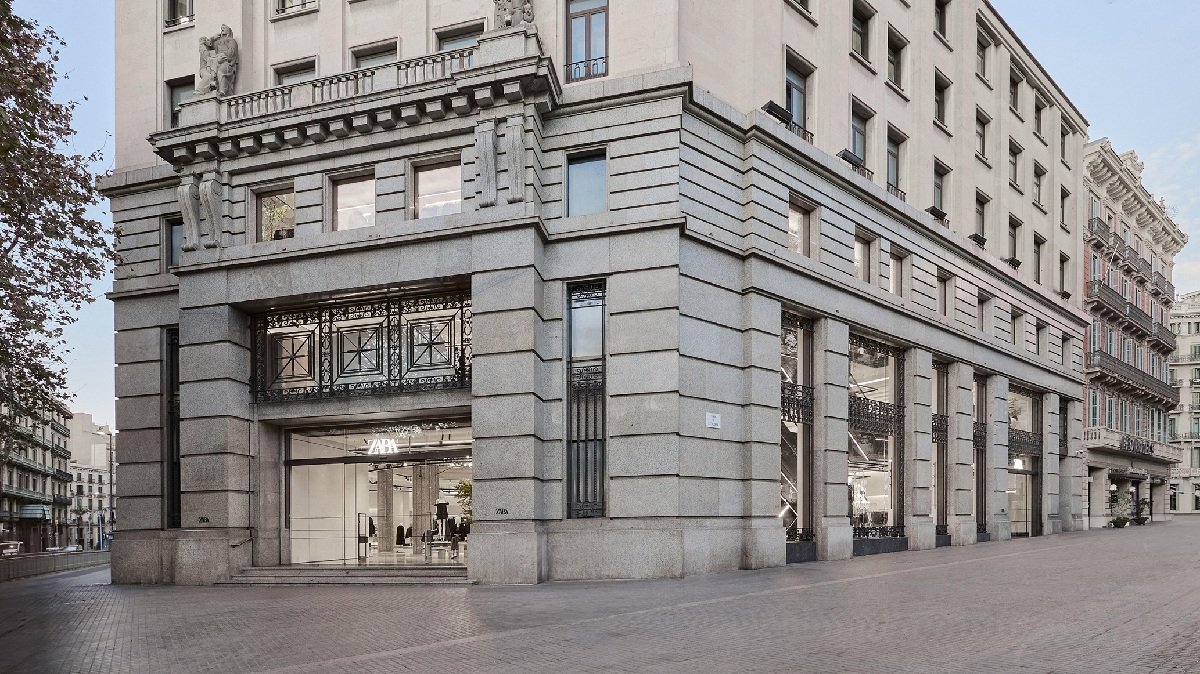


The Civil Chamber of the Supreme Court has ruled in favor of Inditex so that it can use as Zara’s identifying trademark the series of numbers: 26 1 18 1, which in the Anglo-Saxon alphabet correspond to the order of the letters of the group’s flagship, where the ‘Z’ occupies the 26th place; the ‘A’, the 1; and the ‘R’, the 18th place.
In a ruling at the end of September 2025, the Supreme Court overturned the judgment of the Madrid Provincial Court that denied Zara’s request and upheld the refusal of the Spanish Patent and Trademark Office. Now, the high court has upheld the appeal filed by Inditex.
The Spanish Patent and Trademark Office argued that this numerical series “lacked sufficient distinctiveness to be registered as a trademark”, an issue that the Madrid Court of Appeals included in its decision. However, the Supreme Court has considered that “the Provincial Court, implicitly, has been guided by a restricted criterion of distinctiveness of numerical marks that goes beyond the provisions of Community and national legislation and its interpretation by the Court of Justice”.
Zara obtains the validation to be called 26 1 18 1, the position of its letters in the Anglo-Saxon alphabet
Inditex has received the green light to its claim because “the Trademark Law, in line with the Trademark Directives and the European Union Trademark Regulation, admits trademarks consisting of numbers,“ the Supreme Court has announced.
This number corresponds to the letters of Zara in the Anglo-Saxon alphabet, where ‘Z’ occupies the 26th place; ‘A’, 1; and ‘R’, 18th place.
“And since it is notorious that the Zara trademark has great significance within the applicant group of companies, it cannot be ruled out at all that an average consumer would easily identify the products marked with the numerical sign with its business origin,“ the Supreme Court stated. “Nor can it be conclusively stated that the position (order) of the numbers prevents the sign from being mentally retained by the consumer, especially if we note that there are actually four numbers and one of them is repeated (twenty-six, one, eighteen, one),“ adds the grounds of the ruling.
Related content
Lefties Sets Sights on UK Market with Four New Stores by 2026
29 sep 2025 - 07:26

Inditex Partners with Bain for €65 Million Land Acquisition in Spain
27 ene 2026 - 10:53

Bershka Joins Inditex’s Strategic Expansion into the Mercosur Market
15 ene 2026 - 05:00

Inditex Hits All-Time High on Stock Exchange, Reaches $174 Billion Valuation
12 dic 2025 - 07:43
Latest news
Swatch Sees 89% Profit Decline in 2025 Amid Tariff Woes and Sluggish Demand
30 ene 2026 - 04:26


Inditex’s Eduard Casabella on Oysho’s Sport Pivot and Growth Through Identity
29 ene 2026 - 18:40

McKinsey’s Gemma D’Auria on Luxury’s Pullback and Fashion’s Resilience in 2026
29 ene 2026 - 18:35