Fashion Industry in Stagnation? Insights from Guillem Gallego of Highsnobiety
With a rich marketing background at industry leaders like Nike, Desigual, and Highsnobiety, Guillem Gallego asserts that storytelling is essential for brands to make emotional connections, reaching far beyond the product itself.
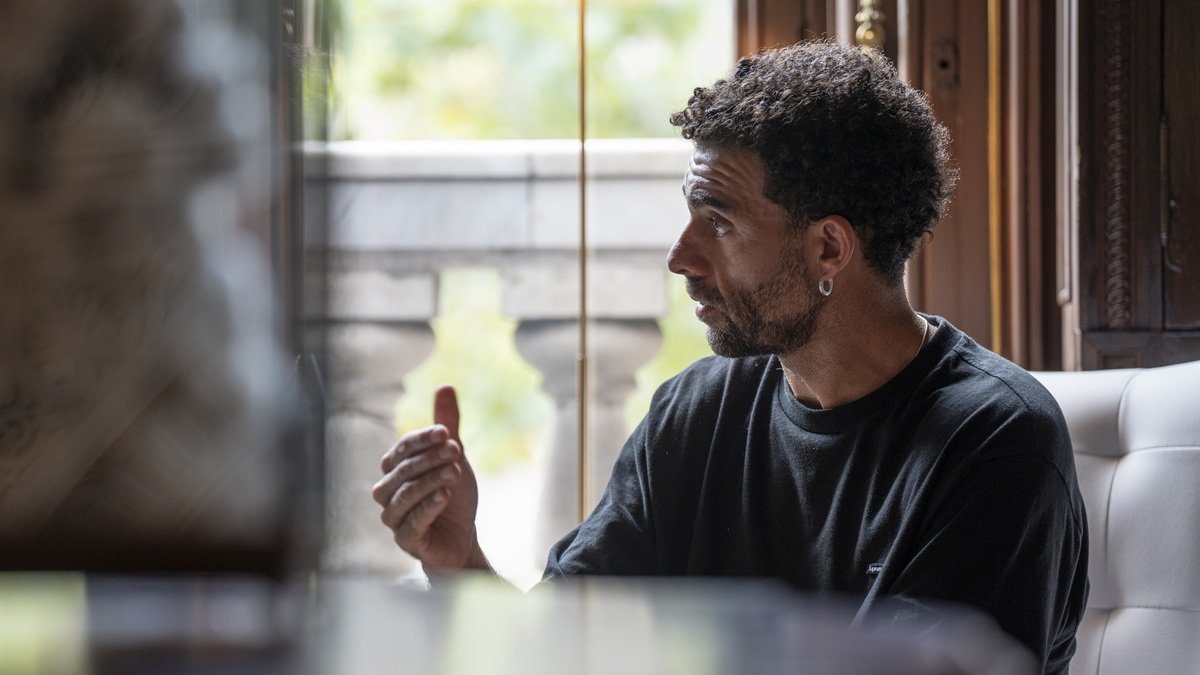


What are the similarities between a fashion brand and a media outlet? A priori, not much. However, after a whole professional life dedicated to marketing, for Guillem Gallego it makes perfect sense for companies to act, practically, like newspapers. “Brands should be media, they should communicate a lot and tell many stories so that audiences are always interested in what they say, beyond their products,“ he says.
Guillem Gallego is currently vice president and general manager for Iberia at Highsnobiety. He left Barcelona at the age of 17 to finish high school in California, a city that awakened his interest in sports and fashion. After two years, he returned to his hometown to study Audiovisual Communication and began working in an event organization agency that, in turn, worked for Nike. This allowed him to meet the team of the sports equipment giant, for which he ended up working for fifteen years, occupying different positions, some managerial. In 2019, she signed on with Desigual, where she captained some of the Catalan fashion company’s most distinctive makeovers.
Gallego understands that separating marketing from product “is a big mistake,“ and is something that “Spanish companies have not yet understood,“ with the exception of the new players. “The fact that marketing is explaining stories and the product is focused only on the product doubles the communication, which neither ends up being effective nor works,“ he says. For him, the key is to “put the community at the center and build a system around that audience.“
“In Spain, we have great retailers, but we don’t have great brands today,“ says Gallego
But not everything goes. “We are in one of the most boring moments in the history of fashion,“ says the executive, who points directly to the big brands. “They just can’t find a way to be themselves: they simply copy everything they see,“ he laments. Where interesting strategies can be drawn from is precisely from the small ones. “The more new-generation proposals, such as TwoJeys, will do anything to constantly excite their audience,“ he points out. From events to products and store openings, “everything has a brand narrative behind it.
Guillem Gallego sets his sights on Spain. “I don’t think we have great brands here, but we have great retailers. We are the kings of fast fashion, but we have not managed to excite as they have managed to do in Paris, Milan, Copenhagen, London or Berlin,“ he reflects. There, “they connect with culture, sometimes with art, with entertainment”. Be that as it may, in Spain “we have to improve a lot in communication and marketing”.
In fact, to the big companies, he recommends that they look at the small ones, at “these new players that are coming in and are having a great effect on fashion”, such as Nude Project, Cold Culture, Cold Culture, and others. such as Nude Project, Cold Culture, Eme Studios and, with special emphasis, TwoJeys, which “are generating energy and are the ones with the most authentic proposal”. Gallego finds in all of them “something that we haven’t seen for a long time and that is refreshing”. His taste for these brands, he specifies, has less to do with the product they offer. In terms of design, we are not seeing great innovation, but rather creative proposals that we can find in several streetwear brands,“ he says.
Gallego affirms: “We have reached the peak of what can be done with collaborations”
As for his favorites, the most complete, Gallego also names Maison Margiela, a historic Parisian firm that stands out for remaining “very faithful to its design and communication proposal” and for having “built over the years this consistency that is a pleasure to see”. Asked about a project he is particularly proud of, Gallego finds it difficult to decide on a favorite. He remembers Nike in 2010, when he carried out a project with FC Barcelona that united culture and soccer, with figures as diverse as a sketeboard player, Rosalía and young people from the Raval.
Desigual also recalls, in 2019, with its return to fashion shows. The starting point was in Miami with models, all dancers, who started parading dressed and ended up naked, in homage to Desigual’s first logo, which depicted a man and a woman holding hands, without clothes.
Finally, something he believes is running out of steam: collaborations. “We have reached the peak of what can be done with collaborations,“ he says. He specifies that “they are only interesting when the artist takes a different look, gives it a twist and takes it to a new place, presents something unexpected.“ Otherwise, collaborations are nothing more than “a somewhat worn-out marketing technique”. Gallego assures that it is perfectly possible to succeed as a brand without the need to carry them out.
Solo adventure
A lot has happened since Guillem Gallego started working in the marketing world. He says that he started in the events sector until, in the 2000s, everything began to go digital. “Ecommerce became essential,“ he recalls.
“It has taken us almost fifteen years to understand how to make digital as effective as possible and, now, with the arrival of Artificial Intelligence and with marketing so installed in society, what brands are doing again are events; we have returned to see how brands return to interact with consumers in a physical way, as before,“ he stresses. And so, “the circle is closed”.
Guillem Gallego is now launching his own project. It is called La Kuina, a name that refers to the Catalan word cuina (kitchen), because he and his family have always cooked up the best and most creative ideas in the kitchen. It is a branding and marketing consultancy “with a creative and unstructured filter”, says the entrepreneur. For the time being, he will combine his new adventure with the position he holds at Highsnobiety.
Related content
Birkenstock projects double-digit growth through 2028 with renewed strategy
29 ene 2026 - 11:16
Levi Strauss Boosts Profitability: Dodges Tariff Impact and Triples Earnings
29 ene 2026 - 11:15
H&M keeps its finger on the pulse and earns 4.6% more at fiscal year-end
29 ene 2026 - 11:10
Gordon Brothers Takes Over LK Bennett, Sets Stage for Global Expansion
28 ene 2026 - 12:33
Latest news
Birkenstock projects double-digit growth through 2028 with renewed strategy
29 ene 2026 - 11:16
Levi Strauss Boosts Profitability: Dodges Tariff Impact and Triples Earnings
29 ene 2026 - 11:15
H&M keeps its finger on the pulse and earns 4.6% more at fiscal year-end
29 ene 2026 - 11:10
Gordon Brothers Takes Over LK Bennett, Sets Stage for Global Expansion
28 ene 2026 - 12:33