Gonzalo Brujó of Interbrand on Crisis Communication: “Brands Must Amplify Their Message”
According to Interbrand’s global president, the “quiet approach” and local market focus of brands in response to recent geopolitical turmoil are slowing down expansion efforts.
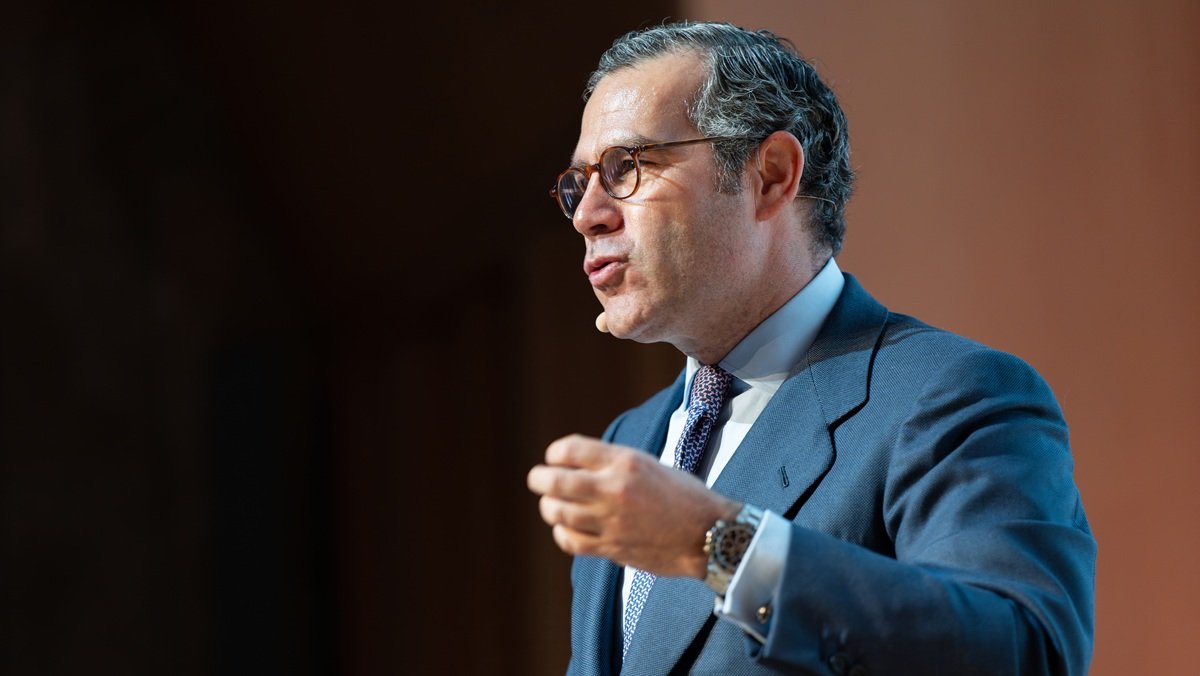


“Brands have to overcommunicate; especially in turbulent times, brands have to remind consumers that they are there”. So says Gonzalo Brujó, president and CEO of brand consultancy Interbrand. The geopolitical context has meant that, over the last three years, many brands have opted for “a low profile”, which has had an impact on the valuation of the world’s leading brands in all sectors.
“Many brands have had a low profile, not investing as much in branding and communication as they should, and now, for the third year in a row, you can see the effect on many of the brands, which have gone down,“ Brujó points out. This is one of the reasons why the world’s most valuable brands have been stagnating in their valuation evolution for three years, he says.
The total value of the 100 brands included in Best Global Brands stands at 6.3 trillion dollars, an increase of 4.4% over 2024. Once again this year, Apple consolidates its position as the world’s most valuable brand with $471 billion (down 4%), followed by Microsoft ($388.5 billion, up 10%) and Amazon ($319.9 billion, up 7%).
“The second point that explains this stagnation in the increase in brand value is that many brands are focusing on their natural markets: American brands in America, European brands in Europe and Asian brands in Asia,“ analyzes Brujó. The executive believes that, as a result of the impact of geopolitics, “brands are becoming tamer,“ because at a time of international upheaval they are focusing on their local markets, where they are stronger. “We have seen this factor for the second year in a row, but this year we see it more accentuated,“ he adds.
“Many brands have had a low profile, not investing as much in branding and communication as they should, and now, for the third consecutive year, we are seeing the effect on many of the brands, which have gone down,“ says Gonzalo Brujó
While there has been overall growth in this year’s rankings, there have also been significant movements, “with historic advances, twelve new additions and some notable declines.“
Among the declines, particularly notable are those of brands operating in the luxury sector, with operators such as Gucci suffering particularly badly. Among the best performing brands are, for example, Nvidia (with a 115% increase in valuation), Netflix (with a 42% increase) or Youtube, with a 61% rise in valuation.
“The winners in this year’s ranking have been able to seize the opportunities that radical realities have given them,“ Interbrand points out. The companies making the 2025 ranking, which include Booking.com, Uniqlo, Monster and Shopify, “solve specific and unique problems for their customers.“ “They do one thing, but they do it incredibly well,“ Brujó notes; “continued investments in their brands will be important to continue to grow and protect them from competition.
Companies like Booking, Uniqlo or Monster “do one thing, but they do it incredibly well”
Fashion: from luxury to mass consumption
What is happening in a sector like fashion? For Brujó, the evolution of fashion brands is conditioned by the comparison with the rest of the sector. In his opinion, the overall growth is a consequence of the large investments in relation to Artificial Intelligence or digitalization, which are actually concentrated in the technology sector. “This all looks like it’s amazing, it’s growing, it’s putting billions, but mainly it’s a certain industry,“ he says.
In fashion, in both luxury and mass retail, the evolutions are very uneven depending on the company, with brands evolving upwards, such as Hermès or Zara, and others going downwards, such as Louis Vuitton or H&M. “In luxury, especially, there has been, as in automotive, an impact from China, with the slowdown in consumption.“
As in all uncertain economic cycles in which there is a lot of inflection, it can be seen that the brands in the super-high segments are going up and those in the super-low segments also tend to go up,“ says the president of Interbrand; “those brands that are premium but not top brands are a little more affected.
“In uncertain economic cycles, brands in the super high and super low segments usually go up; those that are premium are a little bit more affected”
In mass market, Zara is taking advantage of “reinvention”, evolving “the total look towards new categories, such as optics or cosmetics, and with collaborations and cobrandings and betting on superior quality”. Uniqlo, on the other hand, “what is working for them is expansion”. “They are still in a phase of expansion where they are opening and are still new in many of the markets: Uniqlo is still with that kind of momentum that comes from its own natural expansion in the markets where it is operating,“ Brujó says.
In contrast to Ikea or H&M, which lose 9% and 13% in valuation by 2025, respectively, Uniqlo is, according to Interbrand, “a rare retail growth story” thanks to its “international expansion and brand consistency.“ “When everyone is moving out of stores and betting on digital business, Uniqlo is revamping its stores, just like Apple once did,“ says Brujó. “Many times retail companies are already betting only on digital, digital, digital, digital, and they forget that capex must also be dedicated to stores and leave them outdated,“ he adds.
The rise of Netflix and YouTube
In the 2025 edition of the Best Global Brands report, digital media and entertainment platforms saw some of the biggest increases in brand value between 2024 and 2025. Instagram grew by 27% and entered the top ten for the first time; YouTube raised its valuation by 61% and climbed to 13th place, while Netflix soared by 42% and moved up ten places to 28th.
“Netflix’s expansion into video games, sports and live events underpins its momentum, while YouTube has expanded the role influencers play in creating demand for promoted products and revenue streams for creators,“ Interbrand says. “The strength of entertainment is also reflected in Amazon, with its Prime Video product, in the number three position, and Disney, with its broad entertainment portfolio, including platforms, in the top twenty,“ the consultancy adds.
The strength of these platforms indicates, according to Brujó, that “we are at a time when we have to over-communicate a lot more”. In addition, “new consumers are communicating in a different way and are using these platforms to communicate”, so that “they are all on digital channels activating brands in a different way”.
“Brands have to explain themselves very very well at a time where everyone has to very little time to buy: we are at capacity, we have a lot of plans.... Brands have to over-communicate, especially in turbulent times, they have to remind the consumer that they are there,“ he says. But, he warns, “you not only have to want to communicate, but also have a very clear storytelling so that the consumer sees that there really is a very clear strategy and that you are offering him something he wants.
Related content

Birkenstock projects double-digit growth through 2028 with renewed strategy
29 ene 2026 - 11:16

Levi Strauss Boosts Profitability: Dodges Tariff Impact and Triples Earnings
29 ene 2026 - 11:15
H&M keeps its finger on the pulse and earns 4.6% more at fiscal year-end
29 ene 2026 - 11:10

Gordon Brothers Takes Over LK Bennett, Sets Stage for Global Expansion
28 ene 2026 - 12:33
Latest news
Birkenstock projects double-digit growth through 2028 with renewed strategy
29 ene 2026 - 11:16
Levi Strauss Boosts Profitability: Dodges Tariff Impact and Triples Earnings
29 ene 2026 - 11:15
H&M keeps its finger on the pulse and earns 4.6% more at fiscal year-end
29 ene 2026 - 11:10
Gordon Brothers Takes Over LK Bennett, Sets Stage for Global Expansion
28 ene 2026 - 12:33