Elena Carasso on Change: “Revolutions Start at the Bottom, Yet Require Top-Tier Backing”
Former Mango e-commerce chief gives her first interview post-departure, delving into the challenges facing the sector and reflecting on her career and insights into online retail.
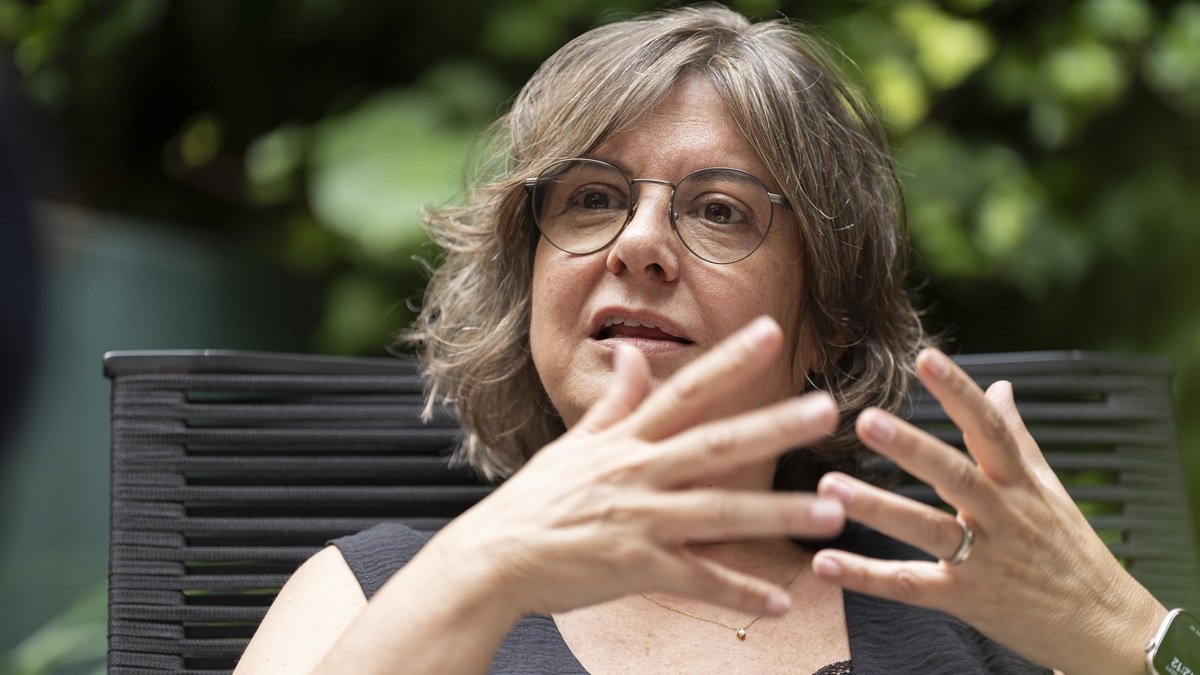


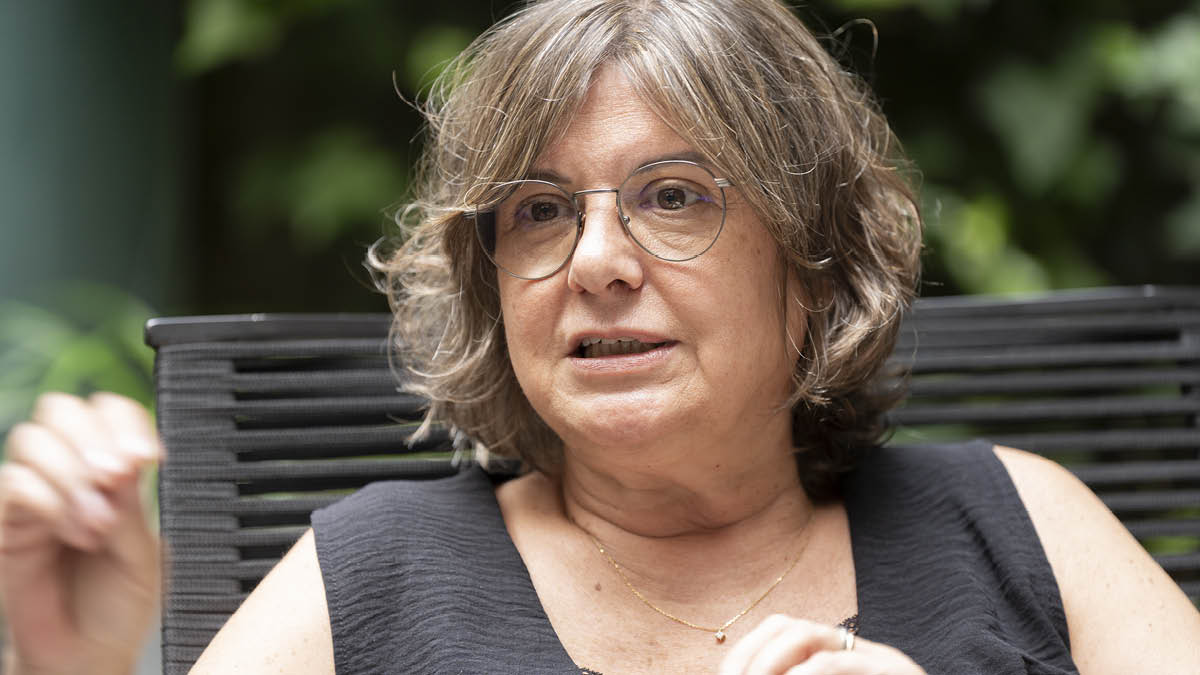
More than thirty years of experience endorse Elena Carasso. It is a question of time, but also of facts: launching the first intranet, the first website and having turned Mango into one of the benchmark companies in fashion ecommerce. After more than three decades in the Spanish fashion retail group, Carasso (Barcelona, 1968) has decided to change course and leave day-to-day management to move into consulting. He says that he still misses the sales sheet every morning and in his speech the name of Isak Andic resonates frequently, but in his look to the future he touches all the links in the value chain of the fashion industry.
Question: Have you already adapted to your new life?
Answer: Well, I’m working on it. I still miss the seven o’clock in the morning adrenaline rush of receiving the sales sheet. I’ve actually joked with my team on occasion and asked them to send it to me. I’m still learning how to get organized, but I’m already on some projects and getting into others. I’ve been preparing for this change, which is going to be a big one for me, for a while now. I’m very hands on, very roll up my sleeves, very executive. And everyone tells me that I am going to have to learn to be a counselor. From experience and from everything I know, I have to add value and let the executives do the work. I’m not an executive anymore. And everybody says that’s what’s going to cost me the most. I’ll tell you.
Q.: From graphic design to being one of the top ecommerce experts in Spain. What would you say has led you to develop such a career?
A.: Obviously when I started I didn’t imagine this kind of career. I was a designer and dreamed of having my own independent design studio: I especially liked packaging and signage. Deep down, I liked to communicate through image, which is really what we do in digital. I joined Mango as a designer, and the truth is that it has allowed me to do a lot of things and it has allowed me to pursue my career. Both Isak (Andic), Enric (Casi) and Toni (Ruiz) have believed in me and have let me do things. Throughout my career I have gone through technology, operations, logistics... I even took a master’s degree in logistics to get up to speed. I launched the first Intranet at Mango. I also got involved in electronic invoicing and invoicing processes, I traveled around the world looking for label suppliers, I was involved in the project of the first automated warehouse, the one in Parets del Vallès, in Barcelona... And finally, the jewel in the crown, ecommerce. I’ve had a lot of fun, I’ve learned a lot. There are things that suited me more and things that suited me less, obviously, but I have been able to evolve by doing them.
“Today, CEOs are much more prepared in areas such as technology”
Q.: Having seen the entire industry value chain, which link did you like the most?
A.: The one I ended up staying in, ecommerce. In 2009, Isak told me that I was carrying too much stuff and that, although ecommerce was still small, I should drop it all to focus on digital. “I want you to put it at the top of everything,“ he told me. Focus, focus, focus. And that’s what I did and then we hit a high. In my opinion, ecommerce combines the digital part with communication, with a one-to-one relationship with the customer, with technology... You touch many touch points if you are looking for a journey that makes sense. It also has that part of commercial adrenaline. When we launched the first online store, I thought I wasn’t a salesperson, but I discovered that I loved that adrenaline.
Q.: Isak Andic said that when you talked to him about ecommerce at first he didn’t understand anything, but he still told you to go for it. How do you convince a CEO of something he doesn’t understand?
A.: Nowadays things have changed a lot. CEOs are much more prepared with all these issues. It is true that in the past, technology and ecommerce were very limited to certain departments and they were like an island that did a little bit of what had to be done, nobody understood and, basically, you were dispatched when there were big investments. But now, with the whole digital revolution or with AI, I don’t think there is any CEO of any major company that doesn’t have all this on their agenda. So it’s not hard to convince anymore, because for CEOs it’s as high on the agenda as finance, sustainability or expansion. It is one more item on the CEO’s agenda. It is much easier, they are much more prepared and they know much more.
Q.: But how do you convince them?
A.: In large companies it may be more difficult to move than in other smaller companies, but mainly two things come into play. The first is your ability to influence. If a manager has credibility and the ability to influence, if he or she has enough experience to be able to communicate well and present something that can add value to the company, companies today are saving resources to innovate. But you have to be clear that a company has to protect its current business. You have to combine, because if companies do not move forward, they die. Large companies have to combine the current business, because they have a lot at stake, with not standing still, because society evolves and sometimes it evolves faster than companies. If you have a prepared team and you have the ability to influence, today’s CEOs are up to date with all the issues that are coming; it’s not a geek product; neither sustainability, nor ecommerce, nor technology, much less AI, it’s no longer a geek product, it’s everywhere.
Q.: Is it possible to be an entrepreneur in a large multinational?
A.: It would be a bit daring to say that I was an entrepreneur. Isak told me so and Mango allowed me to do it, so I believed it a little. The big companies know that, especially in our sector, if you don’t innovate, if you don’t try things out, if you don’t move forward, you can die. Nowadays, resources are allocated to innovation, so it’s not a big problem. The big problem is knowing how to pilot. If you get into a very innovative project, which you want to test, but instead of making an MVP, you start making the big project by mining resources, it will be a failure. You have to start testing as you do everything in digital, little by little. It’s about testing and, if you see that it works, fits and makes sense, then accelerate.
Q.: Does size numb companies, especially in a sector like fashion?
A.: There are companies that have become numb to size and we have examples. It can happen because in a large company you have to convince more people, there are more structures, you have to reach more consensus... in short, you have to make things move. But if you have the capacity to influence, you know how to present things in a strategic way, with a long-term vision and starting little by little without putting the business or the brand at risk, which is the most important thing, companies tend to go for it and there are resources to do so.
Q.: Who should drive innovation in a company: the CEO, the owner or the managers?
A.: Obviously you have to have the support of the CEO and the owner, because if the top management does not see it, it is very difficult to move something. Even if revolutions can come from below, if there is no support from above they cannot happen. Today you can no longer work in silos. In other words, the organization has to be focused. A very good strategy poorly implemented can be a failure. A mediocre strategy that is very well implemented may work. You really have to pull everyone in the same direction. That is very important. Unless you are creating a parallel business, a totally different unit, then you can afford other things.
Q.: What does a multinational have to envy from start-ups?
A.: Probably in a start-up there is much more freshness and agility. A start-up is playing for the future, but not the present, and that takes the pressure off. They don’t have to protect so much, so they can be more daring. When you are a big company you have to be much more careful.
“A big company has to think about protecting its current business, it’s not all about innovating”
Q.: In a trajectory like yours and in a segment as unexplored as the digital arena, mistakes must have been frequent. How do you manage mistakes?
A.: First of all, with a lot of humility and recognizing that it is a mistake. From there, you look back at why the mistake happened. Did I launch something prematurely? Have I launched something that doesn’t really add value to the company or the customer? Is the problem that the idea is brilliant but the execution is lousy? If it’s an execution problem, try it again in a different way. Isak always said that mistakes allow you to learn and evolve. You have to analyze them, you have to stop and think and take that retrospective look at where the mistake has been and how we can prevent it from happening in the future.
Q.: At Mango you had one of the largest teams (in size) in the company. How do you build a team? What recommendations would you give to someone who is setting it up now?
A.: The first thing about talent is, one, capacity, that is, good professionals who have the capacity for the challenges that need to be tackled, which can vary depending on the moment or what the company needs, and then that they are a good person. Isak said: 50% good professional, 50% good person. And, above all, commitment. When you start from scratch, you start with a very small team. If you get a talented and committed team, with passion, you can do whatever you want, because as you grow, everything cascades. It’s true that when the teams are bigger, things change. If you don’t have a combination of talent, passion, engagement and commitment, and that you fit with the culture and have very clear values, it can’t work well.
Q.: Tell me about the history of ecommerce in Spain through your experience?
A.: We Mediterranean countries were late to enter ecommerce. It all started in the United States, followed very quickly by the Anglo-Saxons, then in Eastern Europe, Germany, the Nordic countries... the Mediterranean countries lagged a little behind and started later. In fashion, at the beginning, we relied a lot on price: what worked first were the private sales, which were still leftovers of series and the price bargain. Everything has changed a lot. Now on the Net you look for inspiration, you look for novelty, you look to be the first to access something. Spain is at the point where you go to buy and you get inspiration on the Net, regardless of where you buy.
Q.: What have been the turning points for ecommerce?
A.: I remember when we started talking about ecommerce, 300,000 years ago, people didn’t trust putting in their credit card information. Then Zara came along and revolutionized everything. Before, I was also talking about Vente Privee, Privalias? Then came Amazon, which was also a revolution. The first turning point was reliability. As soon as the pure players became bigger and more reliable and large companies with a reputation entered the market, everything changed, because trust began to increase. The next point was supply: you don’t go shopping on a street where there is only one store. The beginnings at Mango were quite hard, because we were almost alone. And there is no demand without supply. As soon as everyone started to go online, we finally had a shopping street where you could go shopping and get inspired. And everything grew globally. Suddenly the pandemic hit, and it’s not that there were no options, it’s that there was no other option. And with the reopening, they have become omnichannel customers, who are the ones who give more value to companies because they are more loyal.
Q.: Is there a limit to ecommerce?
A.: The limit is what the company wants and what the customer wants. We have fashion companies that are pure players and are moving down to retail and fashion companies that have ecommerce. Each company must develop its own strategy. A combination of channels is totally healthy. And then it will depend on your strategy: if you have a very large portfolio of stores in a market, you need traffic, because otherwise the physical store would not be sustainable, so you have to push the physical store a lot and complement it with the digital channel. If you don’t have a network of stores in a market, digital allows you to reach everywhere and can even lead to physical expansion. I can’t imagine cities without shopping arteries, even secondary ones. Shopping is not just a necessity; sometimes it is a way to socialize and you leave with the product in your hand, it is immediate. There are certain advantages in the physical channel that I don’t think the digital channel makes up for, and there are certain advantages in the digital channel that the physical channel doesn’t make up for.
Q.: Today people arrive at stores or access brand campaigns already knowing the entire collection. Does ecommerce commoditize fashion?
A.: No, I don’t think so, because in the end commoditizing would mean that the perceived value would be less and less and that we would get into price wars, which can happen in the online world as well as in the physical world. It has nothing to do with that. The Web today is at a much more inspiring point. Obviously, price is still important. Going on sale online is much more convenient.
Q.: First there was talk of multichannel, then of omnichannel, today of phygital experience. Has omni-channeling already been achieved?
A.: Yes and no, it is not yet mature. Basically, all brands have omnichannel services and some do it better and some do it worse. But there is still differentiation. There is still no 100% guaranteed frictionless journeys. When you have a problem, whether it’s with a piece of furniture or a garment, they always ask you in which channel you bought it. And we’re not just talking about online or physical, we’re also talking about corners in department stores, stores in airports... we haven’t yet reached that point where it doesn’t matter where the customer decides to be inspired and where to transact.
“I can’t imagine cities without shopping arteries; there are advantages of the physical store that the online channel can’t make up for”
Q.: And what are those frictions that make the experience not homogeneous?
A.: From different return policies, differences in services? There are people who do very well online and then you go into the store and it’s like... it pushes you back. There are people who do very well in the physical store and then online it’s a big disappointment. I’m also not a big fan of players who make price differences between channels. And there are still some of those. In the end, what matters is the brand and the customer expects different things from each brand.
Q.: Why are returns still a headache for the sector?
A.: They are a pain point much more in ecommerce than in the physical store, it is a question of volume. It is difficult to fix, but it is not impossible. In fashion, returns are much higher than in other sectors: you don’t return a washing machine. In recent years, we have been making progress in describing clothes, thanks to technology. We communicate with image, we describe with image, so you have to be very, very descriptive, and there is technology (video, virtual reality...) that allows us to do it better. But what is not solved is the fit. And I mean fit, not size. The problem is in the size if you don’t know the brand and 80% of your closet are brands you already know. We don’t know how to show you that fit, how it will suit you, so you have to know yourself very well. But even knowing yourself well, we don’t describe you well. Technology has to evolve so that, either through personalization or recommendation, it can recommend you well, it can advise you well.
Q.: There are companies that have started charging for returns. Is the consumer being educated through punishment?
A.: What we need to do is to fix our own problems before penalizing the customer. It is necessary to make an analysis of what I am doing wrong so that they return me so much. There are brands that have a very good and very homogeneous quality and there are brands that have a diversity of quality. What you have to do is to give the product that the customer expects. If you know a brand well and you expect quality, when you receive something that does not meet those expectations, it is going to be a sure return. I believe that before penalizing the customer, you have to fix the internal problems of the company itself.
Q.: New companies have disrupted the way they communicate. Is that the way things are going?
A.: It is not so easy to make a publication with interesting content. It is true that the world is driven by content consumption. We consume content, content, content, content and we consume it very quickly and our attention span is very low. We swallow a series in a weekend and then we may not find anything that inspires us for several weeks. The world today is about micro-moments. Brands have to be content creators, it doesn’t have to be a podcast. It has to be content that fits with the brand, you can inspire with your clothes or with your campaigns.
Q.: Toni Segarra says that brands must have an editorial line.
A.: In the past, there was no need, but the Web has brought us a lot of information and a one-to-one relationship with the customer. If you don’t speak, they will speak for you. More and more you have to position yourself on topics and you have to talk about issues that you might have avoided before. Why? Because they’re going to ask you about it anyway or there’s going to be comments on the Web about it. But this is not something we see so often. Most fashion brands, really, except for the small ones or the ones that have a very strong character, are very neutral brands. The problem is that they are very, very global brands. We are everywhere and very open-minded and multicultural.
Q.: Is ecommerce sustainable?
A.: Ecommerce is not very sustainable, especially because of transportation. The ecommerce boom is already unstoppable because it often solves your life as a consumer, but, especially in large urban centers with a lot of traffic and a lot of emissions, it is necessary to move towards the challenge of transport consolidation, delivery points, consolidated routes. Consolidations, delivery points, consolidated routes, that would be the summary. I guess it hasn’t happened yet because there are interests on all sides and because we still don’t care enough. The last mile can be optimized and made more efficient. And we have to work together: governments, logistics operators and brands.
Q.: Give us a prediction for the fashion industry in the next ten years.
A.: Some time ago I was asked this same question and I answered the same thing and it hasn’t happened yet, maybe I’m too far ahead. I am going to join two big trends: sustainability and customization. Fashion must move towards productions closer to demand, less leftovers, smaller batches. And this will be achieved when we manage to automate part of the production process. A lot of progress has been made, especially in the creation of raw materials, but no progress has been made in clothing. It is incredible that we can operate on people surgically with robots, but we cannot make a garment yet. As the production service becomes more automated, volume will become less and less important. The big challenges are at the beginning and at the end of the chain: how we produce garments and consumer changes.
Related content
Birkenstock projects double-digit growth through 2028 with renewed strategy
29 ene 2026 - 11:16

Levi Strauss Boosts Profitability: Dodges Tariff Impact and Triples Earnings
29 ene 2026 - 11:15
H&M keeps its finger on the pulse and earns 4.6% more at fiscal year-end
29 ene 2026 - 11:10
Gordon Brothers Takes Over LK Bennett, Sets Stage for Global Expansion
28 ene 2026 - 12:33
Latest news
Birkenstock projects double-digit growth through 2028 with renewed strategy
29 ene 2026 - 11:16
Levi Strauss Boosts Profitability: Dodges Tariff Impact and Triples Earnings
29 ene 2026 - 11:15
H&M keeps its finger on the pulse and earns 4.6% more at fiscal year-end
29 ene 2026 - 11:10
Gordon Brothers Takes Over LK Bennett, Sets Stage for Global Expansion
28 ene 2026 - 12:33