Domingos Esteves on Consumer Trust: “Value Your Product or Watch Respect Fade”
Highlighting the need for cohesive retail strategies, the former C&A leader emphasizes the importance of unifying sales channels and nurturing holistic leadership to effectively communicate business insights and ensure team alignment.
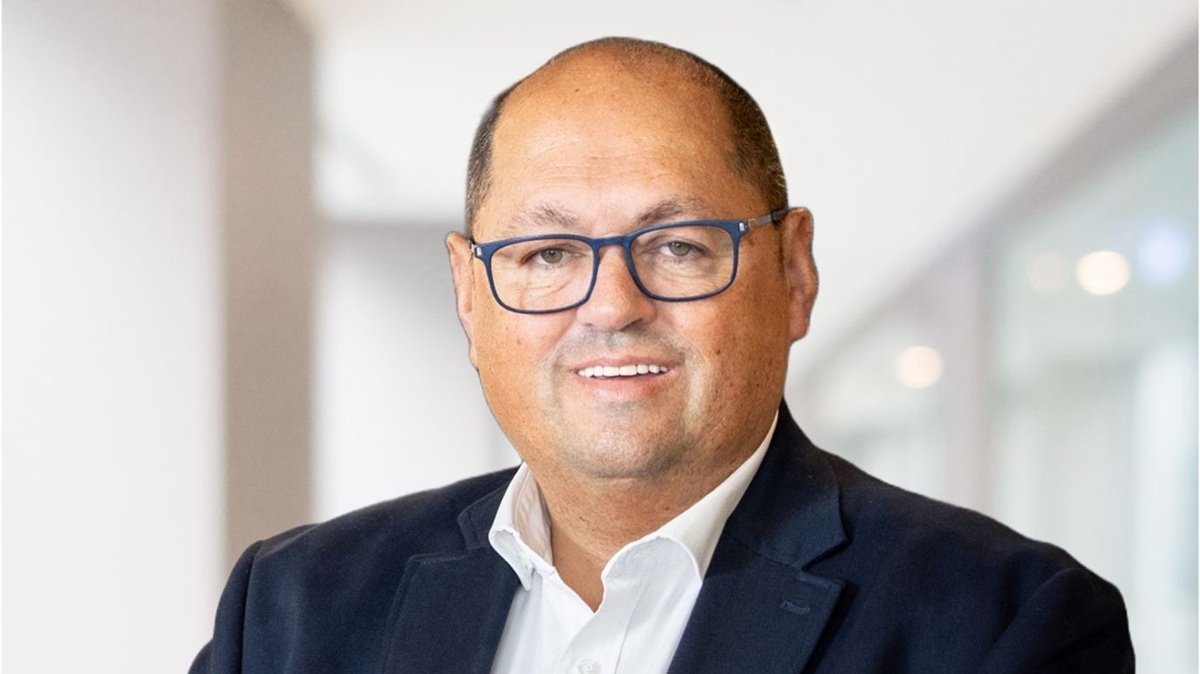

Domingos Esteves has a long history in the retail business and is now embarking on a new professional adventure. With a degree in Business Administration and Management from the Instituto Superior de Lenguas e Administração de Lisboa, he has spent most of his career at C&A, where he became general manager for Spain and Portugal from March 2016 to November 2021. The executive was in charge of the group’s operations in China and, later, of the stores for Spain and Portugal. He is currently immersed in his own consulting project for companies in the fashion industry, which he has just launched together with Mar Melero: FWD Advisors.
Question: You have a long career in the sector. Does the current uncertain moment remind you of another in the past?
Answer: The fashion industry works in cycles. Although memory is short, things repeat themselves very often, even with different causes and for different reasons. We still need to reinvent ourselves and be resilient. There is progress, but there are also persistent challenges that creep in and remain. We have to look inward and see what direction we are taking. Spanish fashion is facing a situation with fragile demand and clear pressure from consumers when it comes to making purchasing decisions. In terms of domestic consumption, we are at lower levels than before the pandemic, and that puts a lot of pressure on physical retail and on transformation strategies. If we look at the monthly evolution and the accumulated sales for the year, there is a clear slowdown. Domestic consumption is weak, inflation is not letting up. Consumers have a more moderate attitude when it comes to consumption. We are once again experiencing, although this is not new either, a promotional saturation, with discounts at all hours and at all times. This is eroding value and margins and affecting growth. On the other hand, stores continue to gain relevance, and that is a positive factor. We have never had so many changes, so fast, in the way we consume.
Q.: Is fashion nervous?
A.: I wouldn’t say that companies are nervous. We have experienced so many surprising phenomena in the last few years that we already have volatility built in. But they are worried, yes. Especially those that have to answer to their investors or those that are in the stock market. Besides, we are not doing badly in terms of profitability.
Q.: With the arrival of new players on the scene, the rules of the game are changing. How can the more traditional industry compete?
A.: I believe that there are no longer traditional companies, when we talk about large groups. Companies today have a much greater flexibility and capacity to adapt, adjusting to new consumer demands and new trends. In the end, we have to make a commitment to quality, to eco-design, and to work with a purpose. Understanding the consumer. Nowadays, personalization is part of loyalty. We must segment much better.
“We live in a saturation of promotions, which erodes value, margins and growth.“
Q.: What has fashion done well in recent years and where can it improve?
A.: Spanish fashion has carried out a very positive internationalization strategy. In addition, it has taken on the role of an export industry. Its strategies are more consistent. It knows where to go, how to go, how to position itself and how to sell. In terms of profitability, progress has also been made, and it has evolved a lot, as it could not be otherwise, in digitalization. Ecommerce is permeating consumer habits and brands are responding to this demand. In terms of prices, specifically this year, they are stabilizing. Some brands raised prices with inflation and this year they are adjusting again in relation to the quality of the product. We are once again concerned about serving the customer, the product and the shopping experience. And we should improve by unifying and integrating all channels. Consumers want to buy what they want, where they want, how they want, whenever they want. We must unite the physical and the digital in such a way that the customer does not feel a difference, neither in quality nor in service. This must be done hand in hand with profitability. You also have to continue with the integration of stocks in a single model that allows them to be more efficient and adjust them to the potential of sales so that you can live with fewer sales. If we predict demand, adjust it in relation to sizes and help the consumer not to make a mistake in the digital channel when choosing theirs, we will be improving the profitability of the business. Technology has to adapt to people, both to the team, to facilitate their way of working, and to the customer. It has to have a utility and a return. Because the reinvention of retail cannot be based on technology alone; it has to be combined with value propositions. In addition, we must continue to invest in technology. We are clearly betting on Artificial Intelligence for stock management and prediction. Anticipating demand and having highly optimized inventories. This is not new, but now we have better tools than before and we must rely on them.
Q.: What are the risks facing fashion companies today?
A.: The main risk is not understanding your business and your consumer. You have to have a sales purpose, you have to have clear differentiating factors, knowing that in fashion products and services are always similar. You have to understand your customer and give them a sense of personalization. You have to understand that there are no sales channels: there is only one, the customer. Otherwise, you isolate yourself and become just one among many others. In addition, there is a clear difficulty in attracting and retaining talent and training them. Today’s consumers demand more, much more. They want effective, correct and respectful answers. And with automation there is a clear tendency to spend less time serving the customer.
Q.: The last time we interviewed you, you said that fashion had been inefficient. Has it changed?
A.: Sometimes we have stopped giving value to the product we sell, and when we do that, the customer doesn’t respect it either. One of the big mistakes is to get into the price fight. There will always be someone who can sell cheaper. If we get into that game, we encourage the consumer to make decisions based on price. We stop being efficient when we stop communicating the value and attributes of the products we sell and explaining to the customer why the price is right.
“We can’t get into the price fight; there will always be someone able to sell cheaper.“
Q.: What is the fashion industry’s unfinished business?
A.: Consistency. Not to deviate from its strategy, to reinforce its purpose. Customer loyalty will increasingly depend on emotion and the creation of stories. And personalization.
Q.: Why is there so much change in ceos?
A.: That’s true and, moreover, they are happening in a very curious way. Before, the leaders changed, but the teams remained more or less stable. Now, one comes along and changes everything. And this has a clear effect on the coherence and durability of strategies. We have to respond to these management changes and maintain a very consistent vision. On the other hand, there are times when they are simply management fads: replicating what others are doing. In reality, five- or six-year cycles are normal. I don’t see it as a negative to change leadership after having had the opportunity to implement a strategy. The problem is that, in this period, 2020-2025, we have had two years of pandemic. And in many cases the strategy is not implemented, it is not executed. Moreover, in these changes, knowledge, experience and company culture are lost. When you lose culture, you run a risk. Human quality and experience are difficult to replace.
Q.: What kind of leaders are needed in companies today?
A.: We need to improve the type of leadership. We need them to be transversal, integrators, who have a 360-degree vision of their business, but who go down into the mud, down to the point of sale. They should not just sit in their offices, they should listen to their sales team, to the customers, to the market, they should look at their competitors. The different departments have to be united by a global business vision. When you arrive, you have to immerse yourself in the company and set up your teams, usually that takes a while and can hurt consistency a bit. The success lies in the teams knowing how to execute the strategy and that the consumer perceives it, because if they don’t, it’s worthless.
“Leadership changes are positive when you have given time to implement a strategy.“
Q.: Why did you found FWD Advisors?
A.: FWD stands for Forward, i.e., to go forward, to drive the future. We created this because of the great enthusiasm, passion and energy we have, and because of our desire to add value. We think that we can do it in a broader way and that we can be more effective in helping companies. I join Mar Melero, who is a manager with more than 20 years of experience in managing large businesses, driving digital transformation, repositioning, branding. And I add my strategic operational capacity for transformation. We put our experience together. We want to be a strategic consultancy providing comprehensive support to companies with different transformation, growth and professionalization challenges. There is a lot to do in terms of organization, restructuring, scalability, internationalization, differentiation...Our proposal goes from end to end: from the physical and digital channels, to putting the house in order, which are the organizations, the functions, the models, the planning, the culture. Many times there is a brand and there is a product, and the two are not aligned. We want to identify their opportunities or their problems and advise them on the transformation they need. We have experience, with achievements and results. We are passionate about retail, fashion and what we do. We want to have fun adding value.
Q.: What three needs do the professionals you are targeting need to cover?
A.: We have to help them to organize the company. Analyze their entire organization, structure, professionalize, strengthen the channels. Make a very clear diagnosis of where they are and how they can function. To help them to grow. There is a lot of talk about internationalization, but let’s see how we are here. Be relevant in your country and then let’s go abroad. And, once we take the step, we can help them with cultural and regulatory adaptation. Many Latin American brands want to enter Europe and they want to do it through Spain. We can help them make realistic, objective decisions, so they don’t make mistakes. And, if they make a mistake, we have a plan B and C for them.
Related content
Gordon Brothers Takes Over LK Bennett, Sets Stage for Global Expansion
28 ene 2026 - 12:33
Galeries Lafayette Finalizes Sale of BHV Building Amid Shein Controversy
28 ene 2026 - 12:30
VF Corp’s Q3 Results Shine with 28% Boost as Business Reorganization Unfolds
28 ene 2026 - 08:23
Claire’s Faces Another Setback in the UK with Second Bankruptcy in Six Months
28 ene 2026 - 08:21
Latest news
Gordon Brothers Takes Over LK Bennett, Sets Stage for Global Expansion
28 ene 2026 - 12:33
Galeries Lafayette Finalizes Sale of BHV Building Amid Shein Controversy
28 ene 2026 - 12:30
VF Corp’s Q3 Results Shine with 28% Boost as Business Reorganization Unfolds
28 ene 2026 - 08:23
Claire’s Faces Another Setback in the UK with Second Bankruptcy in Six Months
28 ene 2026 - 08:21