Desigual’s Fashion Journey: From Lacroix to Egonlab in Search of the Elusive ‘Je Ne Sais Quoi’
Spanish company has spent over a decade using France as its creative laboratory and aesthetic proving ground through collaborations. Now, amidst a brand repositioning and return to profitability, the company unveils a new partnership.
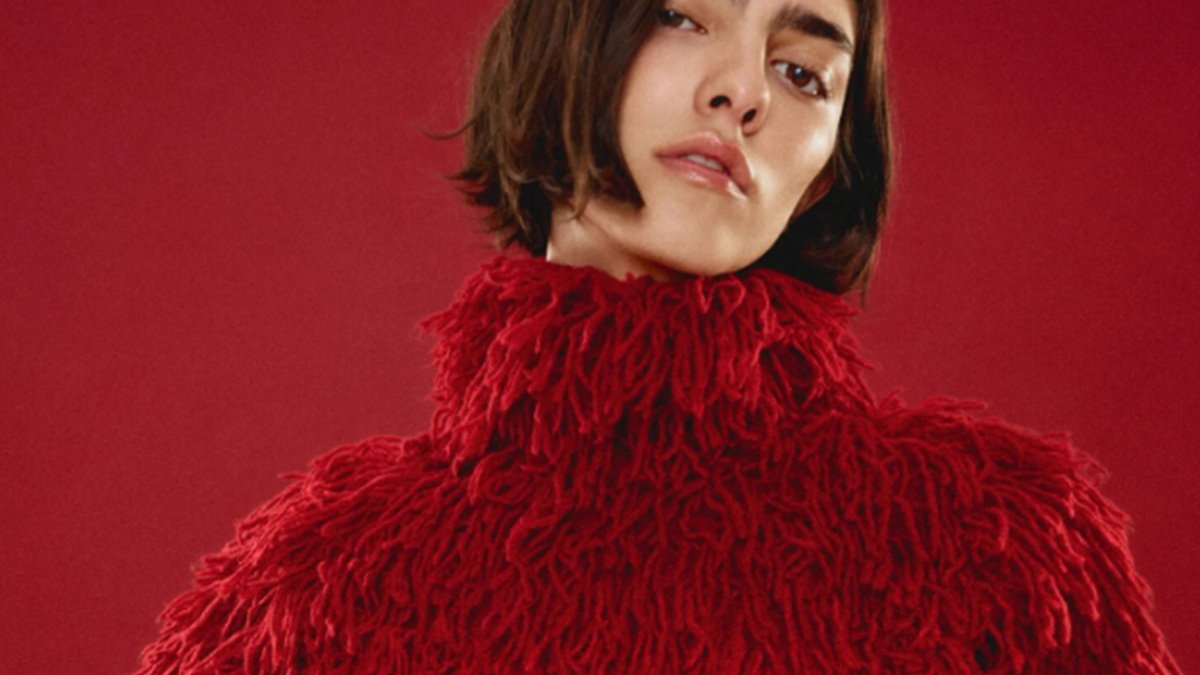


The dialogue between Desigual and France began with an alliance as unexpected as it was coherent, Christian Lacroix. It was 2011 and the French creative known for his exuberant and baroque designs, who had ended the activity of his maison two years earlier, found in the Spanish firm a way to keep alive his aesthetic vision under new contemporary airs. That union between the radical and ornamental theatricality of the south of France and the Mediterranean optimism coined by Thomas Meyer in Barcelona inaugurated a path of co-authorship that still endures today.
That first collaboration went beyond a mere exercise in style. The alliance marked the beginning of an artistic laboratory between Barcelona and Paris, where Desigual has tested its ability to reinvent itself without betraying its identity. France thus became the terrain where the Barcelona brand tested its maturity, a space of symbolic exchange between color and restraint, between Mediterranean intuition and the discipline of French design. Each step in the territory has meant a media movement, but it has also promoted the strategy of legitimization of the Spanish company’s design in the cradle of couture and fashion weeks.
Over time, the neighboring country also became a cultural mirror. For years, the joke circulated in France that Desigual’s clothes, with their bold prints and naïve spirit, were the uniform of Spanish teachers. This ironic cliché reflected both the brand’s notoriety and its difficulty in being perceived as a design firm, one of the reasons behind the progressive implementation of the company’s repositioning plan. Fifteen years after that first idyll with Lacroix, with whom the brand continues to collaborate with good results in Asian markets, Desigual has turned precisely that perception into its battleground to win its own space in the premier league of design.
Desigual has fostered Franco-Catalan dialogue with collections with Lacroix, Maitrepierre and, more recently, Egonlab
The collaboration with Christian Lacroix defined a pioneering model in the medium segment, a haute couture designer bringing artistic legitimacy to a major retail brand. Desigual offered the laboratory and Lacroix, the narrative. His vision, loaded with excess, served to enrich the company’s DNA without diluting it, and the synergy laid the foundations for what are now almost daily collaborations between major fashion retailers such as Inditex and H&M and names in auteur design.
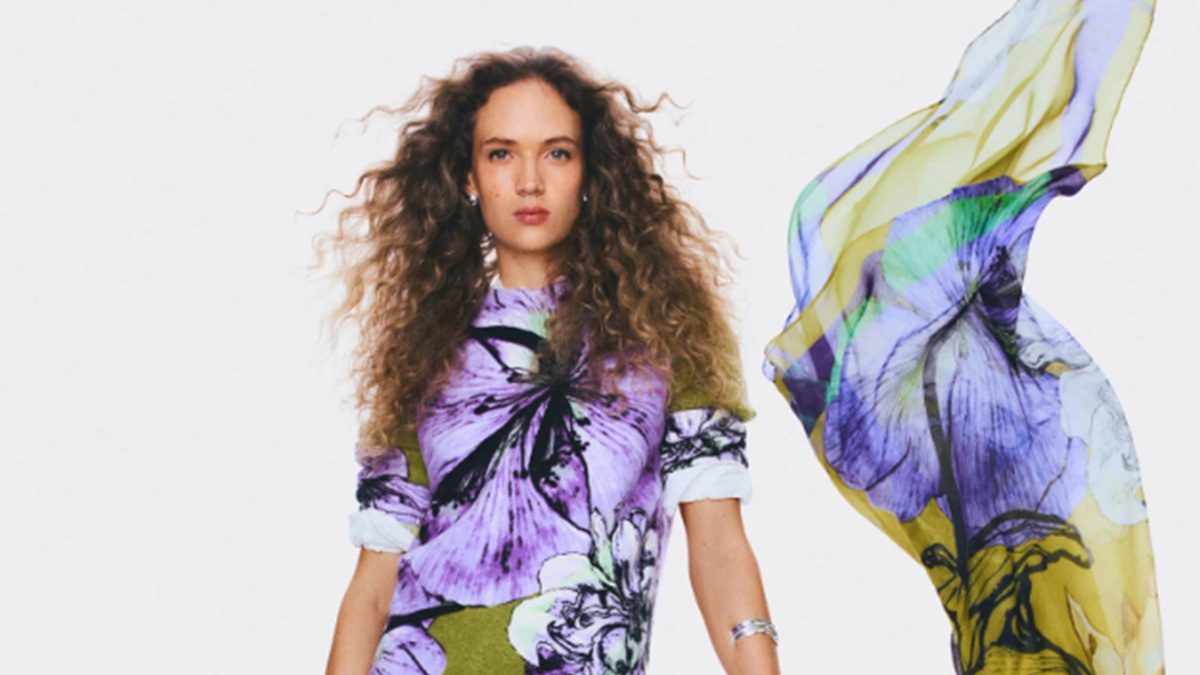
In 2022, the brand extended this dialogue with a new generation of French designers. Under the guidance of Alphonse Maitrepierre, who trained at Maison Margiela and Courrèges, the company explored a more conceptual and digital register, in line with the transition towards a sustainable and technological language, through several limited collections with a slightly higher positioning than its usual proposals. The cycle culminates this year with Egonlab, the Parisian duo founded by Kevin Nompeix and Florentin Glémarec, whose genderless aesthetics and political discourse are in tune with contemporary sensibilities.
“Desigual reminds me of my mother, who was, and still is, a great admirer of the brand,“ Kevin Nompeix explains to Modaes about his recently launched collaboration with the Barcelona-based brand. “Going back through the archives to see that embroidered coat from my childhood was a real Proust madeleine moment and reminded me of how fashion can connect us with memory,“ explains the co-founder of Egonlab, a regular fixture on the Paris Fashion Week calendar.
The designer defines the collaboration as “a dialogue between two creative philosophies that believe in the emotional and cultural power of clothing.“ He adds: “Working with a house like Desigual means finding a balance between heritage and innovation, between freedom and structure.
Thomas Meyer’s company has France among its main markets in terms of turnover
The echo of these partnerships has also been closely linked to the company’s commercial strategy in the hexagonal market. In 2010, the company opened an imposing flagship store in the Opéra area and signed a second 1,200-square-meter store on rue de Rivoli, in the heart of the capital’s commercial hub. Under the direction of Manel Adell, the company then opted for large-format spaces as a physical expression of its power.
Settling in the heart of European luxury implied dialoguing with a demanding public and with an aesthetic tradition that, historically, has defined the fashion canon. The expansion also coincided with the entry of the French fund Eurazeo in the capital, with a minority stake in 2014, which gave the company an unprecedented institutional projection.
But the context has changed. The rise of the online channel, the saturation of shopping streets and new consumer habits led Thomas Meyer to rethink the model. In 2018, after buying back Eurazeo’s stake, the founder pushed for a thorough restructuring of the business and a repositioning that would put an end to the megastore era. His two imposing flagship stores in Paris then kicked the person out.
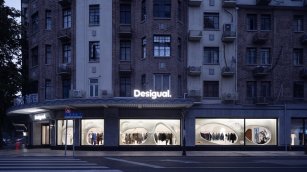
The new phase materialized in 2022 with two flagship openings in Paris. The first, of 93 square meters on rue des Rosiers, in the Marais, and the second, of 273 square meters on rue Bonaparte, in Saint-Germain-des-Prés. “To grow in our main markets, we are committed to emblematic locations; Paris could not be an exception,“ explained Oriol Martinez, Desigual’s commercial director at the time. “We want to get closer to our customers and collaborate with local talent, one of our main competitive assets,“ he added.
Both stores now respond to the new “art gallery” concept, with bright interiors and natural materials that reflect the brand’s aesthetic evolution. Today, the company has 14 company-owned stores in France and 11 outlets in Galeries Lafayette, a balance between selective presence and strategic visibility.
The creative drive has its correlate today in Desigual Studio, the premium line launched in September under the direction of Fernanda Blasco, product manager for women, men and children, with a fashion show held at the Nau de Turbines de les Tres Xemeneies (Barcelona) that symbolized the maturity of the rebranding plan launched in 2019. “The challenge is to maintain the identity, but to elevate it and make it relevant,“ Blasco pointed out in an interview with Modaes. “We want to sell a world, not just garments,“ summed up the creative, who defined the project as “a minimalism with character, not muted, that remains very Desigual.“
The creative transformation is also reflected in the figures. In 2024, the company returned to profit, with a net result of €313,331, compared to a loss of €61 million the previous year. The operating result was drastically reduced, from negative €58.7 million to just negative €424,000, thanks to an adjustment of expenses and a policy of operating efficiency.
Turnover came in at €332 million, down 5.8%, although the company achieved its third consecutive year of organic growth. With equity of €185 million and a debt with financial institutions that barely represents 5% of liabilities, the group controlled by Thomas Meyer has stabilized its structure and consolidated its profitability.
Related content
Desigual’s New CPO on AI: “It’s Not a Threat, But an Ally”
29 oct 2025 - 05:00
Gordon Brothers Takes Over LK Bennett, Sets Stage for Global Expansion
28 ene 2026 - 12:33
Latest news
Gordon Brothers Takes Over LK Bennett, Sets Stage for Global Expansion
28 ene 2026 - 12:33
Galeries Lafayette Finalizes Sale of BHV Building Amid Shein Controversy
28 ene 2026 - 12:30
VF Corp’s Q3 Results Shine with 28% Boost as Business Reorganization Unfolds
28 ene 2026 - 08:23
Claire’s Faces Another Setback in the UK with Second Bankruptcy in Six Months
28 ene 2026 - 08:21