Global Fashion Stocks Tumble in July, Hitting 35-Month Low
Up to eighteen stocks in the fashion sector closed the month down, causing the sixth consecutive drop in the Modaes Global Fashion Benchmark (MGFB35). Boohoo, Adidas and Prada are the worst stocks of the month.
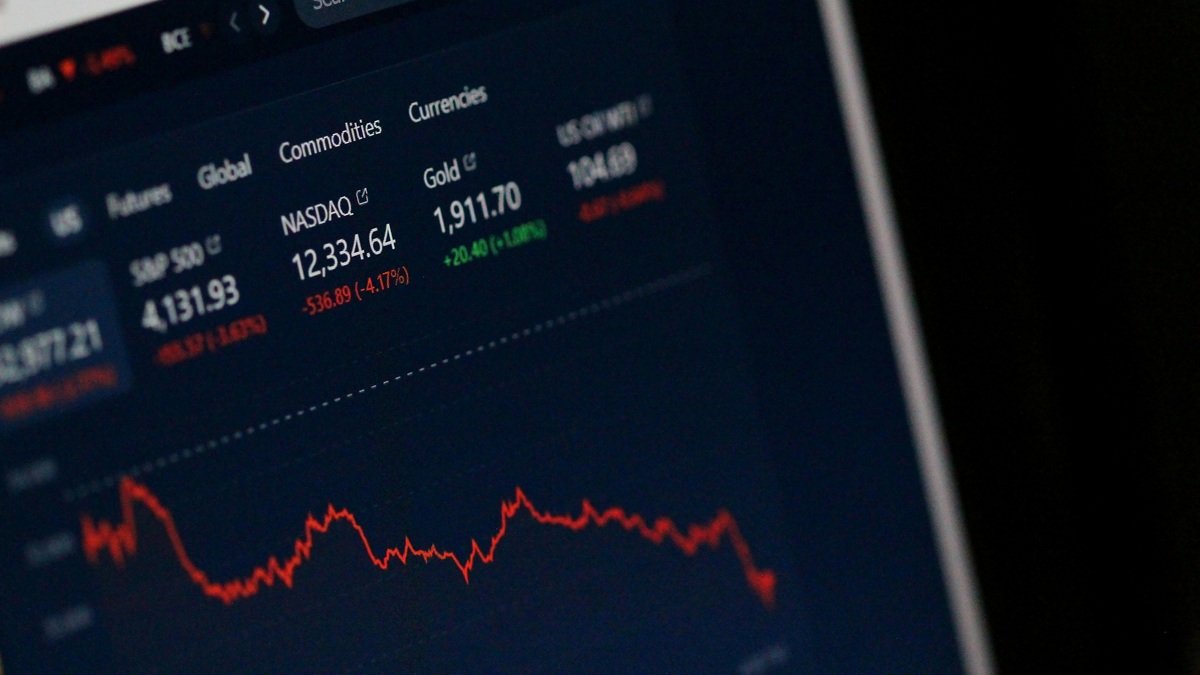


Fashion continues its debacle on the international stock markets. In July, the Modaes Global Fashion Benchmark (MGFB35) recorded its sixth consecutive fall, of 0.7%, to reach its lowest value in 35 months. The indicator, which measures the evolution of the aggregate capitalization of the 35 most representative listed companies in international fashion, closed the month at 28,155 points, the lowest value since October 2022.
As many as eighteen stocks closed the month in negative territory, preventing the rises of the other 17 companies from breaking the MGFB5’s bad streak. In a month with a very uneven performance among the companies in the fashion sector, up to five stocks recorded double-digit declines and five others double-digit rises.
The worst stocks of the month were the UK’s Boohoo, Germany’s Adidas and Italy’s Prada. The ecommerce group shed 23.5% of its stock market value, compared with a 15.6% decline for the fashion and sports equipment giant and 14.7% for the Italian luxury group, which is listed on the Hong Kong Stock Exchange. The Swiss luxury conglomerate Richemont, owner of Montblanc, and the U.S. group Gap also recorded sharp falls of 10.8% and 10.7%, respectively.
On the other hand, the best stock of the month was Tapestry, also from the United States: the parent company of Michael Kors has now enjoyed four consecutive months of increases, with a rise of 22% in July. It was followed by the French luxury giant Kering, whose shares rose by 17.3% from June 28 to last Friday, with the second highest increase.
Tapestry achivied the best stock of the month and Michael Kors accumulates four month of increases
Among the biggest risers are also the American company Estée Lauder, the British company Burberry and the Swiss company Swatch, with monthly share gains of 13.7%, 11.7% and 10.5%, respectively.
Among the Spanish listed companies, the worst performer was Inditex, the parent company of Zara, whose shares fell by 6.7% in the period. In addition to Gap, its other retail rivals also closed the month down: Fast Retailing, owner of Uniqlo, fell by 4.6%, while H&M fell by 3.6%.
Spain’s Puig also closed the month in negative territory, with a fall of 4.1%, while Adolfo Domínguez was in the group of risers, with a 5.1% rise in its shares.
The performance of the euro on the foreign exchange market mitigated the fall of the MGFB35 in July. The index, which measures the evolution in euros of the capitalization of the 35 listed companies that comprise it, would have fallen by 0.8% at constant exchange rates.
The fall in July was in line with the performance of the U.S. Dow Jones, the benchmark for international stock markets, which lost 0.5% of its value. On the other hand, the Ibex35, the Spanish benchmark, closed July in positive territory with a rise of 1.1%.
Updated monthly by Modaes, the MGFB35 is the result of multiplying the value of the previous month by dividing the sum of the current month’s market capitalizations in euros of the 35 companies that make up the selective by the sum of the previous month’s capitalizations, taking into account a corrective factor if there are changes in the number of shares. The SIMB35 was launched in September 2011, with a trading base of 10,000 points.