Uniqlo: The New Icon in the Global Fashion Arena
Fast Retailing, the Japanese titan behind Uniqlo, has solidified its position as the world’s third-largest fashion powerhouse, surpassing Gap and narrowing the gap with H&M. The ultimate ambition? To outpace Inditex, though the timeline remains undefined.
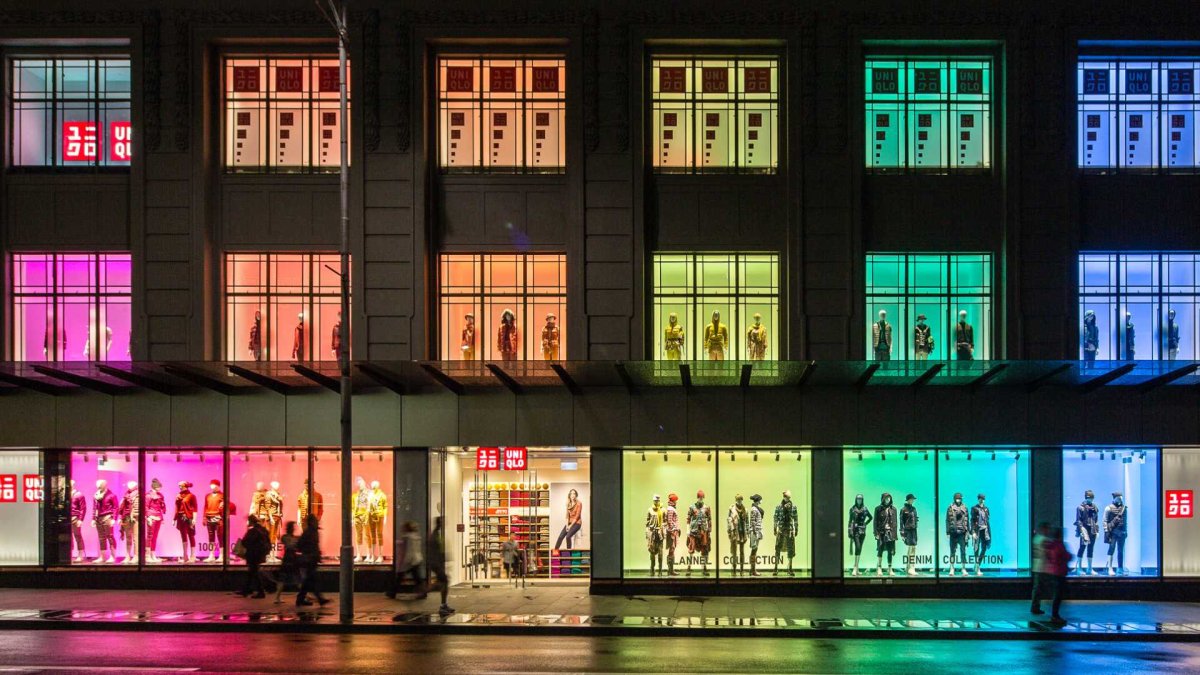


Although it may not be a newcomer, Uniqlo is the hottest kid in town. The Japanese Fast Retailing group ends 2025 maintaining its growth momentum, while its rivals in the fashion retail business are suffering from the macroeconomic context or from misguided strategies implemented years ago. The group headed by Tadashi Yanai is consolidating its position as the world’s third largest fashion company in the mainstream segment, leaving behind the American Gap, which has withdrawn into its local market while implementing its relaunch plan; closing the gap with H&M, which is trying to get back on track by increasing its focus on fashion, and growing even faster than Inditex.
“International expansion and brand consistency have led to an unusual retail growth story.“ This is how the international consultancy Interbrand explained last October the evolution of the Uniqlo brand, the mainstay of Fast Retailing. In 2025, in fact, Uniqlo has broken into the ranking of the 100 most valuable brands in the world, ranking sixth among fashion brands, behind Louis Vuitton, Hermès, Nike, Chanel and Zara. Uniqlo’s brand value stands at $17.7 billion, higher than H&M’s $11.9 billion.
Uniqlo’s business model kept it away from the international fashion honeys for years. With Inditex sharpening fashion with Zara, Uniqlo’s good-quality, affordable basics did not fit a mass audience, making geographic expansion difficult. Its sourcing model, based on a close relationship with suppliers to achieve low prices for technical products, was far from that of giants such as Inditex, H&M or Primark.
But the context has changed. While sustainability is (slowly) making inroads among consumers, a more relaxed fashion consumption is gaining ground, all at a time when international instability has banished ostentation to make way for discretion, and that is precisely Uniqlo. The chain’s sourcing model, which for years was seen as a rarity, is now emerging as an upward trend, at a time when supply chain shocks are occurring one after the other.
Fast Retailing ended the last fiscal year 1.5 times larger than Gap, closing the gap with H&M and growing faster than Inditex
Fast Retailing has four years of record turnover. The company closed the last fiscal year (ended last August) with a turnover of 3.4 trillion yen ($21.79 billion, at last October’s exchange rate) and its net income soared 16.39%.
In the last fiscal year, operating income amounted to 564.2 billion yen ($3.61 billion), an increase of nearly 13% compared to the previous year. Net attributable profit rose by 16.39% to 433 billion yen ($2.77 billion). At the end of the year, the gross margin improved by 0.6 percentage points to 16.2%.
In the last fiscal year, the company recorded growth of 12.81%, advancing its goal of becoming the world’s largest fashion retailer. In 2024, the company surpassed three trillion yen in sales for the first time.

For 2026, Fast Retailing has already projected another record year, with revenue forecast at 3.7 trillion yen ($23.7 million) and growth of 10.3%. The company also anticipates a net attributable profit of 435 billion yen ($2.78 million), up 0.5%.
If the forecasts of Fast Retailing (whose president aspires to become the world’s largest fashion group, although without specifying when) are fulfilled, the Japanese company will further widen the gap with the U.S. Gap, for years the international leader in fashion retailing in terms of turnover. With the 2024 results on the table, Fast Retailing is today 1.5 times larger than Gap.
The U.S. group, focused on turning around its performance under the leadership of Richard Dickson, ended 2024 (fiscal year ended February 1st) with sales of $15.086 billion, a growth of 1.32% over 2023 and a return to the $15 billion mark. Gap managed to continue recovering its profitability in 2024 as a whole. The company, which owns Gap, Old Navy and Banana Republic, posted a gross profit of $6.227 billion, up 7.83% over 2023, while net income rose 11.35% to $206 million.
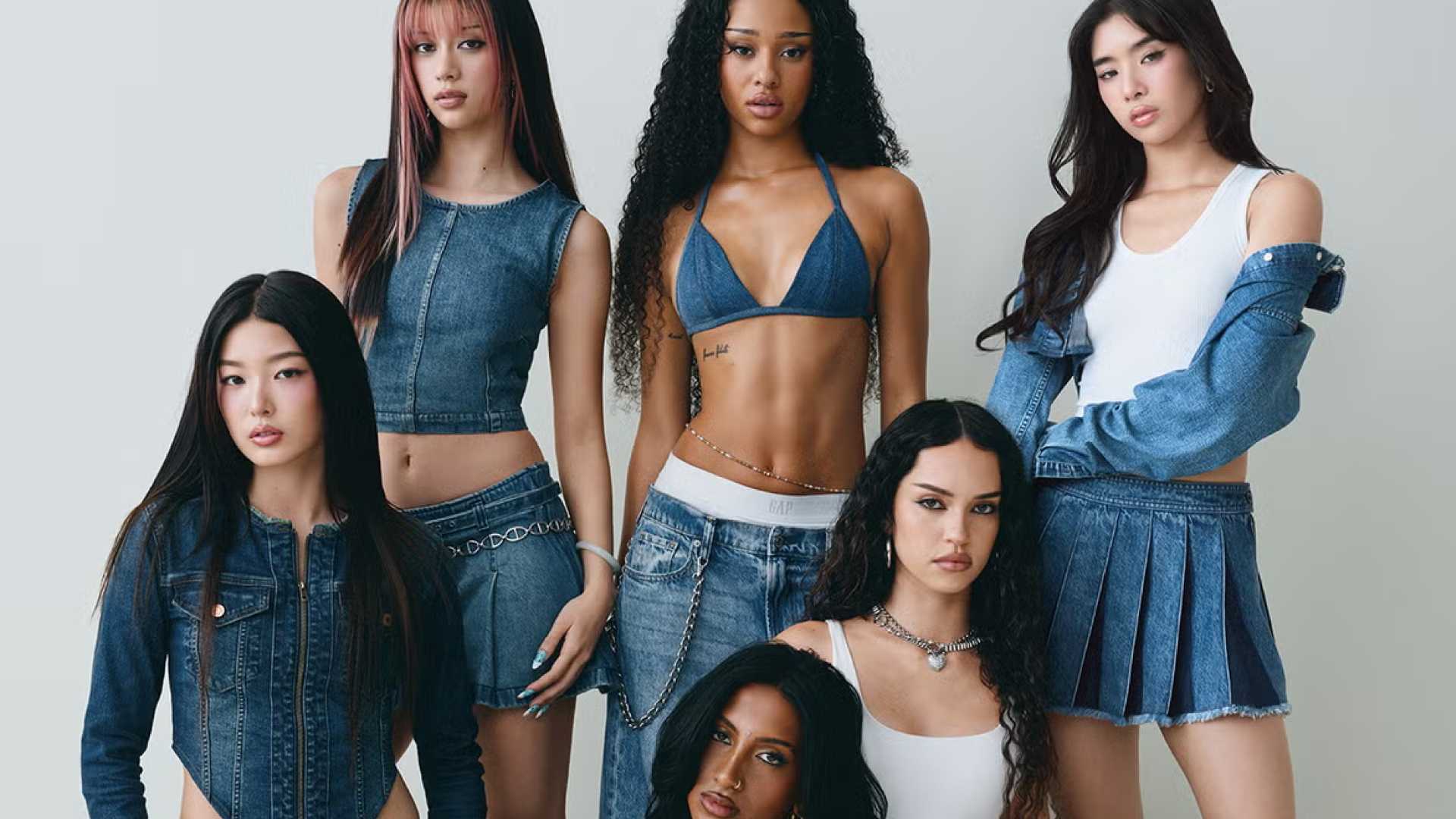
So far this year, the company, which has been affected (like most U.S. companies) by changes in international tariff policy, has continued with its repositioning strategy, which is, in fact, the element that is driving its sales. Gap has focused on a strategy that seeks for its brands to regain cultural relevance and gain penetration among consumers, with campaigns with relevant singers and models, as well as collaborations with Disney, Strangers Things (Netflix) or Wicked (Universal). In the first nine months of the year, Gap’s sales rose 1.76%, while profitability began to suffer in the last quarter due to higher costs.
H&M is currently in a relaunch phase, as is Gap, although the U.S. group began the process a few years earlier
While Fast Retailing, Inditex and H&M are playing at inter-nationalization, Gap is today a local group. The company concentrates 88.13% of its revenues in the United States; outside the United States and Canada, the company had a turnover of just over $609 million (compared to more than $3.7 billion in 2014). For Inditex, Spain represents only 15% of the business; for Fast Retailing, Japan contributes 30.17% of revenues, and for H&M, Sweden is only 8.79%.
The high international component of H&M’s business plays against the phase it is currently in, very similar to that of Gap, but a few years behind in its implementation.
H&M, which was born in 1947 with the department store model in its sights, has always had volume in its path. H&M stores have, for years, sought to be department stores with all available offerings under one roof: men’s, women’s, children’s, home, sport... and all at affordable prices thanks to volume.
The search for volume and price has caused H&M’s production to move to Asia, a fact that, added to the bureaucratization of processes of a company with almost eighty years of history, has caused it to lose speed. And speed is precisely what characterizes its main rivals: Zara, first, and Shein, more recently.
The company began its restructuring several years ago: after the Covid-19 crisis, it was Helena Helmersson who, as CEO, implemented adjustments at the international level, while her successor, Daniel Ervér (at the helm of the company since 2024) is in charge of the relaunch. The executive has set “three key areas where we continue to raise the bar: first, a higher price offering; second, a more inspiring shopping experience; and third, a strengthened brand,“ the executive said at the analyst conference for the first-quarter results.
Although it managed to improve its net income by 32.9%, H&M’s sales continued to fall in 2024 (fiscal year ended November 2024), with a decline of 0.6%. In the first nine months of the 2025 financial year (December to August), the group posted sales of SEK 169,064 million ($18.38 billion), down 1.8% on the same period last year, and above the decline already recorded at the halfway point of the year. H&M’s profit for the period fell further to SEK 7,753 million ($843 million), down 9.8%.
“We have made progress, but there is still more potential,“ the CEO said in 2025; “it is crucial to keep the focus on what really matters to our customers and, although we are seeing good momentum, achieving the full effect of some of our initiatives will take time. In the meantime, rumors of a possible delisting have been rife in the last financial year, after the Persson family, founder of the company, has reached seventy percent of the company’s capital and 85% of the voting rights.
Related content
Inditex: A Year of Ascending the Fashion Hierarchy
18 dic 2025 - 05:00

Mango: New Year, New Noise, and Celebrity Collaborations
23 dic 2025 - 05:00

Changing Times: A Year of
CEO Checkmates
19 dic 2025 - 05:00

2025: A Year of Unpredictable Shifts in Fashion
18 dic 2025 - 05:00
Latest news

Swiss Fund Arklyz Acquires German Footwear Company Gabor
26 dic 2025 - 11:46

Hanky Panky Acquired by Crown Brands Group in Strategic Move
26 dic 2025 - 07:33
Paul Stuart Joins Middle West Partners’ Growing Portfolio
26 dic 2025 - 07:31