Meet Marco Bizzari: Gucci’s Mastermind Takes on the Helm at Armani
The executive who steered Gucci through its major cycle, navigated a tax agreement with Italian authorities, and stepped down in 2023, has reemerged as a key advisor in Italy. Now, he’s joining Armani’s board and is rumored to take the helm at Golden Goose.


A few years before the start of the Luca de Meo era, in May 2019, Kering agreed to pay €1.25 billion to the Italian Treasury to close a tax investigation focused on how it attributed profits from the Gucci brand between Italy and its Swiss hólding, Luxury Goods International. The settlement included €897 million in additional taxes and the remainder in penalties and interest. In the communication at the time, the group confirmed that Gucci CEO Marco Bizzarri and his predecessor Patrizio di Marco were still under investigation in their capacity as legal representatives of the company, confident that the situation would be clarified.
This episode perfectly illustrates the game in which Bizzarri’s career has moved. An expert in a luxury that is no longer measured only in fashion shows and market share, the executive deftly masters the balancing act of tax structures, regulatory oversight and reputational risk management.
Before coming to Gucci, Bizzarri built a profile as an operator. After his early years as a consultant at Accenture, he joined Mandarina Duck in 1993, where he became CEO and later took over as CEO of Marithé et François Girbaud. In 2005, he joined the Kering perimeter as Chairman and CEO of Stella McCartney and, in 2009, took the reins of Bottega Veneta, which under his management crossed the $1 billion barrier in sales in 2012.
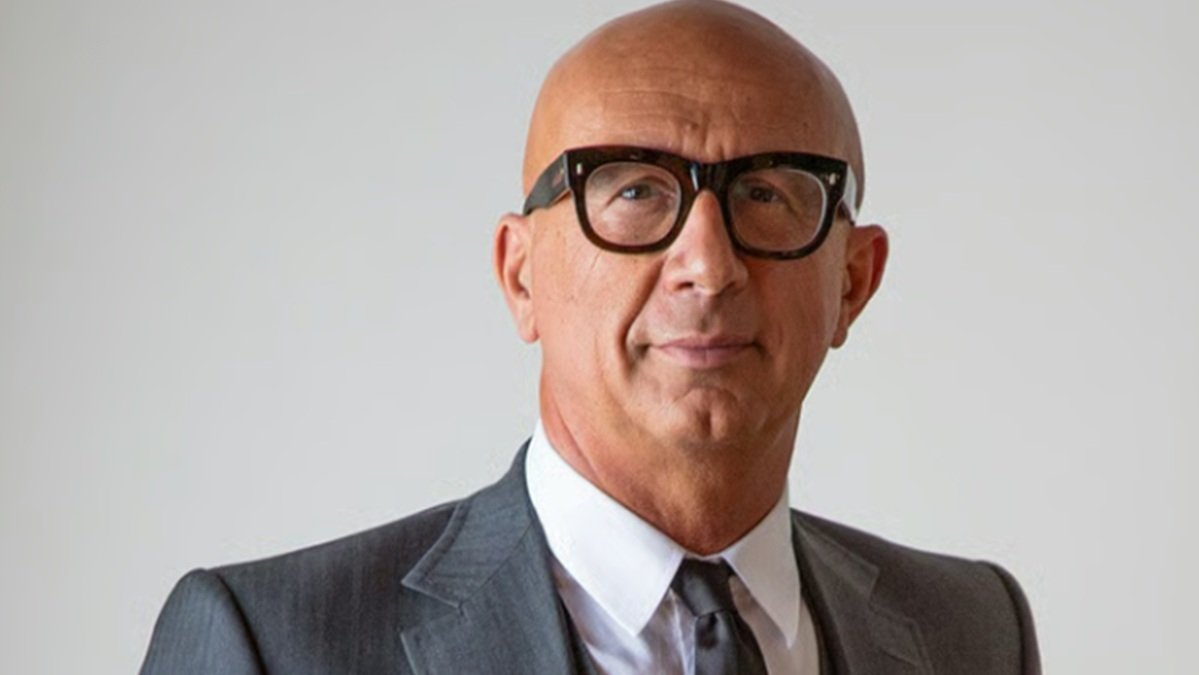
Marco Bizarri took his first steps at Kering with Stella McCartney and went on to become the architect of Gucci’s success
In January 2015, Kering named Bizzarri president and CEO of Gucci. His first major decision was to elevate Alessandro Michele, until then a member of the in-house team, to creative director. The tandem, in the style of Tom Ford and Domenico De Sole, consolidated an aesthetic shift that became a cultural phenomenon and, above all, a business case. Under their tenure, Gucci’s sales grew from €3,898 million in 2015 to €9,628 million in 2019.
Beyond the numbers, Bizzarri turned Gucci into a system of near-perfect gears. The leader tightened the discounting policy, reorganized retail and put corporate culture at the center, from coordination between Milan and Florence to the sustainability agenda. Gucci became a case study in the industry, a demonstration that desire and luxury can be industrialized without diluting the brand.
The cycle, however, ran out sooner than the group would have wished. In July 2023, Kering announced that Bizzarri would leave the company in September of that year and that Jean-François Palus would take the reins as CEO and chairman for an interim period, as part of a reorganization aimed at “restoring the momentum” of the label. The announcement came four years after the fiscal 2019 agreement, in a context of first signs of brand slowdown.
Bizzarri’s second life: from investment to Italian laboratory
After his departure from the Italian company, Bizzarri did not take on another top executive position in a large group, but instead embarked on a second career as an investor and director. In 2024, he launched Nessifashion, an investment company with which he took up to 23% of the Italian firm Elisabetta Franchi and assumed the chairmanship of the board. The company itself explained that the name of the holding referred to “nessi”, a family term of endearment, a minor detail but revealing of the care taken in the corporate architecture.
The operation was based on an already profitable business, given that the brand expected to close 2023 with 170 million euros in turnover and an operating margin of 32%. In September of this year it became known that Bizzarri had ceased to be an investor and no longer chaired Elisabetta Franchi; he left the capital in July and formalized his resignation weeks later.
Last November, Armani announced the creation of a new eight-member board to steer the company through its succession plan following the death of Giorgio Armani in September. Those appointed included Marco Bizzarri, along with John Hooks, businessman Angelo Moratti and several family representatives. The design of the body is part of the roadmap set out in the creator’s will, which foresees the gradual sale of a minority stake, starting with 15% over the next 18 months, with the foundation retaining at least 30% of the capital.
In parallel, international capital has also been knocking on its door. At the end of 2025, HongShan Capital Group’s offer to Permira to acquire Golden Goose for around €2.5 billion was made public, and the fact that the fund had approached Bizzarri to offer him the chairmanship of the company as part of the plan.
Golden Goose closed 2024 with €655 million in sales and €227 million in gross profit, figures that explain the funds’ interest and the need for a profile with industrial experience. For some investors, his name brings a dual expertise around his ability to build a “Gucci machine” and his background in navigating complex environments of regulatory pressure and strong growth expectations.
At a time when Italy is under scrutiny for its domestic production chain and negotiating its place between the independence of its historic houses and the pressure of global capital, Bizzarri stands as one of the sector’s historic profiles with Swiss Army Knife skills.
His experience, according to industry sources, makes him understand the logic of large groups, he has piloted one of the great cycles of recent expansion of luxury and has lived with a record tax settlement.
His trajectory, however, also drags shadows as Gucci’s dependence on an aesthetic language very marked by Michele’s lexicon and the loss of traction and attractiveness in the final part of the cycle are signs of the exhaustion of a brand in the face of the changing market. With Bizzarri as an example, executive power in fashion is shifting, in a sense, from the CEO’s office to the boards.
Related content

Golden Goose on the Brink of Sale: Permira Fields €2.5 Billion Offer
5 dic 2025 - 07:48

Luca De Meo Infuses Gucci’s Financial Team with Renault Expertise in Kering Move
28 nov 2025 - 07:14
Kering Under de Meo: Reducing Gucci Reliance for a Renewed Growth Trajectory
19 nov 2025 - 07:38