Alfredo Carrión of KPMG on AI’s Role: ‘Fashion May Become More Sustainable and Affordable’
According to KPMG’s Director of AI and Emerging Tech, the industry is on the brink of managing demand with greater agility and responsiveness to market cues.
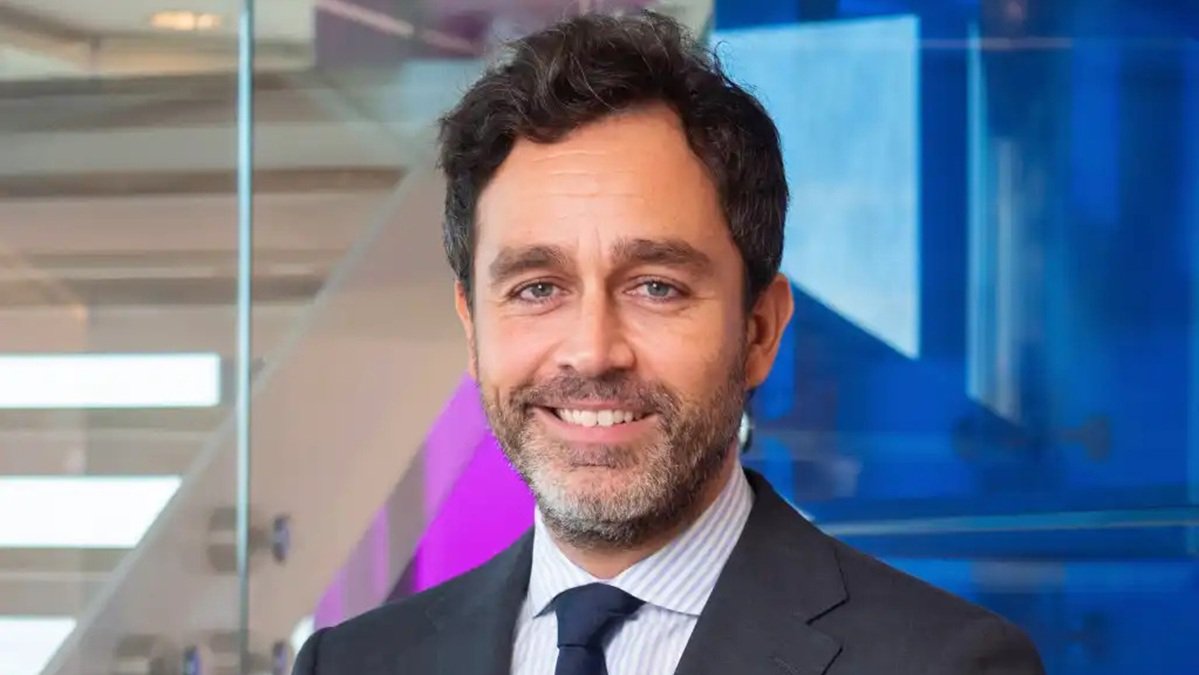


Alfredo Carrión, director of Artificial Intelligence, D&A and Emerging Technology at Kpmg, provides several key insights on how artificial intelligence can impact the fashion business and the moves companies need to make to adopt it, from risk management to cultural change. In his opinion, the technology can lead the sector “to have a business model that is not so stressed by prices and sustainability”.
Question: First it was the NFTs, then the metaverse, and now AI. Is there a bubble around technology?
Answer: What usually characterizes bubbles has to do a lot with an over-expectation that does not have a demonstration of the value that is being promised and is also usually accompanied by an adoption that is more along the lines of fashion than a strategy behind it. If we take Generative Artificial Intelligence and make a slow analysis, we see that it does not really seem to respond to this pattern. There are three big points that make us think about it. The first is that we are already seeing that there is a return and a value capture by companies: at Kpmg we have several reports globally that talk about this, one talks about a potential capture of between 4% and 18% of Ebitda that are represented not only by efficiency and optimization, but also by value capture. We see that, in the consumer and retail sector, about 73% of companies are already talking about real value capture in concrete use cases. We are no longer talking about proofs of concept, but about use cases that are in production. The second point has to do with the fact of operational transformation: artificial intelligence does not attack a specific point, it is not a tactical approach, but it is being approached as a foundational technology in the transformation of different areas of the company. In the specific case of fashion, we are seeing a transformation of the entire value chain, from product design and the purchase of raw materials to the relationship with the consumer himself, this is a big difference that we also see that makes us think that this is not about a bubble. And there is a third one that talks about maturity in adoption: most companies started with a bottom up approach doing very tactical use cases to test the technology, but most of the companies that have a high level of maturity what they are doing is defining a strategic plan in which AI has a very relevant weight. Approximately two-thirds of the companies surveyed talk about an increase in their investment around AI in the next 18 months. This reflects very well that AI, which has already been used in the sector for many years, is a reality and that generative artificial intelligence is accelerating this adoption and, therefore, this would not be a technological bubble.
Q: What is the economic return likely to be?
A: There is a potential pocket of opportunity equivalent to a range of between 4% and 18% of companies’ gross operating profit (Ebitda). On average, in companies with a high level of maturity, and in the case of fashion, a sector that is quite mature, we are talking about the equivalent of 10% of Ebitda. Here we see a very clear value if we talk not so much in quantitative terms, which are obviously very relevant, but also in terms of which part of the entire value chain is being affected. In terms of efficiency and productivity, there is an impact on financial areas, purchasing, human resources, even IT and marketing. There is also a very relevant impact on everything that has to do with the creation of new value, that is, how the improvement of the customer experience (driven above all by personalization, in which generative AI is playing a fundamental role) is leading to faster and better response times at certain points of contact. This is having an impact on a vision of higher average ticket, more recurrent purchases, which has an impact on a higher Customer Lifetime Value and, therefore, on an improvement at the business level. It is a transformational technology that is generating a very positive return at an economic level, and that goes far beyond the company’s own productivity, which is an important point, but which is really already being surpassed. We think in terms of business growth, innovation, and even the generation of new business models, as we are seeing lately with companies like Mango, which are betting very strongly on this type of technology, are doing very well, and are really generating a real impact on their income statement.
Q: AI brings efficiency, and that reduces costs. Can AI make fashion even cheaper? Would that be good for the industry?
A: In line with this reflection on how this AI efficiency is going to impact the fashion industry, it is a structural change and transformation that is being adopted in a gradual way. This is going to have an impact most likely on a fashion that is going to be more sustainable, because we are going to be able to manage demand much better, be more agile in reacting to signals from the market and from the consumer itself and this is very likely to lead us to have cheaper fashion. This is good news because cheaper does not imply, far from it, lower quality, but quite the opposite. In the end, this has to be in favor of the customer receiving a product that is much more suited to what he really wants, that is, that we go towards an even greater customization in fashion, which is much more sustainable and that leads us to have a business model within the sector that is not so stressed by prices and sustainability. And we will have to somehow fit this into a much more efficient and resilient fashion, which is one of the topics that is on the agenda of all CEOs. It is something very positive for the fashion sector, because in the end we are not talking about price, but about the value we are going to be able to bring to our customers and how this value is going to impact our income statement both in terms of revenue and in terms of being able to reduce costs where we are seeing today that there are certain inefficiencies.
Q: Along with efficiency, can risks also increase (exposure to errors, miscalculations, royalties, etc.)?
A: There are mainly three types of risk that are very much in line with European regulations, the Eiag, and have to do with reputational, regulatory and operational risks. Reputational risks have to do with inefficiencies or poorly generated data due to the use of data that is not correct at the outset, i.e. data quality has a very big impact on everything we are going to do with AI. Therefore, being able to govern this data in a proper way is fundamental, as well as avoiding biases in this data. We know that there are many datasets that are biased by the very behavior we have as humans and the fact of using this type of datasets to train models or to generate answers with certain language models, can lead us to reputational risks in which the brand may be at risk because of the impact it may have on some of its stakeholders. The second level of risk, which is regulatory, is closely linked to the compliance part of the AI Act itself, a regulation at European level that is based on the level of risk of EIA systems and has a very large leverage on the fundamental rights of individuals. From Kpmg we propose to work with an inventory that allows us to be clear about the AI systems that, as a brand or company, we are using, categorize those AI systems based on the level of risk proposed by the regulation and, from there, depending on whether they are high risk levels or with less impact on business, that we act with due diligence. What transcends is the concept of AI governance, which somehow ensures that the three types of risk are really limited or minimized because we are acting with the due diligence that in this case is required by the regulation. On top of this, especially in a sector like fashion, which has a very large emotional component, there is the ethical issue. How does a brand position itself in terms of the use of artificial intelligence? Beyond compliance with the standard itself, which is something we assume companies will comply with, it is essential to understand how I want to position myself as a brand. We are seeing in the market large luxury brands that are presenting a very clear positioning on what use they are going to make of AI around their employees, on what impact the AI they use is going to have on their customers and on how AI is going to affect their transformation as a brand within a sector. And finally, in operational risks we talk about operations and security closely linked to the cybersecurity part, with such critical issues as data privacy. Without proper change management, all of this doesn’t make much sense. Many projects that are not succeeding, not because technologically they are not good or because they don’t have the right data, but because the change is not being managed. Employees do not know how to use the technology, they do not know what impact it is going to have on their role and their day-to-day life, and this is an operational risk that can lead to investments that do not achieve the expected return because we have not been able to manage an issue that is fundamental, and that is that the people who are part of our company really understand the impact that a technology of this type is going to have. Clearly there are a series of very clear challenges and risks that, if we are not able to manage as a company, all the talk of opportunity exchange is going to remain on paper.
Q: Does AI create yet another barrier between large, fashionable companies that are able to invest and small and medium-sized companies that inherit the innovations?
A: There is a lot of talk about whether the entry of this technology is really going to create a gap between large and small companies, specifically within the fashion industry. There is a debate and a reflection that will be settled with the passage of time, but that, in some way, has two very clear positions. One is that an increasingly large gap will be created, because the investment and the ability to test this technology is more in the hands of large companies that have technical equipment, infrastructure and investment capacity, not only in technology, but also in the production of the products.This is a vision, in my opinion, of the future of the company, not only in technology, but also in the rest of the levers, in having a quality and well-governed data, in a correct management of people, in a redefinition of processes around the main business areas. That is a vision, in my opinion, perhaps somewhat dystopian. Perhaps we are going to move more towards a model like the second one, which is a reflection that is more along the lines that this type of technology is democratizing the adoption even by SMEs. And here what we are seeing is that the fact that they are Saas models, software as a service models, which are very accessible for companies that do not have teams or large technological teams internally and allow companies with a reduced budget to scale based on the results obtained, without the need to have specialized teams. On the other hand, and we have all seen this as users, it is a technology in which we relate to the different applications or environments with our own language, with natural language, and this has led to massive adoption. ChatGPT was the big driver of all this adoption by far, it has been the technology that has had the fastest and highest level of adoption in history. This is also going to allow companies that do not have in-house technical knowledge to be able to adopt it more quickly. This, added to the other economic aspect, makes us think that democratization can take place, but with a reflection behind, which is what will make the balance go more to one side or the other, and that is the use that each company makes of this type of technology. In the end, it is about understanding how it can have a positive impact on business. Not for all companies it will be a complete transformation of the value chain, but I believe that there are certain quick wins that smaller companies can adopt in order to achieve value in this type of technology and scale up.
“There are a number of solutions accessible to companies of all sizes that there have never been before.“
Q: Does AI open the door to new errors and risks?
A: In the face of starting with this adoption in companies of a smaller profile and with more limited resources, the recommendation we always make is to start with literacy. That training allows our employees to really understand, on the one hand, the potential that this technology has, and on the other hand, the risks that they have. It’s important for them to understand that this is not just about profits and capturing value, but also about a series of risks that have to be managed. It is a fundamental starting point that, in addition, since February of this year, the European regulation requires all companies to have artificial intelligence systems, so, if it is not for pure conviction, it is for pure compliance, in any case, it is a good starting point. There are a number of solutions available for companies of all sizes that have never been available before, and I think this is about testing, as we said before, about test and learn and see what works for us with very specific use cases. In small companies maybe the approach of thinking big, starting fast and scaling even faster is fine. Once we have defined the use cases that can really add value, we would then enter into a more strategic and structured reflection, looking for the partnerships that can lead us to scale this model, but bearing in mind that the resources of this type of company are limited and being able to demonstrate the value from minute one is fundamental.
Q: Is all demand predictable? Are we humans so predictable?
A: Increasingly, with these technologies and especially with the large amount of data available to the main players in the sector, we have the ability to forecast an important part of the demand, but we will never be able to forecast all the demand because it is not realistic. And in this particular sector there is an emotional, aspirational and consumer sentiment point that is difficult to forecast because even we as consumers often do not know what we want. We start a discovery process about a specific product and end up buying something completely different from another brand or even from another category, so it is difficult to predict. It is true that we are increasingly reaching a point where demand can be better predicted, moving from a very reactive approach or demand model to a model where we are increasingly able to anticipate more and more what the customer or consumer really wants and that allows us to be much more efficient in producing certain products. But we will never be able to control all the variables related to this emotional part, especially because there is a point that we have been experiencing for some years now: trends in the fashion sector are going faster and faster, collections that used to last many months are now being shortened, in some cases, to a few weeks, and this is also influenced by issues such as social networks and other inputs in which we are constantly receiving information. We are moving towards a much higher percentage of forecasting this demand which also helps us to try to avoid stock-outs and ensure that we always have the assortment we need to maximize the business but that leads us to think that we are never going to reach 100% predictability.
Related content

Birkenstock projects double-digit growth through 2028 with renewed strategy
29 ene 2026 - 11:16

Levi Strauss Boosts Profitability: Dodges Tariff Impact and Triples Earnings
29 ene 2026 - 11:15

H&M keeps its finger on the pulse and earns 4.6% more at fiscal year-end
29 ene 2026 - 11:10

Gordon Brothers Takes Over LK Bennett, Sets Stage for Global Expansion
28 ene 2026 - 12:33
Latest news
Birkenstock projects double-digit growth through 2028 with renewed strategy
29 ene 2026 - 11:16
Levi Strauss Boosts Profitability: Dodges Tariff Impact and Triples Earnings
29 ene 2026 - 11:15
H&M keeps its finger on the pulse and earns 4.6% more at fiscal year-end
29 ene 2026 - 11:10
Gordon Brothers Takes Over LK Bennett, Sets Stage for Global Expansion
28 ene 2026 - 12:33